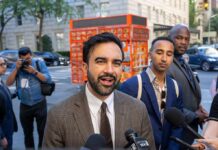
Andrew Bailey, one of the FBI’s top leaders, has resigned after roughly a year in the job, signaling more upheaval at a bureau already under the spotlight.
Story Highlights
- Andrew Bailey said in 2025 he would leave the Missouri attorney general post to join FBI leadership.
- News outlets reported he would serve as a co-deputy director alongside Dan Bongino.
- Bailey has now stepped down from his FBI leadership role after about one year.
- The move lands amid an unusual era of politically charged FBI staffing.
What Happened: Bailey Steps Down From FBI Leadership
Andrew Bailey has resigned from an FBI leadership role after serving about a year. In August 2025, Bailey announced he would leave his Missouri attorney general job effective September 8 to accept a top role at the Federal Bureau of Investigation, calling it an honor to serve in FBI leadership. Major outlets at the time said he would work as a co-deputy director next to Dan Bongino under Director Kash Patel. Today’s resignation closes that chapter.
Bailey’s entry into the FBI was unusual because most past FBI deputy directors were career agents. Reports in 2025 described his role as a co-deputy director, a rare structure that paired him with Bongino, another nontraditional pick. The Associated Press and Reuters confirmed his planned 2025 move and effective date, anchoring the timeline now ending with his departure. The FBI has not released a detailed public explanation for his exit.
Why This Matters: A Break From Long-Standing Practice
The deputy director role has typically gone to veteran agents who rose through the ranks. President Trump’s team backed a new path by naming political figures to senior posts, a change that drew strong reactions inside and outside the bureau. The Senate confirmed Kash Patel as FBI director in early 2025, underscoring the shift in leadership style and priorities at the agency amid wider fights over trust, accountability, and mission focus. Bailey’s exit adds to that unsettled picture.
Leadership churn can slow large agencies. When senior roles change often, priorities can shift, plans can stall, and staff can wait on new orders. Supporters of the shake-up say fresh leaders break old habits and challenge a “deep state.” Critics say political choices risk bias and weaken operations. Many Americans across the aisle want fairness, less drama, and a focus on crime, public safety, and civil rights. Bailey’s exit will be read through that shared lens.
Title Confusion and What We Know For Sure
Some outlets used different labels for Bailey’s post, including “deputy director” and “co-deputy director.” In August 2025, Bailey’s office and national outlets reported he would serve in a co-deputy structure at the FBI, working alongside Bongino. That phrasing supports the idea that his role was a top-tier deputy slot, paired with another deputy. The precise internal wording matters less than the fact that he held a senior leadership seat he has now vacated.
The public record clearly shows the start of Bailey’s move in 2025 and the unusual nature of the post he took. The record does not spell out why he stepped down now. Without a formal explanation, the safest reading is this: a key leader who entered on a nontraditional path is leaving during a period of intense political pressure on the FBI. The bureau will now navigate another handoff at the top while it faces major cases and scrutiny from both parties.
Sources:
thegatewaypundit.com, ago.mo.gov, pbs.org, stlpr.org, aol.com, centerforsecuritypolicy.org, ourpublicservice.org