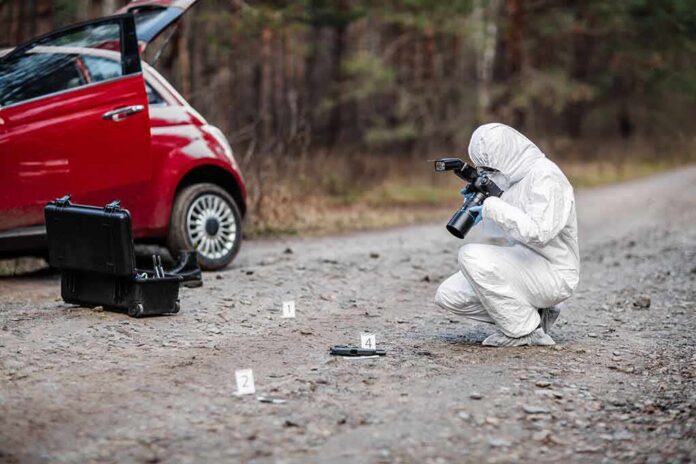
Jurors in Orlando heard that a 1-year-old died trapped in a car topping 120 degrees after her mother was shot, a searing example of how violent crime and system gaps can end in preventable child deaths.
Story Snapshot
- Prosecutors say Doujon Griffiths shot Massania Malcolm, stole her car, and left her baby to die.
- Detective testimony said the car’s interior heat rose above 120 degrees, consistent with heat death.
- Bodies were found two days later in a parking lot off Lake Ellenor Drive in Orlando.
- Reporters note name inconsistencies for the child, underscoring record-quality issues.
What Prosecutors Told the Jury
Prosecutors in Orange County, Florida said Doujon Griffiths shot 20-year-old Massania Malcolm after shooting her boyfriend, then took Malcolm’s car with their 1-year-old inside. The State Attorney’s Office framed the case as a linked series of violent acts that ended with the child’s death in extreme heat. News coverage from the courtroom reported that jurors saw photos and heard witness accounts that aim to tie Griffiths to both shootings and the car, setting up a multi-count murder theory.
Trial reports said investigators found Malcolm and her daughter in a parking lot off Lake Ellenor Drive two days after the killings. Coverage described how the delay narrowed the rescue window and raised the stakes on causation. A local detective testified that temperatures inside the vehicle rose above 120 degrees, which can be fatal to a small child in a short time. Reporters summarized that the baby likely died from heat exposure, pending full medical specifics.
Evidence Points Cited in Open Court
Local outlets reported that jurors heard about the vehicle’s location, the time gap before discovery, and the expected heat inside the cabin. A detective’s testimony about the car’s interior temperature provided a concrete anchor for the heat-death theory. The Miami Herald earlier quoted the Orange County sheriff stating the suspect allegedly left the baby to die in the car, framing law enforcement’s view from early in the case. These reported details shape how the jury might weigh intent, sequence, and responsibility.
Coverage highlighted an evidentiary wrinkle that often plagues public understanding: inconsistent reporting of the child’s last name across outlets, appearing as Reid, Reed, or Malcolm. That inconsistency does not alter the core claims, but it complicates record searches and case tracking. It also shows why primary documents—charging papers, autopsy findings, and transcripts—matter. Those records fix names, counts, and findings in a way that summarized reporting sometimes cannot.
The Defense Angle and Open Questions
One report noted that the boyfriend, identified as Reid, told the court he was inside the vehicle when prosecutors say Griffiths opened fire, a point the defense can use to test the timeline. Another outlet reported a statement that Griffiths believed Malcolm had been shot and the car left with her and the baby, which adds a counter-thread on sequence and awareness. These items do not overturn the state’s case, but they signal the disputes jurors must resolve about intent and what Griffiths knew, and when.
Some facts remain behind paywalls or in files not yet public in these reports. The available coverage does not include the charging document text, the exact count structure, or the full autopsy results for the child. Without those, readers should treat certain phrases—like “likely” or “may have”—as careful attributions, not final conclusions. The courtroom is where those gaps close. Until then, the trial reporting provides the best window into what the state believes it can prove.
Why This Case Hits a National Nerve
This case sits inside a broader pattern: most hot-car child deaths are tragic mistakes, but a smaller group tie to other crimes and lead to murder charges when prosecutors argue the child was knowingly left or abandoned. Florida media have reported that many such cases hinge on intent and timing. Here, prosecutors tie the child’s death to an alleged shooting and car theft sequence. That chain, if proven, moves the case from neglect to homicide in the eyes of the law.
The Bigger Trust Question
People on the right and left share a fear that the system fails families until it is too late. They see violent offenders slip through cracks, while children pay the price. This case fuels that worry because it mixes gun violence, flight, and a preventable heat death. It also shows why clear records, steady policing, and swift search protocols matter. When officials speak in one voice and evidence is accessible, the public can judge outcomes with confidence.
Sources:
wesh.com, caribbeannationalweekly.com, us.headtopics.com, co.marion.or.us, oregon.gov