“Whoever wins AI wins,” President Trump said, as the White House tightened control over powerful models while vowing not to slow America’s edge over China.
Story Highlights
- President Trump tied AI policy to U.S.-China competition and warned against rules that blunt America’s lead.
- A June order promoted innovation, cyber defense use, and voluntary pre-release testing rather than sweeping mandates.
- The White House pressed access limits on frontier models and clashed with Anthropic over “guardrails”.
- Critics argue safety and competition can advance together, urging clear rules that do not cut corners.
Trump’s Message: Keep the Lead, Manage the Risk
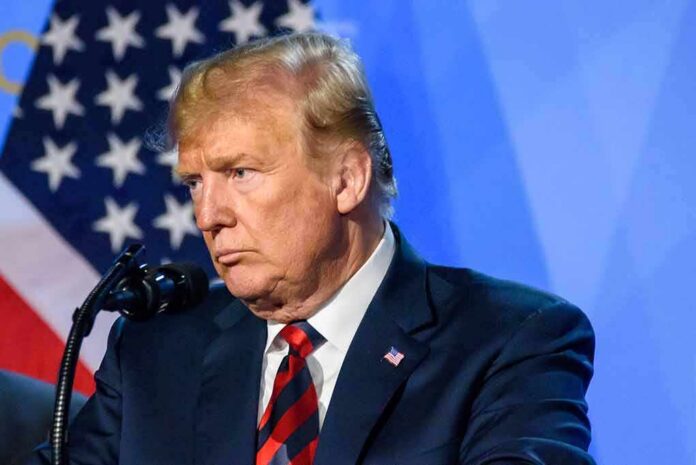
President Trump linked AI rules to national competition with China and said the United States must keep its lead. Trump told reporters, “We’re leading China in AI,” and warned that “whoever wins AI wins.” He also said some voices were pushing “exaggerated” fears that could slow progress. His team has framed policy around staying ahead, not halting deployment. Supporters say this race lens reflects real security stakes in cyberspace and industry.
The administration’s June order focused on government use of AI for cyber defense and resilience. It set up a voluntary program for companies to let the government test powerful new models about thirty days before public release. It did not create heavy, across-the-board preclearance rules. The White House cast the plan as protecting the country from cyber threats while keeping builders moving fast on innovation and deployment.
Where Policy Meets Power: The Anthropic Clash
Events turned sharper when the Pentagon labeled Anthropic a supply-chain risk for government use and the White House told federal agencies to end use of the company’s systems. Trump gave agencies six months to phase out Anthropic tools and warned of penalties if orders were ignored. The administration later said it was open to a deal as the company “shaped up,” but the message was clear: access to government work can hinge on safety and security judgments.
The fight also showed how the government can steer the frontier. Reporting described White House efforts to control which models agencies can access and how they roll out. One outlet said officials explored ways to bypass the company’s own risk flags for new models when agencies deemed them necessary. Another reported a broader push to coordinate with firms on cyber vulnerabilities through a program called “Gold Eagle”.
China Frame: Competition, Copying, and Controls
White House aides argued that foreign actors, especially in China, try to extract or copy capabilities from American models at scale. A memo described efforts to “distill” features from U.S. systems, casting that as a threat to national strength. This view places frontier models inside a larger contest over chips, code, and data. It also helps explain export and access limits, which aim to slow foreign use without stopping domestic advances.
Analysts noted that China has added multiple binding rules on algorithms and generative systems in recent years. They argued that the United States can keep pace without blanket red tape. They also said a lighter, targeted approach can support leadership while addressing concrete risks like cyber attacks and model misuse. Still, the public record offers more quotes than hard metrics on whether these choices change relative standing.
Shared Concerns: Speed, Safety, and Who Decides
Critics from think tanks and academics say the choice is not speed or safety. A Brookings essay urged clear guidance so firms can work together on safety without fear of antitrust trouble. A University of Chicago summary warned that hard competition can push labs to cut safety to keep up, which is risky for everyone. These voices argue that smart, even-handed rules can reduce race pressure while keeping innovation strong.
Trump is also defending a relatively hands-off approach to AI regulation, saying concerns about AI risks are exaggerated and emphasizing U.S. competition with China.
— Owen Glover (@OwenGlover8idg) September 13, 2026
For many Americans, the deeper worry is trust. People on the right fear global rivals and heavy-handed regulators. People on the left fear corporate corners cut in the name of growth. Both fear a system where elite deals decide who gets access and when. The Anthropic episode shows how fast the government can pick winners and losers. The June order shows how Washington can still prefer voluntary steps. That split fuels doubts about who benefits and who bears the risk.
What to Watch Next
Watch three fronts. First, model access rules for agencies and contractors, which decide who builds and who buys. Second, cyber incidents tied to advanced models, which could force tighter mandates. Third, any hard benchmarks showing whether U.S. policy widens or narrows the lead over China. Clear, public measures would help the country judge trade-offs. Without them, the debate stays stuck between racing ahead and guarding the rails, with trust in short supply.
Sources:
facebook.com, carnegieendowment.org, reuters.com, wsj.com, whtc.com, cnbc.com, youtube.com