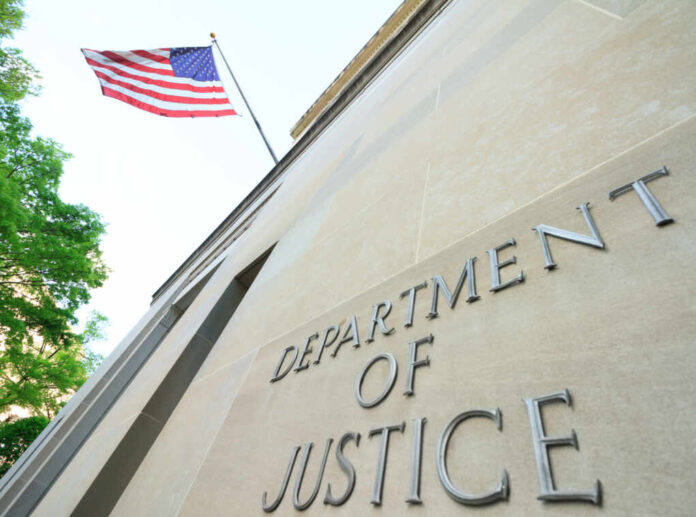
The Department of Justice’s decision not to defend the Hispanic-Serving Institution grant program marks a significant shift in federal education policy following recent Supreme Court rulings on race-conscious practices.
At a Glance
- DOJ declined to defend the $350 million HSI grant program in court.
- Legal challenge targets the 25% Hispanic enrollment requirement for funding.
- Over 500 institutions currently qualify under the HSI designation.
- The 2023 SCOTUS affirmative action ruling shapes legal strategy.
- Broader impacts expected for race-based eligibility programs in higher education.
Legal Challenge to Federal Funding Criteria
On July 25, 2025, the U.S. Department of Justice formally notified Congress that it would not defend the Hispanic-Serving Institution (HSI) grant program in a lawsuit brought by the state of Tennessee and advocacy group Students for Fair Admissions. The challenge argues that the program’s 25% Hispanic undergraduate enrollment threshold for eligibility constitutes a violation of equal protection principles under the U.S. Constitution.
Created in 1992 under the Higher Education Act, the HSI program distributed approximately $350 million in federal funding in 2024 to over 500 institutions. The DOJ’s decision follows the Supreme Court’s 2023 ruling against affirmative action in college admissions, which narrowed the permissible use of race in federally funded education programs. The administration stated that the enrollment threshold constitutes a race-based criterion that may no longer withstand judicial scrutiny.
Watch now: DOJ won’t defend race-based college grant program · YouTube
Historical Context and Legal Arguments
The HSI designation was developed to increase higher education access for Hispanic students by providing targeted financial support to qualifying institutions. The current lawsuit contends that this funding structure discriminates against colleges that serve diverse populations but do not meet the specific ethnic enrollment threshold. Plaintiffs argue that federal resources should be allocated based on institutional merit, student need, and performance indicators rather than demographic composition.
The Hispanic Association of Colleges and Universities (HACU) has intervened in the case, asserting that the program addresses long-standing disparities in access to postsecondary education. HACU maintains that the enrollment criterion reflects historical underrepresentation and supports institutions committed to serving disadvantaged populations. However, critics contend that any fixed demographic threshold inherently excludes schools that do not meet that specific metric, raising concerns about fairness and equal treatment.
Policy Implications for Federal Education Programs
The DOJ’s stance may influence similar grant initiatives for other minority-serving institutions, including those serving Black, Native American, and Asian American students. Legal analysts suggest that programs using demographic benchmarks as funding qualifiers could be re-evaluated or redesigned to align with recent judicial interpretations of equal protection.
The Supreme Court’s 2023 decision has already prompted changes in college admissions policies across the country. This new case extends the debate into the realm of institutional funding and federal grant distribution, potentially reshaping the way support is allocated in U.S. higher education. If the challenge prevails, future federal funding models may need to emphasize race-neutral metrics such as student outcomes, graduation rates, or regional educational disparities.
Sources