
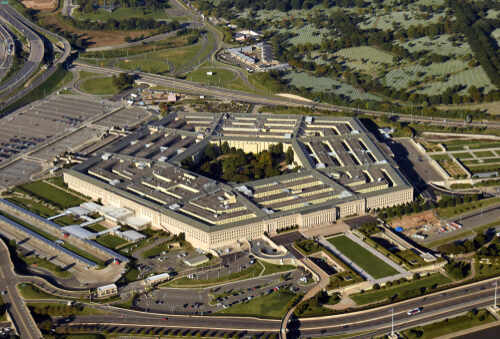
A federal appeals court has handed the Pentagon a significant victory in its battle with legacy media, allowing the Defense Department to escort journalists on its grounds while fighting a First Amendment challenge—raising alarm bells about government control over press access at the very moment transparency matters most.
Story Snapshot
- Three-judge appeals panel ruled 2-1 on April 27, 2026, allowing Pentagon to enforce escort requirements for reporters during ongoing appeal
- Decision suspends lower court ruling that found Pentagon violated constitutional press freedoms and defied judicial orders
- New York Times reporters now face restricted, monitored access despite two prior court victories against the policy
- Ruling represents interim win for Trump administration’s Defense Secretary Pete Hegseth amid escalating press-government tensions
Appeals Court Reverses Press Access Protections
The U.S. Court of Appeals for the District of Columbia Circuit delivered a split decision that temporarily reinstates Pentagon restrictions on journalists. Judges Justin Walker and Bradley Garcia formed the majority, determining the Defense Department would likely succeed in proving its escort requirement legally valid for security purposes. Judge J. Michelle Childs dissented from the 2-1 ruling. This decision directly suspends U.S. District Judge Paul Friedman’s April 9 order, which had found the Pentagon in violation of constitutional protections after implementing new rules requiring reporter escorts and removing workspace access for seven New York Times journalists.
Pattern of Defiance Emerges After Initial Court Loss
The Pentagon’s escort policy emerged only after suffering a constitutional defeat in district court. Judge Friedman ruled the Defense Department’s initial press credential restrictions violated First Amendment free speech rights and due process protections, ordering full access restoration. Rather than comply, the Pentagon implemented what it termed “updated” rules—mandating escorts and eliminating reporter workspaces. Judge Friedman responded by finding the Pentagon had violated his previous order, yet the appeals court has now allowed those very restrictions to remain in place during the appeal process. This sequence raises serious questions about whether government agencies can simply repackage unconstitutional policies to circumvent judicial authority.
Security Claims vs Constitutional Rights
The Pentagon justifies its escort requirement as a minimal security measure for a sensitive military facility. Defense Secretary Pete Hegseth’s administration argues that controlled access protects operational security without completely barring press coverage. However, critics see this framing as disingenuous given the policy’s timing and targets. The restrictions primarily affect legacy media outlets like The New York Times—organizations the Trump administration has repeatedly criticized. The lower court emphasized that security concerns do not grant unlimited power to restrict press freedoms, particularly when those restrictions appear selective. First Amendment precedents from cases like Sherrill v. Knight establish that government facilities cannot arbitrarily deny press access absent genuine security threats.
Broader Implications for Government Accountability
This case extends beyond Pentagon press passes to fundamental questions about government transparency. When federal agencies can limit independent journalist movement through mandatory escorts, investigative reporting becomes substantially more difficult. Reporters lose the ability to conduct impromptu interviews, observe unplanned events, or pursue leads without government handlers monitoring every interaction. The chilling effect reaches beyond the Pentagon—if this escort model withstands legal challenge, other agencies may adopt similar restrictions at the White House, State Department, or federal facilities nationwide. For Americans already frustrated with opaque government operations and officials who seem more interested in controlling narratives than serving citizens, this development represents another barrier between the people and those wielding power on their behalf.
Pentagon can require reporters to be escorted during appeal process, judges rule https://t.co/YN3hrcN7Vd
— CBS News (@CBSNews) April 28, 2026
The case now proceeds to full merits review before the D.C. Circuit Court of Appeals, with potential Supreme Court involvement if either side appeals further. Meanwhile, journalists covering national defense operate under restrictions a federal judge twice found unconstitutional. The outcome will determine whether security concerns can override constitutional press protections or whether government agencies must answer to judicial oversight when their policies infringe on freedoms the Founders considered essential to checking government power.
Sources:
Pentagon can require reporters to be escorted during appeal process – CBS News
Pentagon can require reporters to be escorted during appeal process, judges rule – WTOP
Judge rules Pentagon violated order to restore press access – Fox 13 News