Elon Musk’s courtroom warning that America’s charities could be “looted” has turned a Silicon Valley power fight into a national test of whether nonprofit promises still mean anything.
Story Snapshot
- Musk testified in April 2026 in a $150 billion lawsuit accusing OpenAI leaders and Microsoft of abandoning OpenAI’s original nonprofit mission.
- OpenAI was founded in 2015 as a nonprofit AI research organization, but later developed a profit-seeking structure amid major outside investment.
- Musk argues the case is about protecting charitable integrity, not personal payback, and says damages would go to OpenAI’s charitable arm.
- OpenAI’s defense says Musk himself pushed to convert the organization to for-profit status and sued only after losing influence.
Musk’s testimony frames the case as a fight over charitable trust
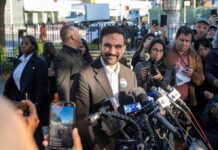
Elon Musk took the stand in late April 2026 as his lawsuit against OpenAI, CEO Sam Altman, President Greg Brockman, and Microsoft moved deeper into trial. Musk is seeking $150 billion in damages and presented the case to jurors as a defense of charitable giving in America. Musk testified that allowing a “charity” to be looted would undermine confidence in the entire charitable system, escalating the dispute beyond ordinary corporate governance.
Musk’s framing matters because it tries to shift the argument from Silicon Valley personalities to public accountability. If a donor’s or founder’s expectations can be overridden once a project becomes valuable, Americans who give money, time, or data to nonprofit missions could reasonably wonder what protections exist. At the same time, the courtroom will still require something more than rhetoric: jurors will weigh documents, governance structures, and testimony about who authorized key changes.
How OpenAI’s nonprofit origins collided with big-money AI development
OpenAI began in 2015 as a nonprofit artificial intelligence research company co-founded by Musk and Altman, with a mission presented as benefiting humanity. The dispute now centers on whether that founding purpose remained binding as the organization evolved. In 2023, Microsoft invested $10 billion into OpenAI, a milestone frequently cited as evidence of deeper commercial direction. Musk left active involvement before later launching his own AI company, xAI, also in 2023.
Those basic facts create a problem that goes far beyond one company: advanced AI is expensive, and sustained research often demands capital markets, high-end compute, and aggressive product timelines. The tension is that nonprofit branding signals restraint, public purpose, and separation from pure profit motives. Conservatives skeptical of elite institutions will recognize the pattern: lofty “public good” language up front, then complex structures and investor influence later, with ordinary citizens left guessing who really controls outcomes.
OpenAI’s defense highlights a competing story about who wanted profits first
OpenAI’s attorney, William Savitt, told jurors that Musk pushed for OpenAI to convert into a for-profit company and hoped to lead it, and that the lawsuit followed only after those efforts failed. That claim, if supported by evidence, would cut directly against Musk’s portrayal of himself as the guardian of a betrayed mission. It would also reframe the case as a founder dispute over control rather than a public-interest stand for charitable integrity.
This is where the public should be careful. Two narratives can be partly true at the same time: Musk could have supported some for-profit pathway at one stage while later objecting to the degree of commercialization, governance, or control that developed. The trial’s value is that it forces these questions into sworn testimony and legal standards rather than social-media talking points. Still, the legal distinction between “nonprofit” and “charity” could become decisive.
Why the case resonates in a broader anti-elite political moment
Musk’s lawsuit lands at a time when many Americans—on the right and the left—believe powerful institutions play by different rules. The case asks whether a mission-driven organization can attract public goodwill as a nonprofit and then pivot toward profit without meaningful accountability to the original purpose. If jurors accept Musk’s theory, it could strengthen expectations that nonprofit commitments are enforceable constraints rather than marketing language used to build trust.
Even if Musk loses, the public scrutiny could pressure other tech-adjacent nonprofits and “public benefit” ventures to clarify governance, disclose control arrangements, and draw bright lines around donor intent. Limited information is available on the specific legal claims, internal bylaws, or the exact structure OpenAI used during its commercialization. Those details will likely determine whether the case becomes a lasting precedent or a headline-driven clash between billionaires.
Sources:
Elon Musk casts his OpenAI lawsuit as a defense of charity
Elon Musk accuses OpenAI CEO Sam Altman of trying to steal from charity
Musk says it’s not ok to ‘loot a charity’ as he takes the stand in OpenAI fraud trial