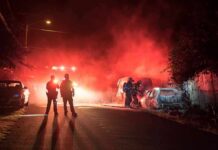
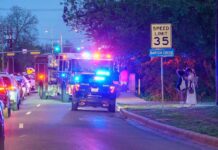
Over 120 homes lie in ashes across rural Georgia after two massive wildfires—one sparked by a party balloon, the other by welding sparks—turned drought-ravaged communities into what Governor Brian Kemp called the most destructive wildfire disaster in state history.
Story Snapshot
- Two wildfires have consumed over 40,000 acres and destroyed 122 homes in south Georgia, threatening 1,000 additional properties
- Human activity ignited both blazes: a party balloon contacting a power line and sparks from a welding operation during extreme drought conditions
- Governor Kemp declared these the “two most dangerous, biggest, problematic fires anywhere” in the United States with containment below 20 percent
- Evacuees watched their homes burn remotely via security cameras while fleeing with families and pets as winds fueled rapid fire spread
Human Error Ignites Historic Devastation
The Brantley Highway 82 Fire erupted when a party balloon contacted a power line in rural south Georgia. Three days later, the Pineland Road Fire ignited from welding sparks. Both incidents occurred during extreme drought conditions that transformed the region into a tinderbox. Governor Brian Kemp instituted a burn ban across 91 counties, but the damage already spiraled beyond control. The combination of careless human activity and natural conditions created what officials describe as the most destructive wildfire event in Georgia’s history by home losses.
Fires Overwhelm Containment Efforts
By Saturday, the Brantley Fire consumed 9,500 acres and destroyed 87 homes, while the Pineland Road Fire scorched 32,000 acres and obliterated 35 structures. Containment remained at approximately 10 percent for Pineland and below 20 percent overall despite hundreds of firefighters deploying air and ground resources. High winds overnight sparked 34 additional fires across the state within 24 hours. Brantley County Manager Joey Cason described the situation as “dynamic” and urged immediate evacuation compliance. The fires covered more than 50 square miles and generated smoke affecting air quality across the region.
Communities Face Displacement and Loss
Families fled with whatever they could carry as flames advanced through rural communities near the Florida border. One woman evacuated to Florida with four children and ten dogs, watching her home burn through her Ring security camera. Craig Jacobs fought hotspots around his property while neighbors lost everything. The fires threatened approximately 1,000 additional homes across Brantley, Clinch, and Echols counties. Governor Kemp declared a state of emergency and extended Hurricane Helene Block Grant deadlines to assist displaced residents facing immediate housing crises and long-term rebuilding challenges in economically vulnerable rural areas.
Government Response Mobilizes Resources
Governor Kemp toured the devastation Friday and coordinated multi-state firefighting resources, including air tanker operations based in Chattanooga, Tennessee. Federal authorities designated the Georgia fires as top national threats. The Georgia Forestry Commission responded to 31 new wildfires covering 266 acres by Friday alone, straining suppression resources across more than 150 active fires statewide extending into Florida. State and federal officials emphasized the fires resulted from preventable human actions during publicly warned drought conditions, raising questions about enforcement of safety protocols and individual responsibility during environmental emergencies that endanger entire communities and strain taxpayer-funded emergency response systems.
The prolonged drought following Hurricane Helene created unprecedented wildfire vulnerability across the Southeast. Agricultural and tourism sectors face immediate economic hits from burn bans and property destruction. Rebuilding costs will burden local governments and displaced families for years. This disaster underscores how individual carelessness—a party balloon, welding during drought—can devastate entire communities when environmental conditions align. The most frustrating element for citizens watching their tax dollars fund massive emergency responses is that both fires were entirely preventable, stemming from activities that reasonable precaution could have avoided during publicly announced extreme fire danger conditions.
Sources:
Georgia wildfires destroy homes, scorch acres – CBS News
Chattanooga serves as tanker base as south Georgia wildfires burn nearly 40,000 acres – NewsChannel9
Georgia wildfires burn 40,000 acres, hundreds of homes – UPI