President Trump’s decision to publicly post President Macron’s private G7 invitation exposed how quickly elite “closed-door” diplomacy can turn into a public power struggle.
Quick Take
- Macron privately offered Trump a post-Davos G7 meeting in Paris, including a dinner invitation, as tensions rose over trade, security, and Greenland.
- Trump posted screenshots of Macron’s message on Truth Social and refused the proposed “emergency” G7 format, signaling he preferred bilateral leverage over multilateral meetings.
- A separate flare-up followed Trump’s early departure from a G7 gathering in Canada after Macron told reporters it related to Israel-Iran ceasefire talks—an account Trump rejected.
- The episode highlights a widening split between America First governing and Europe’s globalist instincts, with protocol and trust inside the G7 taking collateral damage.
Macron’s private outreach collides with Trump’s public negotiating style
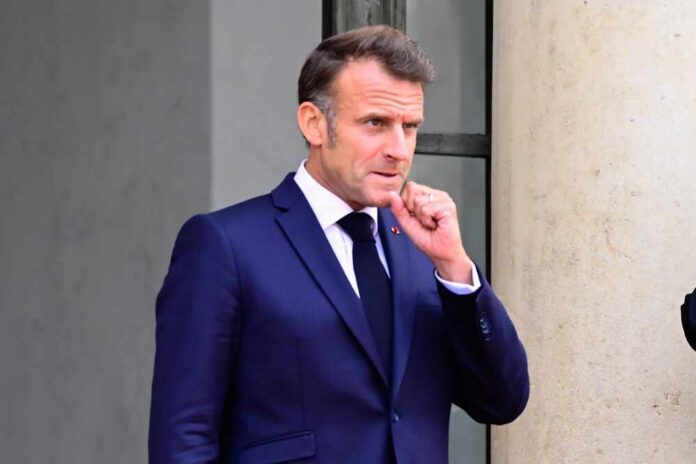
President Emmanuel Macron’s message to President Donald Trump offered what looked like classic summit diplomacy: a proposed G7 meeting in Paris after Davos, plus a personal dinner invitation. Reports describe Macron also questioning Trump’s focus on Greenland while pointing to areas of cooperation on Syria and Iran. Trump’s response broke from traditional practice. By posting screenshots of the outreach publicly and declining the meeting, he shifted the exchange from quiet coordination to a visible test of leverage.
That choice matters because the G7 runs as much on trust and process as it does on formal communiqués. When a leader publicizes another leader’s private note, it can deter future candid communication—especially during crises. Supporters of Trump’s approach see transparency and hard bargaining, not cocktail-summit theater. Critics see a damaging breach of protocol.
Refusing an “emergency G7” underscores America First priorities
Trump refused to attend an emergency or post-Davos G7 session proposed by Macron. The context included Macron’s public criticism of U.S. tariffs at Davos and Trump’s attention to high-stakes strategic files, including Greenland and broader security talks. From a conservative perspective, the core question is not diplomatic etiquette, but whether multilateral meetings produce results—or simply bind the U.S. to consensus outcomes that voters did not authorize.
The limitations are also clear. The available sources describe the refusal and the diplomatic tension, but they do not provide a detailed White House readout explaining what specific U.S. demands or deliverables would have justified attendance. What is documented is the direction of travel: Trump prioritized flexibility and direct U.S. control over commitments that can dilute national sovereignty. That posture fits a pattern from Trump’s earlier term, when he frequently challenged NATO spending norms and G7 messaging.
The Canada G7 dispute shows how fast narratives become ammunition
The dispute intensified after an undated G7 gathering in Canada, where Trump left early. Macron told reporters Trump’s departure related to Israel-Iran ceasefire and broader discussions. Trump publicly rejected that account, calling Macron “publicity-seeking” and “wrong,” and suggesting the reason for his return to Washington involved something “much bigger.” The research notes uncertainty about what that larger matter was, beyond speculation about national security.
This is where public trust collides with elite messaging. When two heads of state offer competing explanations, the public is asked to choose whom to believe without full information. Trump’s supporters tend to credit his claim that urgent U.S. priorities required immediate attention. Macron’s supporters tend to credit his framing of U.S. leadership as unpredictable. It also indicates a G7 joint statement still emerged despite the U.S. departure, showing the institution can function, but not without visible strain.
What the spat signals about Europe’s leverage—and America’s patience
The broader significance is not personal drama; it is power alignment. Europe is trying to preserve a rules-based, multilateral order that often restrains national decision-making. Trump is signaling that U.S. participation is conditional, transactional, and rooted in domestic accountability rather than global approval. With Republicans controlling Congress in 2026, Trump’s negotiating posture carries more policy backing at home, even as it increases friction with leaders like Macron who use summits to project unity.
France Bends the Knee to Trump on G7 Meeting – but They're Whining About Ithttps://t.co/PSJ95gpMaG
— RedState (@RedState) April 25, 2026
For Americans frustrated with “deep state” governance and international bureaucracies, the episode reinforces a hard reality: global institutions often depend on private bargaining and carefully managed narratives. Trump’s public posting of Macron’s outreach punctured that process, for better or worse. For Americans who value stability and alliances, it raises concerns about trust and coordination. Either way, the clash shows the G7’s old playbook is being tested by voters demanding clearer priorities and measurable outcomes.
Sources:
US President Trump refuses to attend emergency G7 meeting proposed by French President Macron
Trump shares messages from France’s Macron offering G7 meeting after Davos