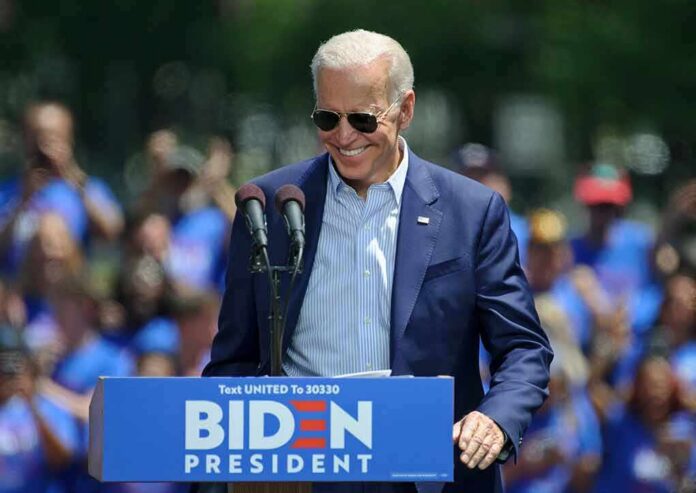
A sitting Republican governor says Joe Biden told him he had already thought about pardoning Donald Trump—and even talked it over with Jill Biden.
Story Snapshot
- Utah Governor Spencer Cox recounts a 2023 talk where Biden said he had considered pardoning Trump.
- Cox says Biden linked the idea to a private conversation with Jill Biden that same week.
- The claim appears in reporting tied to Cox’s new book and social posts by The Atlantic.
- The episode spotlights how broad, private, and political the pardon power can be.
What Cox Says Biden Told Him in 2023
Utah Governor Spencer Cox says he urged then-President Joe Biden in August 2023 to consider pardoning Donald Trump during a ride in the presidential limousine in Salt Lake City. Cox says Biden replied that he had actually been thinking about it already. Cox’s account appears in new reporting and references to his book, with New Jersey media quoting his detailed retelling of the exchange in the car.
Cox also says Biden tied the idea to a private talk with First Lady Jill Biden that same week. Cox describes Biden framing a possible pardon as a move that could cool national anger. The New York Post highlighted the “pillow talk” detail in its coverage, citing Cox’s remarks about that private discussion at home. The Atlantic amplified the book’s themes on social media, noting Cox’s push for depolarization through clemency and unity appeals.
Why This Strikes a Nerve Across the Aisle
The report cuts to a shared public worry: powerful figures make justice decisions behind closed doors. Supporters of President Trump see past cases as showing two systems of justice. Many liberals see a pardon for Trump as letting the powerful dodge accountability. Cox’s account sits in that tension. It suggests Biden weighed mercy for a rival at the very moment many demanded tough consequences for Trump’s conduct and rhetoric.
The story also lands after a stretch of fierce fights over pardons. Reporting shows Biden considered or granted sweeping clemency near the end of his term, including family pardons and talk of shielding allies from what Democrats feared would be political payback by the next administration. President Trump later challenged the validity of some Biden pardons signed by autopen, a dispute that fed claims of elite impunity and partisan score‑settling in Washington.
How the Pardon Power Works—and Why Private Talk Matters
The United States Constitution gives presidents wide power to grant pardons for federal crimes. Legal scholars note that presidents can even grant pardons without public notice, and that such acts can be effective before they are broadly known. That privacy makes clemency decisions ripe for political firestorms when later revealed, especially when they involve polarizing figures or national flashpoints.
Modern presidents have often used this power outside normal Department of Justice channels. Research shows recent leaders, including Trump, bypassed standard review more often than predecessors. That flexibility is legal, but it fuels the view that justice can be bent by insiders. Cox’s account, if accurate, shows how a single private talk—between a president and a spouse, or with a governor—can shape choices with huge public stakes.
What Was Considered—and What Did Not Happen
Cox’s account centers on consideration, not action. Biden did not pardon Trump. The governor says Biden entertained the idea and discussed it with Jill Biden, but no move followed. The account underscores a key point: in Washington, even quiet “what if” talks can ripple for years. When those talks touch a rival’s legal exposure, they strike at people’s faith that rules apply the same to everyone.
The claim adds to a larger record on high-level clemency. News reports and academic work show presidents consider pardons for many reasons: mercy, unity, political cover, or to preempt what they view as unfair prosecutions. The public rarely sees those early stages. That secrecy, while lawful, deepens a sense on both right and left that decisions are made by a small circle, not by transparent standards anyone can trust.
Sources:
nypost.com, nj.com, x.com, nytimes.com, bbc.com, thehill.com, pbs.org, cnn.com, apnews.com