Rep. Alexandria Ocasio-Cortez laughed off her past “defund the police” rhetoric while urging voters to judge candidates by their current views, a notable shift from her 2020 stance.
Story Snapshot
- Ocasio-Cortez said “Woke 1 was crazy,” steering focus to present positions.
- In 2020, she pressed for “defunding police” and rejected “budget tricks.”
- She argued a “defunded” model invests more in youth, health, and housing.
- The slogan’s meaning has long split supporters and critics across parties.
What Ocasio-Cortez Said This Week
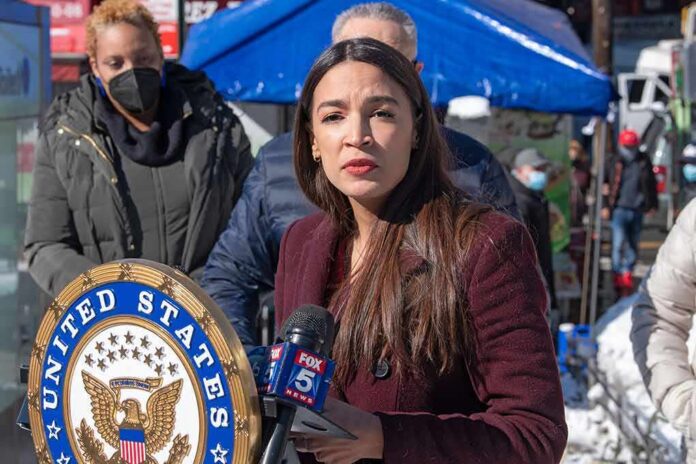
During weekend comments covered by a New York outlet, Rep. Alexandria Ocasio-Cortez encouraged voters to judge a Wisconsin candidate by what she is saying now, not only by older quotes that backed “defund the police.” She joked, “Woke 1 was crazy,” and did not offer an endorsement in the race. Her remarks mark a softer tone than her 2020 push for the phrase. The shift comes as both parties argue over crime, police staffing, and how to keep people safe.
Ocasio-Cortez’s pivot mirrors a wider trend. Democrats and progressive activists have spent years defining “defund” in different ways. Republicans have used the slogan to argue Democrats turned away from public safety. Voters across the spectrum say they want safer streets and accountable leadership. Many also feel national leaders, in both parties, play word games instead of solving problems that affect daily life, like violence, drugs, and stressed local budgets.
Her 2020 Position, On the Record
In June 2020, Ocasio-Cortez rejected New York City’s proposed one billion dollar police budget cut as “budget tricks,” saying “defunding police means defunding police.” She argued then that true change meant fewer police duties and more funding for services that prevent crime. In a House website interview, she described a “defunded” vision as looking like many suburbs, where communities invest more in youth programs, schools, health, and housing than in heavy police presence. Those statements made her one of the most visible voices for the movement.
She also backed the movement publicly in media coverage at the time, supporting activists after the death of George Floyd. Backers said the idea was to shift some duties to non-police responders, such as mental health teams and social workers, and to reduce the odds of violent encounters. Think tanks and researchers framed the debate as a reallocation of funds, not an end to law enforcement. Opponents said the slogan sounded like walking away from public safety and demoralizing officers.
Why the Language Keeps Fueling Fights
Political strategists say the three-word slogan became a stand-in for a larger worldview on safety, race, and budgets. Supporters used it to push a national conversation. Opponents used it to argue progressive leaders were extreme. The same phrase carried at least three meanings: literal budget cuts, a symbolic demand for reform, and a movement identity. Those differences often got blurred in the media and on the trail, making honest debate harder and fueling mistrust.
That confusion had real costs. Some Democrats blamed the slogan for lost swing seats in 2020. Others said the problem was messaging, not the policy ideas behind it. Republicans still cite it as proof that progressive leaders put ideology before safety. Many Americans, left and right, see the back-and-forth as more proof that Washington focuses on branding wars over real fixes, while crime victims and rank-and-file officers pay the price.
What This Shift Signals Now
By telling voters to weigh current positions, Ocasio-Cortez nodded to a political reality: the public wants lower crime and clear plans. That means fewer slogans and more steps that work on the ground, like faster 911 response, targeted patrols for hot spots, and steady funding for youth jobs and treatment. Her comment does not erase her 2020 record. It does show a move to language that stresses results over labels in a season when safety is a top concern.
AOC Laughs Off ‘Defund the Police’ Past as Radicals Distance Themselves https://t.co/L1VOhPYLe3
— Theressa Hudspeth (@The1mst) August 10, 2026
The bottom line for readers who feel let down by leaders in both parties is simple. Crime policy should not swing on hashtags. Cities need clear goals, transparent budgets, and honest measures of success. Voters deserve to see who is cutting violence, who is training officers well, and who is wasting money. Ocasio-Cortez’s shift highlights a bigger test for American politics: can leaders drop the spin and deliver safer streets without forgetting civil rights and community trust?
Sources:
foxnews.com, thehill.com, ocasio-cortez.house.gov, youtube.com, republicanleader.senate.gov