
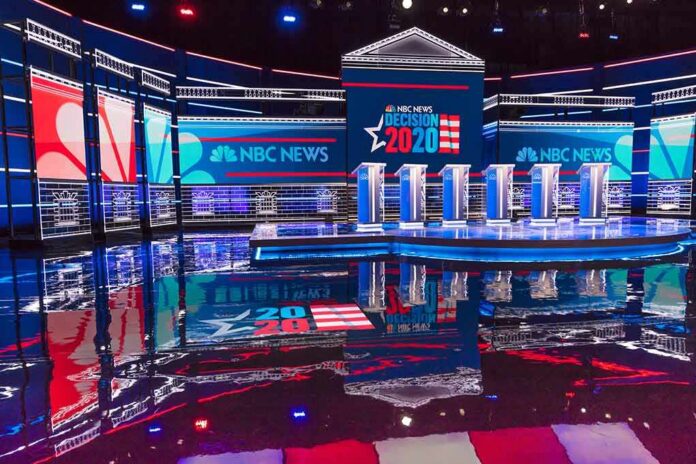
The Democratic National Committee will require 2028 primary debate hopefuls to denounce help from super PACs and undisclosed donor groups, but the rule leaves enforcement in the party’s hands and on candidates’ honor.
Story Snapshot
- The Democratic National Committee set a 12-debate calendar spanning June 2027 to March 2028.
- Debate access requires signing a pledge to denounce outside spending by super PACs and certain nonprofits.
- The process relies on complaints and Democratic National Committee review before a required public denunciation.
- The plan adds “creators and influencers” to expand reach, but details on how that works remain thin.
What the Democratic National Committee Announced
CNN reported that the Democratic National Committee created a Fair Campaign Practices Pledge for candidates who want to join the 2028 primary debates. The pledge requires candidates to denounce qualifying support from super political action committees or nonprofit groups that do not reveal donors, including ads that boost them or attack rivals. The Hill said the committee plans at least 12 debates, with five in 2027 and seven in 2028, running from June 2027 through March 2028.
Deadline described the covered “dark money” as spending by social welfare nonprofits and federal committees that raise and spend outside normal limits and source rules. CNN said each campaign must name a representative who can file complaints to the Democratic National Committee about outside spending. If the committee agrees the ad or mailer breaks the pledge, it will ask the candidate to issue a public denunciation to keep debate access.
How Enforcement Would Work — and Its Gaps
Reports agree the pledge cannot stop independent expenditures outright. The rules create a denunciation step after a complaint and a review but do not force a refund or fine the outside group. NBC News called the pledge “relatively symbolic” because it seeks to add a political cost but cannot block the money. Yahoo News said experts questioned how enforcement would function when candidates cannot legally control outside spenders.
Several outlets flagged two scope limits. First, the process depends on Democratic National Committee review that has no fixed public timeline or appeals track in the available materials. Second, the pledge covers spending “in our primary,” not the general election. A Democratic analyst told FOX 35 Orlando that this gap could invite hypocrisy charges if the nominee later benefits from super political action committees. These are design choices, not proven abuses, but they shape public trust.
Influencers in the Debate Mix
NewsNation reported that the Democratic National Committee plans to include creators and influencers to widen distribution and engagement. The Hill framed the move as a bid to boost viewership for a long debate season. The reporting does not yet define how influencers will be selected, what disclosures they will make, or how they will share moderation roles, if at all. Without those rules, the plan is an intent, not an operating model, and could face fairness questions.
🚨 JUST IN: Dems SET 2028 Democratic presidential primary debate rules.
12 debates start in June 2027. Entry requires a primary-only pledge denouncing dark-money spending.
PRIMARY-ONLY IS WEAK.
Democrats, cover the general too. pic.twitter.com/GQH0fkD0O6
— Aaron Bacus (@AaronBacus) November 24, 2026
FOX 35 Orlando’s segment included concern that polarizing online figures could alienate parts of the audience. That risk is broader than one party. Many Americans on the left and the right already distrust platforms and media gatekeepers. A debate model that relies more on influencers could reach new voters, but it also ties civic events to private algorithms and personalities who answer to sponsors and clicks, not voters.
Why This Matters Beyond One Party’s Rules
The plan lands after years of rising outside money across elections. Independent researchers estimate undisclosed or hard-to-trace funds surged in recent cycles, making it harder for voters to see who is behind ads. That backdrop explains the Democratic National Committee’s focus on denunciations, even if the tool is limited. A clear schedule could also help voters plan and press candidates on issues that hit wallets and families.
The trade-off is control. Party-run gates can improve order and transparency norms, but they also concentrate power in committees that pick partners, set thresholds, and judge complaints. Voters who see Washington as serving insiders will watch how this process is applied. The strongest proof will be public, consistent rules, prompt decisions, and records that show the same standard for every candidate, friend or foe within the party.
What to Watch Next
Watch for three deliverables: the full text of the pledge and definitions, the complaint and decision timelines, and the influencer participation rules. Clear documents would answer many fair questions raised by both supporters and skeptics. Transparency here is low cost and high value. If the Democratic National Committee publishes decisions and anonymized records, voters can judge whether the rules curb shadow spending or simply add another press release to a crowded news cycle.
Sources:
thegatewaypundit.com, ms.now, newsnationnow.com, dailygazette.com, nextnewsnetwork.com, brennancenter.org, repository.upenn.edu