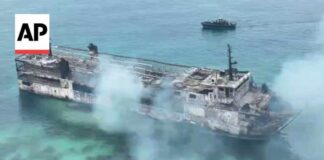
Rescuers in the Philippines have recovered more bodies from a burned ferry, pushing the confirmed death toll to 76 as families wait for answers.
Story Snapshot
- Authorities say 76 are confirmed dead after a Philippine ferry fire.
- Search teams report 43 survivors as recovery work continues.
- Manifests and early counts were incomplete, a recurring problem in past disasters.
- The Philippines ranks among countries with the most ferry casualties worldwide.
Recovery Update From Coron, Palawan
Philippine rescuers retrieved more remains from the charred ferry near Coron, Palawan, raising the confirmed death toll to 76. The Philippine Coast Guard reported the increase after teams entered the wreck and searched burned compartments. Officials said identification is underway and could take time. The fire broke out during a routine route in western Philippine waters. Authorities have not released a final cause. They continue to coordinate with local hospitals and coroners for victim identification.
Rescue leaders said the operation shifted from search to recovery as hopes for finding more survivors faded. Crews still scanned nearby waters and shoreline for any sign of the missing. Medical teams processed remains onshore while investigators examined the hull and safety equipment. Reports from the scene described heavy damage to passenger areas. Coast Guard officials warned that final numbers could still change as more compartments are cleared and as records are reconciled with families.
Conflicting Early Counts And Passenger Manifests
Officials faced confusion in the first days after the fire. Early figures listed five dead and more than eighty missing. The number climbed as teams boarded the wreck and recovered bodies. Authorities also reported forty-three survivors brought to safety. Those swings followed a familiar pattern in the region, where ship manifests are often incomplete or inaccurate in a crisis. That mismatch slows rescues and complicates family notifications during the most critical hours.
Past ferry disasters in the Philippines show why early counts can be unreliable. Investigations have found inaccurate manifests and unlisted passengers in several major cases. Reporters and rescue officials said the same issues emerged here as crews tried to verify who actually boarded. Those gaps can hide the true scale of a tragedy until divers and search teams finish their work. That is why officials caution that totals may change even days after the event.
Safety Record And Systemic Risks
Global studies place the Philippines among the countries with the highest share of ferry accidents and deaths. Researchers point to recurring drivers: human error, weak loading control, overcrowding, and aging vessels. Regional safety reviews have urged tighter checks, better crew training, and real-time passenger tracking. Those steps aim to prevent fires on crowded decks from turning deadly and to give rescuers a clear head count when seconds matter.
BREAKING: The death toll from the devastating ferry fire in the Philippines has risen to at least 76, with 13 people still missing.
Survivors reported hearing two explosions before flames rapidly spread through the vessel.
Rescuers are continuing recovery efforts as…
— World Incident Radar (@IncidentRadar_) September 13, 2026
This latest fire again exposes a hard truth that spans politics and borders: when basic safety rules fail, ordinary people pay the price. Americans know this story from train derailments, bridge failures, and factory accidents. Voters on the right and left both blame lax oversight and paper-thin enforcement that favor the well-connected over public safety. Clear manifests, working alarms, trained crews, and honest audits are not partisan asks; they are the floor for a system that values life over excuses.
Sources:
nytimes.com, trtworld.com, reuters.com, bbc.com, lrfoundation.org.uk, maritime-executive.com