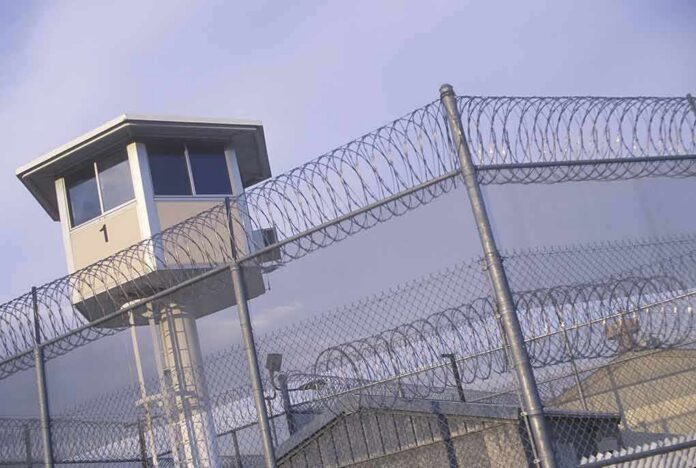
A federal judge in San Jose is leaning toward stopping construction of a new ICE detention center near Gilroy, saying California and Santa Clara County have a strong case that the government skipped required environmental review.
Story Snapshot
- Judge Eumi Lee signaled she is “inclined” to block construction at the Holsclaw Road site near Gilroy, citing a likely violation of federal environmental law.
- California Attorney General Rob Bonta and Santa Clara County sued in June, saying the project skipped required environmental reviews before building began.
- The lawsuit claims the facility’s septic system was built for much lighter use and could fail under the weight of daily detainee operations.
- Federal attorneys call the septic and contamination claims speculation, saying the state has no evidence the site is actually polluted.
State And County Sue Over Skipped Reviews
California Attorney General Rob Bonta and Santa Clara County Counsel Tony LoPresti sued the federal government on June 10, 2026. They filed the case in U.S. District Court in San Jose. The lawsuit says the government “skirted environmental laws” while moving to build an ICE holding facility on farmland near Gilroy, a town known for its garlic industry.
The complaint leans on more than one law. It cites the National Environmental Policy Act, the Immigration and Nationality Act, the Intergovernmental Cooperation Act, the Administrative Procedure Act, and California’s Williamson Act, which protects farmland from certain kinds of development.
Septic System And Contamination Claims At Center Of Fight
Plaintiffs say the Holsclaw Road property was used for agricultural research starting in the 1960s. They argue building a detention center there risks releasing hazardous materials left over from decades of farm chemical use and could damage the local ecosystem.
The septic system is the sharpest point of dispute. State and county lawyers say the existing system was “designed for much smaller use” and could be overwhelmed if the facility holds up to 150 detainees around the clock, plus 60 staff members. That capacity number comes from a preliminary injunction motion filed by the plaintiffs.
Federal Government Pushes Back Hard
Immigration and Customs Enforcement (ICE) has rejected the environmental claims as unfounded. Federal attorneys wrote that the state and county “have no evidence that the site is currently contaminated” and have not shown that turning the building into office space would cause more harm than the farm research work already done there for years.
On the septic question, government lawyers were direct. They wrote that the plaintiffs’ “speculation that ICE will overload the septic system at the site by holding 150 detainees, 24 hours a day, plus 60 staff members, lacks support”. Separately, ICE has said the facility may hold as few as 10 detainees at a time, though the eventual maximum capacity remains unclear.
Judge Signals She May Side With California
Judge Eumi Lee has not issued a final ruling, but reporting from early September 2026 says she indicated she is “inclined to grant the injunction.” Her reasoning centers on the state and county’s argument that they are likely to win their claim under the National Environmental Policy Act, the law requiring federal agencies to study environmental impacts before major projects move forward.
Construction on the site had already paused once before, in July 2026, while the case moved through court. That pause shows how quickly a federal project can stall once a judge takes environmental claims seriously, even before a final decision is reached.
A Bigger Pattern Beyond One Garlic Field
This case is not happening in isolation. Courts have wrestled with similar questions at other detention sites, including a Florida facility nicknamed “Alligator Alcatraz,” where an appeals court examined whether state involvement let the federal government sidestep environmental review altogether. A separate Maryland case saw a judge sharply criticize ICE for skipping the same kind of review before converting a warehouse into a detention center.
The pattern raises a question that goes beyond politics: how much environmental review the government must complete before building fast-tracked immigration facilities. Voters across the spectrum have reason to watch this closely. Bypassing established review rules, whether the project is a detention center or any other federal building, undercuts the checks that are supposed to protect communities and hold agencies accountable before shovels hit the ground.
No final ruling has been issued as of the most recent reporting. Both sides are waiting on Judge Lee’s decision, which will determine whether construction near Gilroy stays frozen or moves forward while the broader lawsuit continues.
",Judge Eumi Lee in San Jose U.S. District Court said she was inclined to grant the injunction because state and county officials were likely to succeed in their claim that the facility violates the National Environmental Policy Act" #Gilroy #ICE https://t.co/dlausKK7ca?
— Media Alliance (@twrling) September 9, 2026
Sources:
thegatewaypundit.com, mercurynews.com, aol.com, modbee.com, kcra.com