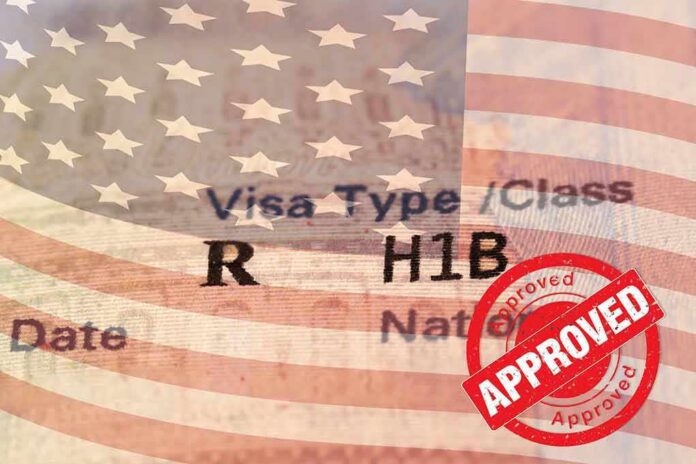
A federal judge struck down President Trump’s $100,000 H‑1B visa fee as an unlawful tax, even as the administration moves to lock a similar charge into regulation, leaving employers and immigrant workers in limbo.
Story Highlights
- A court voided the $100,000 H‑1B fee as beyond presidential power.
- The administration is proposing a rule to charge about $103,000 instead.
- Supporters say the fee protects U.S. workers under immigration law.
- Opponents warn of harm to hospitals, schools, and churches.
What the Court Decided and Why It Matters
On June 8, 2026, a federal judge ruled that the $100,000 payment on new H‑1B visas was a tax that Congress never authorized the President to impose, and vacated the policy in full. The decision undercut the 2025 proclamation that tied the fee to sections 212(f) and 215(a) of the Immigration and Nationality Act. The court focused on limits of executive power, not the broader H‑1B debate. The ruling reset the program’s fees to pre‑proclamation levels while appeals and new rulemaking continue.
The administration is not backing down. On August 24, 2026, it released a proposed regulation that would codify a fee of more than $100,000, listed at about $103,265 for new H‑1B petitions. A regulation must go through public notice and comment, which takes time and invites lawsuits. Still, a rule could make the fee harder to overturn than a proclamation. Employers face a planning gap as they weigh hiring, wages, and timing for next year’s filings.
What the Proclamation Said and How It Worked
The 2025 presidential proclamation restricted entry of specialty‑occupation workers unless a $100,000 payment accompanied a new petition, citing worker protection and national‑interest exceptions under immigration law. United States Citizenship and Immigration Services issued guidance that any new H‑1B petition after September 21, 2025, had to include proof of payment or an exception, or the agency would deny it. The directive swept in the 2026 lottery and other filings, creating a rapid shift in costs and compliance steps.
The fee’s backers argued the measure would curb abuse and protect U.S. jobs by raising the bar for employers who rely on imported talent. Critics, including immigration advocates and some companies, filed suits, claiming the policy caused chaos and halted hiring plans. They said the fee squeezed schools, hospitals, and faith groups that use H‑1B workers in hard‑to‑staff areas. The court never weighed the policy’s labor impact; it ruled on authority. That narrow frame left the economic arguments for another venue.
Who Feels the Impact on the Ground
Hospitals in rural regions say they depend on international doctors and therapists when local pipelines run dry. School districts use H‑1B teachers for math, science, and special education roles they cannot fill. Faith organizations bring clergy for language and community needs. These groups warned that a six‑figure fee would block essential hires and strain services in towns already short on staff. Their claims explain why lawsuits mixed legal theory with real‑world harm.
Tech and research employers split on effects. Some believe a steep charge filters out staffing firms and pushes companies to invest more in U.S. workers. Others warn that top candidates will go to Canada or Europe if entry costs soar and processing grows uncertain. The mixed research base on H‑1B impacts feeds the divide: some studies tie H‑1B access to gains for other workers, while others see crowd‑out in certain roles. Policymakers use both readings to justify their stance.
What Comes Next and Why Both Sides Should Watch
If the rulemaking advances, the fight shifts from presidential power to agency power. The Department of Homeland Security would need to explain its legal basis, cost estimates, and exemptions. Opponents will likely argue the fee is still a tax in disguise and that Congress must set it. Supporters will argue it is a regulatory charge aligned with worker protection goals. Courts will test those claims against statutes and past cases. The outcome will shape hiring plans for 2027 and beyond.
For readers worried about elites gaming the system, this episode shows a larger pattern. Washington made a sweeping change overnight, then the courts reversed it months later. Employers, workers, and communities paid the price for the whiplash. Whether you fear offshoring or brain drain, the process felt backwards. Big moves should come from clear laws, not sudden fees. When rules swing this fast, only insiders with lawyers keep up, and everyone else is left guessing.
Sources:
redstate.com, employmentlawworldview.com, aljazeera.com, natlawreview.com, pbs.org, reuters.com