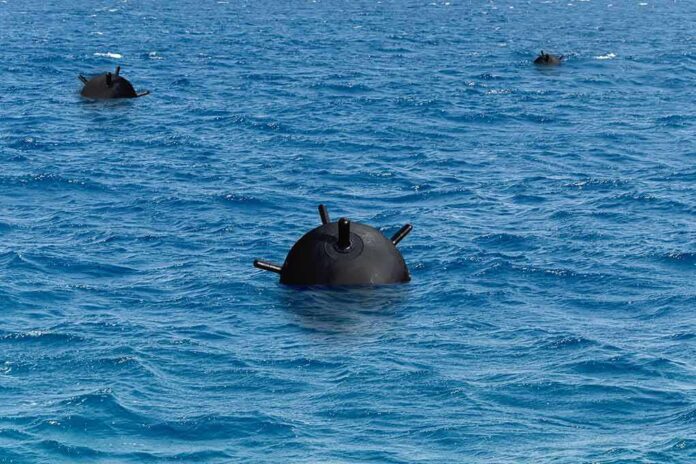
President Trump warned Iran there will be “zero tolerance” for mines in the Strait of Hormuz as U.S. forces moved against alleged mine-laying vessels, pushing global shipping and energy markets into a fresh moment of risk.
Story Snapshot
- Trump set a zero-tolerance line on sea mines and ordered swift removal.
- U.S. Central Command said it destroyed Iranian mine-laying vessels near the strait.
- Iran denied laying mines and asserted control over passage through the waterway.
- Experts say even the threat of mines can raise costs and disrupt oil flows.
What Triggered the Latest Standoff
U.S. Central Command said American forces eliminated 16 Iranian mine-laying vessels near the Strait of Hormuz on March 10. The command framed the action as necessary to protect commercial shipping in a chokepoint that moves about one fifth of global oil. President Trump amplified the warning, saying any mines must be removed at once. These statements formed the clearest U.S. claim of an active mine threat during the current crisis.
Iran pushed back on the U.S. account. Senior Iranian figures denied laying mines and said Tehran manages traffic through the strait. A Reuters report cited an Iranian official claiming the waterway was under Iran’s “management and control.” This line echoed past Iranian messaging on sovereignty in the narrow channel. The competing claims left ship captains, insurers, and energy traders to read risk from actions rather than words.
Why Mines in Hormuz Matter So Much
Strategists say mines are a cheap way to cause outsized disruption in a tight channel. History shows mines can force slow and dangerous clearance efforts. The Stimson Center explains that Iran’s mine threat works by driving up costs, delaying traffic, and daring the United States to commit time and ships to clearance. That pressure can echo in higher oil prices and insurance rates even when physical damage is limited.
Analysts and U.S. historical reviews describe how mines have long shaped naval risk. During the late 1980s, mines damaged vessels in the Persian Gulf and nearly sank a U.S. frigate, prompting a major U.S. response. The pattern is familiar: a few explosive devices in a narrow passage can unsettle markets and test political resolve. That is why official statements on mines move prices as much as patrols do.
How Washington and Tehran Are Framing the Facts
President Trump used public warnings to set bright red lines. He demanded any mines be cleared and signaled that U.S. forces would act to keep shipping open. The U.S. military’s claim of destroying mine-laying vessels matched this stance. The combination aimed to deter more mining and to reassure shippers that the route would stay open to lawful traffic under protection.
⚡️Trump:
All mines have been removed and/or detonated from within the International Waters of the Strait of Hormuz.
Iran has been notified that any ship or boat placing new mines will be immediately and systematically destroyed.
Through Space Force, we are watching every… pic.twitter.com/ybzNbUqOhX
— War Intel (@warintel4u) August 25, 2026
Iran countered by denying mine-laying and stating that it controls the tempo of passage. This message seeks to undercut U.S. claims and project authority at the chokepoint. The result is a narrative duel over who secures the strait. Meanwhile, the real test remains simple and concrete: whether tankers can sail on time, get insured at tolerable rates, and reach buyers without incident.
What It Means for Americans Watching Prices and Power
Energy and shipping costs rise when risk rises, even without a single ship hit. Clearing mines is slow, careful work. Each day of caution can mean higher premiums and delayed cargoes. That hurts family budgets through fuel and goods prices. It also helps the well-connected who trade on volatility. Both right and left see a pattern here: global bottlenecks and security failures tend to reward insiders while regular people shoulder higher costs.
Voters also see a trust gap. Many feel leaders talk tough but deliver confusion at sea and at home. Some blame years of mixed Middle East policy. Others blame great-power drift and mission creep. In this moment, results will speak louder than speeches. If ships move safely and prices cool, the policy worked. If not, the public will view the latest showdown as more evidence that Washington’s promises often miss the mark.
What to Watch Next
Watch for confirmed convoy schedules, insurance rate moves, and independent reports of safe passages. Look for clear proof of mine removal and any new U.S. or allied minesweeper deployments. If Iran continues to deny mining while claiming control, expect more signaling and close calls. The test for both sides is simple: keep trade moving without a spark that widens the war or spikes prices at the pump again.
Sources:
pbs.org, reuters.com, strausscenter.org, nytimes.com