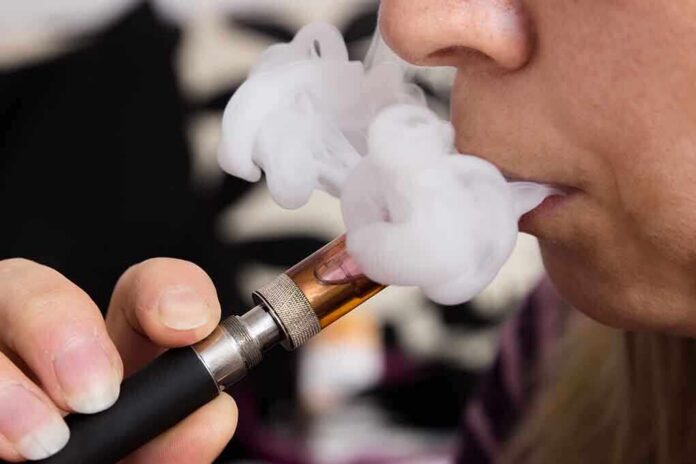
California just voted to outlaw disposable nicotine vapes with built-in batteries, setting up a statewide phaseout tied to fire risks and toxic waste.
Story Snapshot
- Lawmakers passed AB 762 to ban disposable, battery-embedded nicotine vapes, now headed to Governor Newsom
- Manufacture and import end in 2027; sales and distribution end in 2028, if signed
- Supporters cite lithium battery fires at waste sites and worker safety as core reasons
- Opponents warn the ban could fuel illicit sales and undercut lawful retailers
What AB 762 Would Do and When It Would Happen
California’s Assembly Bill 762 targets single‑use nicotine vapes that have batteries built into the device. The bill bans importing or making them for sale in 2027, and bans selling or distributing them in 2028, if Governor Gavin Newsom signs it. The legal text defines covered devices as non‑reusable tobacco‑product vaporizers. The bill does not outlaw vaping in general. It instead pushes makers and sellers toward reusable or refillable hardware models.
The measure creates a long runway so companies and stores can adjust. Lawmakers chose phased dates rather than an instant cutoff. That schedule aims to reduce stock shocks and prevent a rush to dump inventory into the waste stream. Reports on the bill’s progress note debate over exact start dates in earlier drafts, but the current version sets the import and manufacture cutoff at 2027 and the sales cutoff at 2028.
Why Backers Say the Ban Is Needed
Supporters frame AB 762 as a safety and waste fix. Fire agencies and waste operators have warned for years about small lithium batteries starting fires when crushed in garbage trucks or recycling lines. The Assembly’s policy analysis highlights that risk and cites fears about worker injuries and facility shutdowns. Backers argue a narrow product ban is clearer to enforce than disposal education alone and reduces a fast‑growing e‑waste stream at its source.
California is not acting in a vacuum. Policymakers in the United Kingdom and Scotland reviewed similar hazards and moved to restrict disposable vapes. Their assessments said bans could cut the number of lithium batteries tossed into regular trash, which lowers fire risk in trucks and plants. California lawmakers point to those findings as proof that targeting single‑use designs can change the waste mix that facilities face every day.
What Critics Fear Could Go Wrong
Opponents from fuel and convenience groups, distributors, and some cannabis and tobacco interests argue the bill misses the main source of the problem. They say many of the cheapest disposables tied to litter and fires are already illegal under flavor and licensing rules. In their view, banning compliant products on top of that would push buyers to unregulated sellers, cut tax revenue, and hurt lawful stores trying to follow the rules.
The official Assembly analysis echoes those warnings from industry groups. It records claims that the ban would drive consumers to the illicit market, where products face weaker safety checks and age rules. That channel shift, critics say, would undermine health goals and make enforcement even harder. They call for stronger crackdowns on unlicensed sellers and for take‑back programs and disposal education instead of a sales ban.
What This Fight Says About Policy and Power
This debate reflects a wider pattern: when tech pushes new waste and safety risks onto the public, lawmakers often reach for product bans. That moves costs from cities and workers back to manufacturers and importers. Many readers across the political map will see a familiar split. Environmental and labor groups want fewer battery fires and cleaner streams. Retailers and small businesses fear another rule that squeezes legal trade while bad actors skate by.
California lawmakers have passed a ban on disposable nicotine vapes, with the sales prohibition set to take effect in 2028.
The measure would significantly reshape one of the largest U.S. vape markets, pushing retailers and brands away from disposable products and toward other…
— 2FIRSTS (@2FIRSTS) August 28, 2026
For families, the stakes are direct. Fewer fires mean safer workers, fewer service delays, and lower local costs. But if legal options vanish and the black market grows, communities could face more unsafe products and less oversight. Governor Newsom now holds the pen. A signature would start a two‑year shift to reusable vape hardware. A veto would send lawmakers back to ideas like stronger enforcement and battery collection, which critics say should come first.
Sources:
washingtontimes.com, apnews.com, tobaccoinsider.com, cawrecycles.org, ground.news, citizenportal.ai