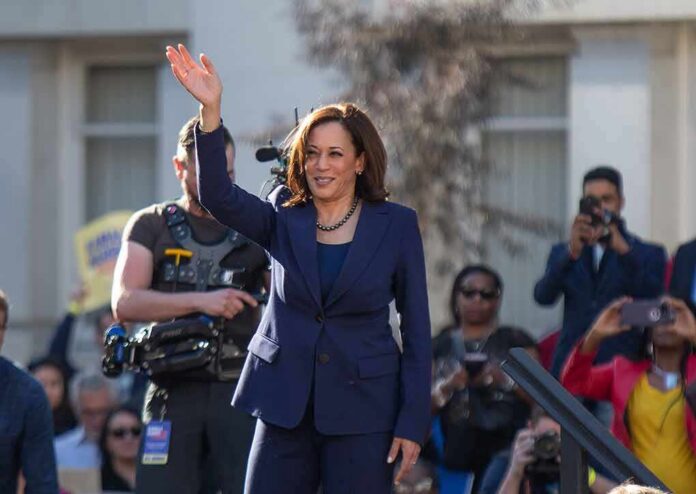
Kamala Harris publicly urged Democrats to “revisit” expanding the Supreme Court to 13 justices and to rethink the Electoral College and statehood for Washington, D.C., and Puerto Rico, escalating a live fight over the rules of American democracy.
Story Highlights
- Harris said the Supreme Court should consider expanding to 13 justices.
- She called for revisiting the Electoral College and granting statehood to Washington, D.C., and Puerto Rico.
- Republican leaders denounced the ideas as partisan power grabs.
- The debate reflects a long cycle of court reform pushes after divisive rulings.
What Harris Proposed and Where She Said It
CNN reported that Harris told an audience the country should consider expanding the Supreme Court to 13 justices. She tied the number to the structure of the federal court system and said the move could restore trust. Her comments fit a pattern of recent speeches and interviews where she urged Democrats to widen the reform “playbook.” She also said the party should revisit the Electoral College and pursue statehood for Washington, D.C., and Puerto Rico, placing multiple institutional changes on the table.
Video clips show Harris urging supporters to brainstorm reforms beyond past limits. She listed court expansion, stronger rules for Supreme Court ethics and testimony, Electoral College changes, multi-member districts, and new states as options to weigh. Her message invited debate rather than outlining a detailed bill, but it marked a clear endorsement of pushing structural reforms when Democrats next have power to act. The broad menu signals a larger fight over how the system should work in coming years.
How Supporters Explain the Case for Reform
Supporters frame court expansion and related steps as repairs to a system they say has lost balance. They argue a bigger court could reduce outsized power of single seats and reflect a growing nation. They also claim an updated Electoral College or national popular vote would better match voter will. Statehood backers say Washington, D.C., and Puerto Rico deserve full representation. These points echo Democratic reform talk that has moved from fringe idea to mainstream discussion in recent years.
Backers point to a string of Court rulings and ethics controversies that, in their view, eroded public trust. They argue Congress has the power to set the Court’s size, which has changed before in American history. They add that other reforms, like judicial term limits and a binding ethics code for justices, have gained bipartisan interest at times. Even so, they concede any change would be hard and would likely face legal and political challenges in the current climate.
How Opponents See the Risks and the Stakes
Opponents call the proposals “court packing” and warn it would shatter norms. They argue adding seats for short-term advantage would start a cycle where each party expands again, destroying judicial independence. They say scrapping or weakening the Electoral College would sideline smaller states and fuel urban dominance. They warn that rapid statehood for Washington, D.C., and Puerto Rico could be a partisan plan to add senators rather than a neutral fix to representation problems.
Republicans also stress timing. They argue these ideas rise after big conservative wins at the Court, which makes the push look like a power move, not neutral reform. They say most Americans want leaders to cut inflation, secure the border, and lower energy costs, not rewrite basic rules. Skeptics across the spectrum fear that fast, one-party changes to guardrails could deepen mistrust and confirm that elites rewrite rules to keep power, leaving citizens with even less voice.
What It Would Take to Enact These Changes
Changing the size of the Supreme Court would require a bill from Congress and the President’s signature. Ending or deeply changing the Electoral College would likely require a constitutional amendment, a high bar that needs broad support across many states. Granting statehood to Washington, D.C., and Puerto Rico would require congressional approval and, for Puerto Rico, a clear vote by its residents. Each step would draw court fights and face years of political struggle.
Why This Debate Resonates Beyond the Parties
Many Americans on the left and right feel the system serves insiders first. They see leaders fight over process while wages lag, bills rise, and trust falls. Harris’s call lands in that mood. To some, it is a chance to fix broken parts. To others, it is a threat to bedrock rules. Either way, the clash shows a country asking who the rules serve and how to restore fairness. That question will shape elections and the courts for years.
Sources:
thegatewaypundit.com, cnn.com, youtube.com, washingtonpost.com, vox.com