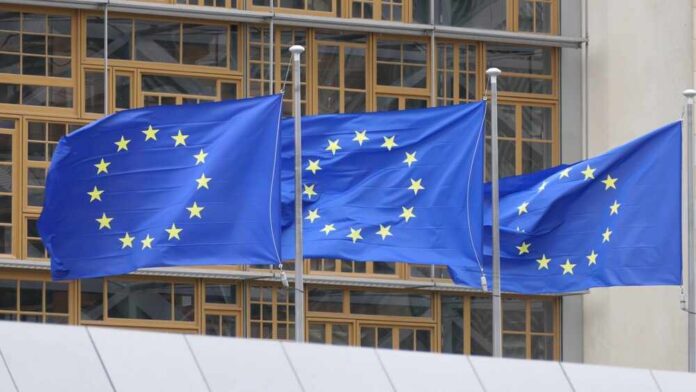
Europe’s highest court ruled that EU sanctions on RT can extend beyond broadcasters to individuals who make sanctioned content available online, a decision that could broaden legal risks for bloggers and website operators.
Story Snapshot
- The European Union’s top court has confirmed that reposting Russia Today (RT) videos can trigger criminal liability, even for non‑profit bloggers.
- Judges gave a very broad meaning to “operator,” covering anyone who makes RT content available online, paid or unpaid.
- The court said the sanctions apply regardless of the specific content carried by RT, reinforcing the broad scope of the existing EU restrictions.
- This ruling fits a wider European trend of turning “disinformation” into illegal content, enforced with fines and jail time.
What Exactly Did Europe’s Top Court Decide?
On July 2, 2026, the Court of Justice of the European Union ruled in a case tied to a German blog that reposted RT Deutsch videos. The case came from a criminal prosecution in Germany against people behind the “Live‑Ticker” site, who shared RT content as an “alternative” news stream. The court said that European Union sanctions against RT do not stop with big TV channels or tech platforms. They also cover individuals who help distribute RT material online, even if they do not earn money.
Under the ruling, the key word is “operator.” European Union sanctions from 2022 already ban “operators” from broadcasting or helping to broadcast RT and Sputnik content in the Union. The judges said “operator” includes any person who directly or indirectly makes banned content available, including owners and administrators of public websites. One legal analysis notes that the commercial character of what they do “is irrelevant,” so even volunteer‑run sites and donation‑funded blogs can fall under the ban.
A Blanket Ban That Reaches Ordinary Users
The court confirmed that the ban applies to “all materials regardless of their content, duration, or format,” and that neither the scale of distribution nor how long a video is online changes that. In practice, that means it does not matter whether a clip is hard‑core war propaganda or a short sports highlight. If it comes from RT, sharing it can be treated as helping to broadcast a sanctioned channel. Even “a single act of sharing,” one legal commentary on the case explains, may be enough to reach a wide audience and count as broadcasting.
This interpretation closes what many thought was a loophole for non‑profit or “mirror” sites. For years, activists and bloggers in Europe used small websites to repost state media streams, claiming they were just passing along links or archiving videos. Now the top court says those people can be treated like operators too. The ruling does not spell out exact prison terms or fines; those penalties will depend on each country’s criminal law. The ruling leaves enforcement to member states, whose criminal penalties vary under national law.
Free Speech Concerns and the Growing “Disinformation” Regime
Supporters of the ruling argue that it is needed to stop Russian propaganda during wartime and to protect public order and safety. They point to research showing that RT and similar outlets played a big role in pushing pro‑Russian messages across Europe before and after the 2022 invasion of Ukraine. At the policy level, this decision lines up with a broader European effort to fight “disinformation.” Reports from European research networks show that many member states now treat disinformation not just as harmful speech, but as illegal content under criminal law.
Critics, including human rights lawyers and free speech groups, worry about the other side of that trend. Under Europe’s Digital Services Act, platforms must remove “illegal content” flagged by governments or “trusted flaggers,” which can include material labeled as fake news or disinformation. Scholars warn this will push platforms to take down huge amounts of political speech, parody, and criticism of leaders in order to avoid fines. When you combine that pressure with a blanket ban on all RT content, even neutral reporting, they say the result looks less like targeted security measures and more like broad censorship.
Where the Ruling Leaves Ordinary Bloggers and Small Sites
For everyday Europeans who run blogs, forums, or small video channels, the key risk is the court’s very wide reading of “operator.” A person who embeds RT clips, hosts RT files, or possibly even runs a site dedicated to linking RT streams can be treated as helping to broadcast a sanctioned outlet. The judgment did not draw a clear line between posting a full video and simply sharing a link, even though older European Union cases suggested that hyperlinking might be less risky. That lack of clarity may lead platforms and prosecutors to err on the side of over‑enforcement.
Several commentators warn that this kind of rule hits small players hardest. Big media companies and tech giants can hire lawyers and compliance teams to navigate the sanctions framework. Solo bloggers and small alternative news sites usually cannot. When they face the same criminal rules as major broadcasters, many will simply avoid from controversial topics or foreign sources. The result is fewer independent voices and more control in the hands of large, well‑connected media and political elites—exactly the kind of “deep state” dynamic that frustrates people on both the left and the right.
A Warning Signal for Americans Watching Europe
Americans on both sides of the aisle often criticize Europe’s heavy‑handed approach to speech online. Technology writers have already described recent European Union court decisions as making it “effectively impossible” to run user‑generated content sites without breaking some rule. Unlike the United States’ broad protections for platforms under Section 230, Europe is moving toward a model where hosts and small publishers are expected to police speech aggressively or face legal risk.
Reposting an RT video as a middle finger to the EU Court of (In)Justice.
Those with woke pervert values in Europe, see Macron, Starmer for instance, can't handle the truth. https://t.co/YprUgAVuGt— steve mcmaster ⏳ (@mcmastersteve) July 5, 2026
For conservatives, this feeds fears about “woke” governments using censorship tools to crush dissent and control narratives. For liberals, it highlights how powerful states and corporations can shut out anti‑war voices, minority views, and criticism of elites. In Russia, people have gone to prison for simple anti‑government reposts. Now Europe says some reposts can be criminal too—only this time, the target is foreign propaganda. The ruling is likely to fuel continuing debate over where governments should draw the line between countering foreign propaganda and protecting freedom of expression.
Sources:
reason.com, x.com, ua.news, mezha.net, united24media.com, reddit.com, provideocoalition.com, lawscot.org.uk, europeanpapers.eu, cjil.uchicago.edu, policyreview.info