California Democrats just proved how fast “inclusion” rhetoric can turn into a political pressure weapon that shuts down a debate voters were promised.
Quick Take
- USC canceled a televised California gubernatorial debate less than 24 hours before airtime after Democratic leaders and excluded candidates demanded changes to the invite list.
- USC’s selection method relied on polling and fundraising viability thresholds designed by USC professor Christian Grose and defended as objective by supportive political scientists.
- State Assembly Speaker Robert Rivas and Senate President pro Tem Monique Limón urged voters to boycott unless additional candidates were included, escalating public pressure on a private university.
- With the USC event scrapped, Tom Steyer moved to stage an alternative forum inviting all candidates, while Republican Steve Hilton called for federal funding consequences.
A last-minute cancellation driven by political pressure
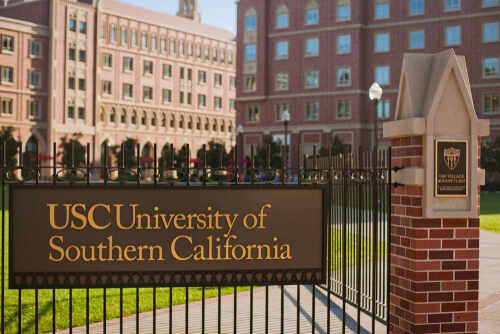
USC’s Dornsife Center for the Political Future pulled the plug on its planned Tuesday (March 24, 2026) California gubernatorial debate late Monday night, after a public backlash from Democratic officials and candidates who were not invited. USC President Carol Kim emailed organizers around 10:30 p.m. announcing the cancellation. USC said the controversy had become a “significant distraction,” and talks with co-sponsor KABC-TV to expand the field did not succeed.
The core dispute centered on the invite criteria: a data-driven formula using polling and fundraising to determine “viability,” a common approach for debates that have limited stage space. The outcome ignited the political firestorm because the invited Democratic lineup was described as entirely white, while four prominent Democrats of color were excluded. Those excluded candidates called for a boycott, and the boycott message quickly gained force once top Democratic legislative leaders joined in.
How USC’s “objective criteria” became a racialized fight
USC’s organizers leaned on the work of professor Christian Grose, whose model was presented as independent and grounded in research. Supporters of the approach argued that viability thresholds are customary and help ensure debates remain useful to voters rather than becoming sprawling forums. Political scientists publicly defended Grose, warning that attacks on the methodology resembled character-based smears more than substantive critique. Grose declined to comment in at least one report.
Democratic leaders framed the exclusion problem as discrimination, arguing voters should be able to evaluate all candidates fairly and that debate access should not be shaped by a formula that produced a stark racial imbalance. Assembly Speaker Robert Rivas and Senate President pro Tem Monique Limón escalated the dispute with a letter urging voters to boycott the event unless the inclusion criteria changed. That kind of pressure—directed at a supposedly nonpartisan university forum—helped turn a scheduling dispute into a cancellation.
What this means for debate rules, media partners, and voter trust
The immediate impact is straightforward: California voters lost a major televised event that was supposed to be broadcast statewide on ABC stations, narrowing access to side-by-side comparisons. The broader impact is more concerning for anyone who wants transparent rules that are applied consistently. If objective thresholds can be overridden by political threats, future debate hosts may avoid clear criteria altogether, or quietly alter them under pressure—leaving campaigns and voters guessing about the real rules.
The scramble for alternatives—and the threat of federal leverage
Within hours of the cancellation, campaigns began improvising. Tom Steyer announced plans for a do-it-yourself forum in downtown Los Angeles and said he would invite all candidates, while San Jose Mayor Matt Mahan confirmed participation and coordination aimed at inclusivity. On the Republican side, candidate Steve Hilton criticized USC sharply and called for federal funding to be suspended—an escalation that highlights how quickly a debate-stage dispute can spill into institutional punishment fights.
California Dems unleashed pressure campaign against USC prior to debate cancellation https://t.co/LFMJgp2RuU
— ConservativeLibrarian (@ConserLibrarian) March 25, 2026
Key details remain limited in public reporting, including which specific excluded candidates drove the boycott push and what exact criteria changes would have satisfied the lawmakers’ demands. Still, the available timeline is clear: a formula-based invitation list triggered a race-focused backlash; legislative leaders amplified that backlash into a boycott threat; and USC canceled rather than host a contentious event. For voters who want institutions to resist political coercion, the episode raises hard questions about who really gets to set the terms of public political forums.
Sources:
https://www.foxla.com/news/california-gubernatorial-debate-usc-canceled-heres-why