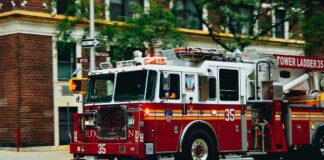
A Canadian flight attendant survived being ejected over 100 meters from an Air Canada Express plane during a fatal LaGuardia Airport crash that killed both pilots, raising serious questions about runway safety protocols and emergency vehicle operations at one of America’s busiest airports.
Story Snapshot
- Solange Tremblay ejected over 100 meters while strapped to her seat during LaGuardia crash on March 22, 2026
- Both pilots killed instantly when fire truck collision tore apart cockpit during landing attempt
- Air traffic controllers issued urgent “Stop Stop Stop” warnings before impact with emergency vehicle on runway
- Tremblay hospitalized with multiple leg fractures requiring surgery, described survival as miraculous by family
Fatal Collision Claims Pilots’ Lives
Air Canada Express Flight collided with a fire truck at New York’s LaGuardia Airport on Sunday, March 22, 2026, killing both pilots when the impact tore apart the aircraft’s cockpit. Lead flight attendant Solange Tremblay was positioned near the pilots’ cabin when the collision occurred during the plane’s landing approach. Air traffic controllers issued urgent warnings to stop before the crash, but the aircraft struck the emergency vehicle positioned on the runway. The black box was recovered Monday for investigation into how the fire truck ended up in the plane’s path.
Miraculous Ejection Survival Defies Logic
Tremblay was thrown more than 100 meters from the wreckage while still strapped to her seat, landing alive on the LaGuardia tarmac despite the catastrophic forces involved. Her daughter Sarah Lepine told TVA Nouvelles the survival was “nothing short of a miracle” and credited a “guardian angel” with protecting her mother. Tremblay remained conscious and spoke with her daughter Monday from the hospital, recounting the ejection details while awaiting surgery for multiple leg fractures. The physics of surviving such an ejection while seat-belted challenges conventional aviation safety expectations and will likely prompt analysis of crew restraint systems.
Runway Safety Failures Demand Accountability
LaGuardia Airport has a documented history of runway incidents, including a 2015 Delta crash and prior emergency vehicle collisions, yet another preventable disaster occurred under the watch of airport authorities and the FAA. The presence of a fire truck on an active runway during landing operations represents a fundamental breakdown in safety protocols that cost two pilots their lives. Air traffic controllers attempted to avert catastrophe with stop warnings, but the systemic failure that placed the vehicle in harm’s way demands immediate investigation and accountability. American taxpayers fund these airports and regulatory agencies, yet continue witnessing failures that put crews and passengers at risk through apparent negligence or incompetence.
Investigation Focuses on Human Error
Federal investigators will analyze the recovered black box to determine why the fire truck occupied the runway and whether human error by airport operations staff, emergency responders, or air traffic control contributed to the fatal collision. The “Stop Stop Stop” warnings captured in communications suggest controllers recognized the danger but could not prevent impact, pointing to potential failures in ground vehicle coordination systems. Air Canada Express faces scrutiny over crew safety protocols, though preliminary accounts suggest Tremblay’s proximity to the destroyed cockpit should have been fatal. The investigation’s findings will determine whether criminal negligence charges or regulatory enforcement actions follow against responsible parties at LaGuardia or within the airport’s fire department.
Regional Aviation Safety Under Microscope
The crash spotlights vulnerabilities in regional jet operations at congested airports like LaGuardia, where tight runway spacing and heavy emergency vehicle traffic create collision risks. Aviation safety experts will likely examine whether Tremblay’s seat restraint design contributed to her survival and whether similar ejection scenarios offer data for improving crew protection standards. The incident may prompt reforms to emergency vehicle runway incursion protocols nationwide, though bureaucratic resistance to change often delays common-sense safety improvements until multiple disasters force action. Families of the deceased pilots deserve answers about why basic runway safety measures failed, and travelers deserve assurance that airports prioritize operational discipline over complacency.
Sources:
Air Canada crew member survives ejection in crash ‘miracle’ – NDTV Profit
Daughter says flight attendant ejected in crash survives with broken leg – VINnews