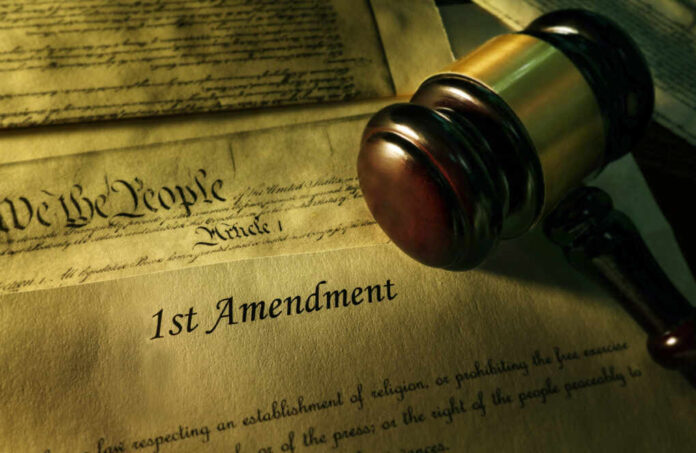
A fierce debate over free speech and government overreach has been ignited by a tech CEO’s controversial call to limit First Amendment rights. Shlomo Kramer, co-founder of Cato Networks, suggested that the U.S. government should more actively control social media to combat AI-driven misinformation, even proposing a restriction on constitutional protections to defend democracy against cyber threats. The proposal has drawn swift and strong criticism from conservative figures who view it as a direct assault on foundational American freedoms.
Story Highlights
- Shlomo Kramer, a tech CEO, suggests limiting First Amendment rights to combat AI misinformation.
- Conservatives express alarm, viewing this as an attack on free speech and constitutional rights.
- The debate highlights tensions between security and freedom in the AI age.
- Kramer’s comments have sparked widespread backlash on social media platforms.
Tech CEO’s Controversial Proposal
Shlomo Kramer, co-founder of Cato Networks, recently suggested that the U.S. government should take a more active role in controlling social media platforms to combat AI-driven misinformation. His proposal includes ranking users’ authenticity and limiting First Amendment protections as a means to defend democracy against cyber threats. This has sparked a significant backlash from conservative circles, who view it as a direct assault on free speech.
Kramer argues that the rapid advancement of AI technologies has created a new battlefield for cyber warfare, giving authoritarian regimes like China a significant advantage over democracies. He claims that without regulating online speech, democracies are at a disadvantage in protecting national security. However, many conservatives see this as a slippery slope toward censorship and government overreach.
⚡️🇺🇸🇮🇱JUST IN:
Israeli billionaire Shlomo Kramer says America needs to limit its First Amendment to prevent antisemitism and adds that he wants to weaponize AI to do so.pic.twitter.com/u6YbrB0DY5
— Suppressed News. (@SuppressedNws1) January 2, 2026
Reactions from Conservatives
Conservative figures have been quick to criticize Kramer’s proposal. Utah Senator Mike Lee, Representative Marjorie Taylor Greene, and former Representative Matt Gaetz are among those who have voiced their opposition. They argue that any attempt to limit the First Amendment is an affront to the foundational principles of American democracy.
The backlash has been particularly strong on social media. Many conservatives have taken to platforms like X to express their concerns about what they perceive as an authoritarian approach to free speech. Critics warn that Kramer’s suggestions could set a dangerous precedent, undermining the very freedoms that the U.S. Constitution seeks to protect.
Implications for Free Speech and Security
The ongoing debate underscores the complex relationship between national security and individual freedoms in the digital age. While some acknowledge the need to address AI-driven threats, they caution against sacrificing fundamental rights in the process. The conversation also raises questions about the role of tech leaders and government in managing online discourse.
Kramer’s comments have not yet led to any policy changes, but they continue to fuel discussions about the balance between security and liberty. Whether or not his ideas gain traction, they highlight the ongoing challenges that democracies face in adapting to new technological threats.
Watch the report: Israeli tech CEO calls to ‘limit the First Amendment’ to prevent spread of ‘lies’ on social media
Sources:
- Israeli tech CEO calls on US govt to ‘limit’ First Amendment,’ take control of social media to prevent ‘lies’
- Conservatives push back on Israeli billionaire calling for limitations on First Amendment
- Cybersecurity CEO Urges Limiting First Amendment to Fight AI Threats