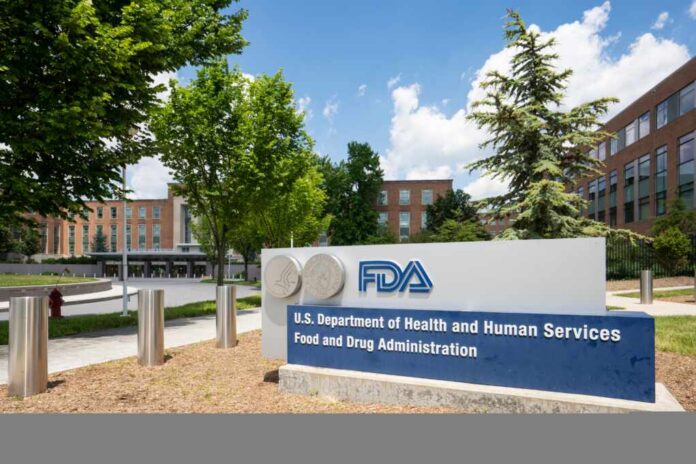
The FDA has officially dismantled a decades-old safety standard that required two clinical trials before approving new drugs, replacing it with a single study as the default—a radical departure that raises serious questions about patient safety and Big Pharma’s influence over the regulatory process.
Story Highlights
- FDA Commissioner Marty Makary eliminated the two-study requirement established in the 1960s, replacing it with single-trial approval as the new standard
- Drug companies can now rely on mechanistic data, animal models, or related findings instead of a second confirmatory human trial
- The policy shift sparked internal controversy, with at least one high-ranking FDA official departing over the change
- Critics worry this erosion of safety standards prioritizes pharmaceutical profits over rigorous patient protection
FDA Abandons Six-Decade Safety Standard
FDA Commissioner Marty Makary and Vaccine Chief Vinay Prasad announced the agency will no longer require two pivotal clinical trials for new drug approvals. The two-study requirement originated in the early 1960s following the thalidomide tragedy, when Congress mandated “adequate and well-controlled investigations” to ensure drugs were safe and effective. For over sixty years, the FDA interpreted this as requiring two independent studies—a safeguard designed to prevent statistical flukes from reaching patients. That protection is now gone.
Single Trial Becomes New Default Across All Drug Categories
Unlike existing expedited pathways such as Accelerated Approval or Fast-Track designation—which apply only to drugs treating serious conditions with unmet medical needs—this policy makes single-trial approval the default standard across all drug categories. Pharmaceutical companies need only submit one adequate clinical trial supplemented by “confirmatory evidence” such as mechanistic data, findings from related indications, or animal models. This represents a fundamental shift in the FDA’s risk-management philosophy, moving regulatory burden away from rigorous human trials toward theoretical biological plausibility and laboratory data.
Decades-Long Erosion of Approval Standards
This policy change formalizes a trend that has been underway for decades. Research published in peer-reviewed literature shows the proportion of new drug approvals supported by at least two pivotal trials fell from 80.6% between 1995-1997 to just 52.8% between 2015-2017. By 2018, 81% of new drugs benefited from at least one expedited program, indicating the FDA has been steadily accepting less data and shorter review times. The 1993 Prescription Drug User Fee Act allowed pharmaceutical companies to pay user fees directly to the FDA, creating a concerning financial relationship between the regulated industry and its regulator.
Winners and Losers in Regulatory Rollback
Pharmaceutical companies are the clear winners, benefiting from reduced development costs and faster time-to-market for products with less rigorous testing. The FDA leadership justifies the change by citing advances in biology, trial methodology, and statistical science. However, the policy sparked enough internal disagreement that at least one high-ranking agency official resigned. Patients face a troubling trade-off: faster access to potentially life-saving treatments versus reduced pre-approval safety confirmation. Healthcare providers must now prescribe medications with potentially less extensive safety data, shifting the burden of risk identification to post-market surveillance and real-world evidence gathered after drugs are already in widespread use.
Conservative Concerns About Government Capture
This regulatory rollback exemplifies a troubling pattern of government agencies prioritizing industry convenience over public protection. While conservatives support reducing unnecessary bureaucracy and accelerating innovation, eliminating fundamental safety standards crosses a critical line. The decades-old two-study requirement existed precisely because single trials can produce misleading results—a reality that doesn’t change simply because pharmaceutical companies want faster approvals. When user fees from the very industry being regulated fund the agency, and when safety standards are systematically weakened, Americans have every reason to question whether the FDA serves patients or profits. True regulatory reform should eliminate red tape without compromising the scientific rigor that protects families from dangerous products.
Commissioner Makary arrived at the FDA in April 2025 and immediately introduced multiple initiatives aimed at reducing review times. This policy represents one of his most significant regulatory changes, establishing a new baseline that may influence international regulatory bodies. The shift places greater emphasis on biomarker development and surrogate endpoints, potentially changing how clinical research organizations design trials and what types of evidence drug sponsors prioritize. The long-term consequences for patient safety remain unclear and will depend heavily on the effectiveness of post-market surveillance systems that were never designed to serve as primary safety gatekeepers.
Sources:
FDA Removes Two-Study Requirement for New Drug Approval Process
It’s Official: FDA Will Now Default to One Clinical Trial for Drug Applications
Experts React to FDA’s Shift to Single Pivotal Trial
Understanding the History and Use of the Accelerated Approval Pathway
Trends in the Number and Design of Clinical Studies Forming the Basis of Drug Approvals
Promoting Safe and Effective Drugs for 100 Years