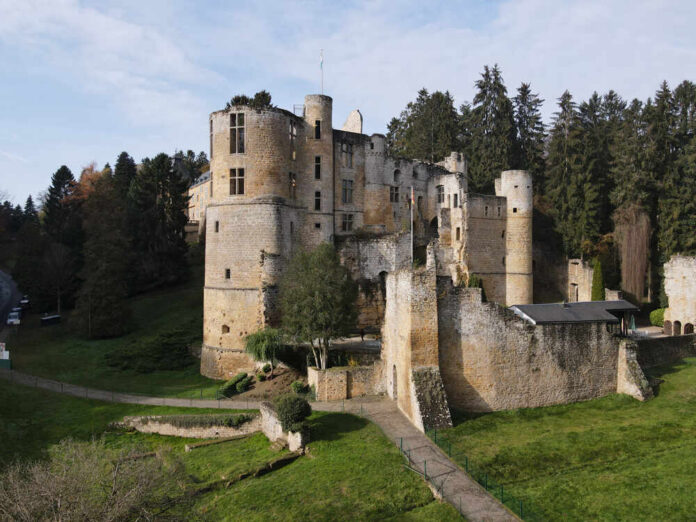
When a 900‑year‑old fortress with United Nations cultural protection becomes a battlefield again, it confirms what many Americans already fear: the people running wars and governments are treating history, civilians, and the truth itself as expendable assets.
Story Snapshot
- Israel says its latest strikes in the Beaufort Castle area hit underground Hezbollah military infrastructure, not a historic monument.
- Lebanese and international reports accuse Israel of bombing or endangering a nearly millennium‑old, United Nations‑protected crusader castle in southern Lebanon.
- The clash highlights a deeper problem: powerful states and armed groups using civilian areas and cultural heritage sites as shields, targets, or propaganda tools.
- Conflicting accounts and limited access on the ground make it nearly impossible for ordinary citizens to know whose narrative to trust.
Beaufort Castle: A Battlefield Sitting On Top Of World Heritage
Beaufort Castle in southern Lebanon is a roughly 900‑year‑old crusader fortress that dominates the landscape above the village of Arnoun and the nearby Israeli border. United Nations Educational, Scientific and Cultural Organization (UNESCO) has described it as one of the best‑preserved medieval castles in the region and granted it enhanced cultural protection in 2024, recognizing its global historical value. That status should, in theory, put extra legal and moral weight on any decision to use force in or around the site.
Despite its beauty and symbolism, Beaufort Castle has spent decades as a military asset in the crosshairs of regional conflict.[3] During Lebanon’s civil war and the years that followed, armed groups including the Palestine Liberation Organization used the castle as a base to fire rockets into Israel, prompting repeated Israeli attacks. Israeli forces captured the castle in the 1982 Lebanon war after heavy bombardment and held it as a strategic outpost overlooking southern Lebanon for years.[3] This long history helps explain why the site is again at the center of today’s fighting.
Israel’s Stated Case: Underground Hezbollah Hub, Not A Museum Piece
The Israeli military says the latest strike was not about destroying a monument, but about neutralizing an active Hezbollah position embedded in the Beaufort area.[1] Israeli officials described the target as “a hub for managing the fire and defense area” for Hezbollah and part of an underground complex the air force had hit earlier in the conflict.[1] According to that account, Hezbollah tried to restore the site, prompting new strikes on what Israel calls “terrorist infrastructure” rather than on the castle itself.[1] For Israelis living under rocket threat, this framing fits a familiar pattern of preemptive defense.
Independent analysts who generally support a strong security posture note that Beaufort’s ridge offers commanding views toward Israel, making any fortified Hezbollah node there a serious concern. Israel and its backers argue that under the laws of war, if a protected site is turned into an active military position—especially one coordinating cross‑border fire—it can lose its immunity as a purely cultural object. From that perspective, failing to strike a rebuilt Hezbollah hub could be seen as neglecting the state’s duty to protect its own civilians, even if the site sits beside a historic fortress.
Counter‑Claim: A Protected Castle Under Fire And Civilians In The Crosshairs
Lebanese sources and several international outlets tell a different story, emphasizing damage to or near the castle and the human cost in surrounding communities.[2] Reports describe Israeli strikes hitting the Beaufort Castle vicinity and nearby Arnoun amid some of the fiercest bombardment of southern Lebanon in years, with dozens of people killed and many more wounded.[2] One outlet reports that the 900‑year‑old fortress itself was hit by Israeli fire, raising alarms that a site supposedly under enhanced United Nations protection is again being scarred by war. These accounts resonate with global concerns that ancient heritage is increasingly collateral damage in modern conflicts.
International humanitarian law puts a special duty on all parties to avoid targeting cultural heritage and to take extra precautions when fighting near such sites, especially when civilians live close by. Critics of Israel’s campaign argue that even if Hezbollah operates in the broader area, using heavy air power around a known historic monument and populated villages risks breaching those obligations. Lebanese commentators also point to the castle’s symbolic role in national identity, framing its damage as another example of outside powers trampling local history in pursuit of military advantage, with ordinary people paying the price.
Fog Of War, Hidden Tunnels, And Why Ordinary Citizens Feel Played
The clash over Beaufort Castle fits a wider pattern along the Israel–Lebanon border: Israel insists it is striking underground Hezbollah infrastructure, weapons depots, and command centers, while local and heritage voices highlight civilian deaths and damage near villages, churches, and ancient sites.[1] Claims about tunnels, buried bunkers, and secret complexes are difficult for outsiders to verify quickly, because meaningful evidence is often classified or requires independent forensic inspections on the ground that may not happen until long after the bombing stops.[1] That opacity feeds public suspicion that each side is shaping the narrative to protect its own power rather than to tell citizens the full truth.
#c4news Israel just blew up UNESCO protected 12th century Beaufort Castle in Lebanon. https://t.co/FQ1FScHBQO
— Jacks 🍉 (@danny28748565) May 28, 2026
For Americans watching from afar, the Beaufort story taps into frustrations that cut across party lines: leaders invoke security or resistance while fighting over territory, but they rarely safeguard culture, civilians, or honesty with the same intensity. Conservatives who distrust international institutions see a United Nations “protected” site apparently offering little real protection, while liberals who worry about militarism see yet another historic landmark caught between bombs and rockets. Both camps can recognize a deeper problem: decisions about war, peace, and heritage are being made by political and military elites with limited transparency, while the rest of us are left trying to piece together reality from competing spin and grainy videos.
Sources:
[1] Web – Israel bombs ancient sites as it pushes deeper into southern …
[2] YouTube – Israel Strikes Hezbollah Target in Southern Lebanon | Dawn News
[3] Web – Lebanon’s Crusader-era Beaufort Castle is consumed by conflict …