As ships stack up at the mouth of the Strait of Hormuz and crews wait without pay, Washington’s scramble for a United Nations-backed plan underscores how fragile global trade becomes when a single chokepoint falters.
Story Snapshot
- U.S. Secretary of State Marco Rubio urged a global response, warning Iran’s toll-or-close tactics threaten worldwide commerce [1].
- Rubio said the United States is trying to build consensus through the United Nations to keep the waterway open [1].
- Reports describe allied hesitation to deploy warships, exposing limits of collective security in a crisis [2].
- Analysts and officials flagged energy-market risks, but public data quantifying prolonged damage remains thin [3].
Rubio’s Warning And The Push For A Multilateral Fix
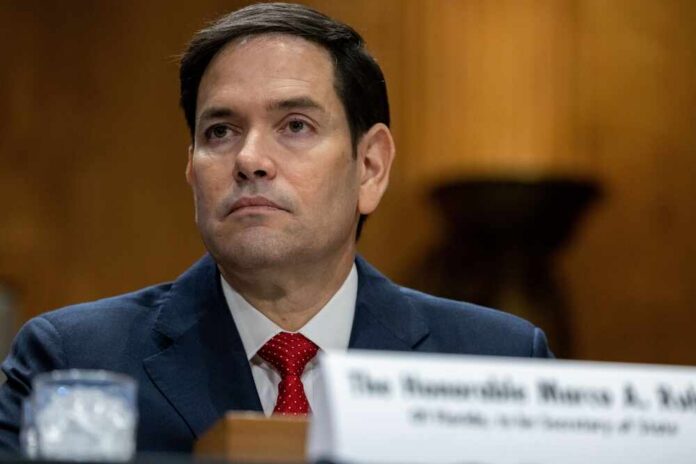
U.S. Secretary of State Marco Rubio told counterparts that freedom of navigation in the Strait of Hormuz is being “basically trampled upon,” asserting Iran is trying to impose a tolling regime that could spread to other waterways if not checked [1]. Rubio argued the strait is “vital and critical” to countries far beyond the room, especially in the Indo-Pacific, and said the United States is working to build a global consensus through the United Nations to prevent disruption and reopen flows [1].
Rubio framed the stakes as broader than a regional quarrel, linking maritime access to global markets and fuel security [3]. He urged support from Group of Seven partners, arguing many economies depend on energy passing through the strait and that reopening lanes is in their national interest [3]. His emphasis on coalition action tracks with his prior Senate stance that presidents should not unilaterally withdraw from the North Atlantic Treaty Organization, reflecting his view that alliances are central in major crises [2].
Allied Reluctance And Strains On Collective Security
Secondary reporting described reluctance among some European governments to send naval assets to protect tankers, a hesitation that reportedly frustrated President Trump and fueled doubts about the alliance’s resolve [2]. Coverage of ministerial discussions cited planning for a United Kingdom-led maritime effort with Dutch mine hunters, frigates, and radar support, signaling that allies considered concrete protection measures even as political caution persisted [3]. These cross-currents suggest coordination challenges when risk is high and legal authorities are contested.
Rubio’s public statements highlighted possible mechanisms of disruption—tolling, harassment, or closure [1]. Early government messaging can deter escalation, yet incomplete evidence clouds the picture for shippers, insurers, and refiners deciding whether to sail, reprice, or pause. The resulting uncertainty leaves crews stuck at anchorage while charterers weigh legal exposure and security guarantees that remain under negotiation [1].
Economic Stakes, Evidence Gaps, And What To Watch
Energy-security experts often treat the strait as a top-tier chokepoint, and policymakers warn that even a “soft closure” through intimidation or insurance costs can ripple into prices and supply chains. Rubio’s remarks reinforced that logic by tying navigation to global fuel markets [3]. However, the current public record relies heavily on official warnings and clipped media segments rather than published data sets on transit rates, cargo delays, or price pass-through, limiting visibility into the scale and duration of harm so far [1].
secretary of State Marco Rubio said NATO allies are beginning to consider worst-case options if Iran refuses to reopen the Strait of Hormuz, while stressing that Washington still wants a deal that keeps the waterway open and ends Tehran’s nuclear ambitions.#middleeast #iran pic.twitter.com/yFgRyDwf30
— M World (@themworldnews) May 23, 2026
First, watch whether a specific United Nations pathway emerges and whether maritime insurers reduce war-risk premiums in response, which would greenlight transits [1]. Second, track whether a credible escort coalition formally deploys with mine countermeasures and rules of engagement, as reported in planning discussions [3]. Third, look for transparent shipping and refinery data, which are still sparse, to establish whether this disruption is temporary or compounding [1].
Sources:
[1] YouTube – Marco Rubio Warns NATO Must Benefit All Allies, Calls Iran Strait of …
[2] Web – Marco Rubio’s Old Warning Resurfaces as Trump Questions Alliance
[3] YouTube – Need A Plan B If Iran Won’t Open The Strait Of Hormuz