When one government claims the power to charge “tolls” on a vital international waterway, it tests who really runs the global system — elected leaders or unaccountable elites and regional power players.
Story Snapshot
- Marco Rubio says Iran’s planned Strait of Hormuz tolls are illegal and would spread “like a contagion” to other key shipping lanes.
- Iran insists it can charge “service fees,” exploiting legal gray areas and its control of local waters.
- The fight is about more than ships; it is about who controls global trade and who pays higher prices when the system breaks.
- Both left and right see the danger of distant power brokers making life more expensive while governments argue instead of fixing the problem.
Rubio’s Warning: Tolls As A Global ‘Contagion’
US Secretary of State Marco Rubio is using stark language to warn that Iran’s move to toll ships in the Strait of Hormuz could rewrite the rules of global trade. Speaking to Gulf Cooperation Council ministers in Bahrain, he said that if the world accepts one country charging money to use an international waterway, that idea will “spread throughout the world like a contagion.”[2] Rubio argued that international waterways “do not belong to any nation state,” and that turning them into toll roads would risk “total chaos” for global shipping.[1]
Rubio’s message is aimed at more than Iran. He told Gulf allies he saw “zero support” anywhere on the planet for tolls or fees on the Strait of Hormuz.[2] In his view, once one government starts charging for simple passage, others will follow with their own tolls on chokepoints like Malacca or key canals, driving up costs for energy and consumer goods worldwide.[2] For Americans already frustrated with inflation, energy prices, and endless foreign entanglements, the idea of new, foreign-imposed tolls feels like one more lever elites can pull to raise prices while everyday workers are told to just “adjust.”
What International Law Says About Tolls And Fees
Maritime law experts point to the United Nations Convention on the Law of the Sea, which sets rules for straits used for international navigation.[1] Under that framework, ships enjoy a right of “transit passage” that cannot be blocked or burdened with simple tolls for crossing.[15] One expert explains that “no charge may be levied upon foreign ships by reason only of their passage,” and that a toll for mere transit or based on nationality would be incompatible with the treaty system.[1] States can charge for specific services like pilotage or port help, but not for just sailing through a narrow choke point.[1]
Iran pushes back by stressing that it has not ratified the Law of the Sea treaty and instead claims to apply an older “innocent passage” regime that it says comes from customary law.[11] Under that view, ships may pass as long as they do not threaten Iran’s security, and Tehran argues it can set conditions tied to safety or the environment.[11] This legal dispute matters because many Americans, on both left and right, already feel global rules are written and bent by elites. When a treaty meant to keep trade free turns into a courtroom fight over what counts as a toll, it reinforces the sense that powerful actors can twist “international law” whenever it suits them.
Iran’s ‘Fees’ Strategy And The Semantics Game
Iranian officials now say they do not plan to impose “tolls” but will introduce “fees for services rendered” to ships passing through Hormuz.[3] A foreign ministry spokesperson told reporters that “charging a toll is illegal under international law, but some fees are allowed for services,” while offering few details about what services would actually be provided.[3] Officials have floated ideas like environmental fees, but have not clearly described how these differ in practice from a toll that ships must pay simply to transit the strait.[3] Rubio and many experts call this a “game of semantics,” warning that relabeling tolls as fees does not change the core problem.[3]
Rubio argues that neither Iran nor any other country has the right to charge for “the use of international waterways,” no matter what they name the charge.[3] Industry insiders warn that even if such fees are legally shaky, shipping companies may still pay because of insurance pressures and security risks, baking the costs into freight rates that ultimately hit consumers.[7] For Americans already upset by rising costs and feeling that distant governments and financial interests quietly change the rules, this looks like another example where ordinary families pay more while powerful players argue over language in conference halls.
Why Hormuz Matters For Energy, Trade, And Ordinary Americans
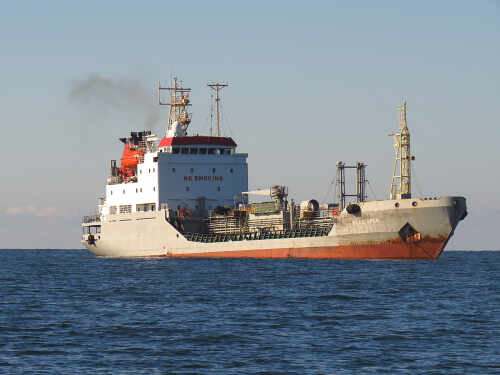
The Strait of Hormuz is one of the most critical energy arteries in the world, with a large share of global oil and gas passing through its narrow channel.[14] Any new tolls or fees at this choke point could quickly raise shipping and insurance costs, feeding into higher fuel prices and more expensive goods back home. Recent reporting notes that Iran has created new authorities to oversee “safe passage permits” and is discussing fee systems with Oman, raising fears of a more formal paywall on the strait.[3] Rubio calls such a system “illegal, unacceptable, and dangerous,” and urges a global plan to confront it.[9]
NOW: Sec. Marco Rubio just told Iran they will NEVER be allowed to charge fees for the Strait of Hormuz, and the Gulf allies will make sure of it
"The President's already said it. That's not going to happen. When we mean open the Straits, we mean open the Straits free in… pic.twitter.com/MXc81crXxL
— Sergeant News Network (@sgtnewsnetwork) June 24, 2026
For conservatives, the dispute taps long-standing anger over globalism, weak borders, and energy policies that already make it harder for working Americans to afford basic needs. For liberals, it highlights yet another move that could deepen inequality, as higher transport costs hit the poor hardest while wealthy players hedge and profit from market swings. Both sides see the same pattern: powerful governments and institutions fight over control and cash streams, while the federal government seems more focused on diplomatic theater than protecting citizens’ access to affordable energy and fair trade rules.
Power, Precedent, And The Deep State Fear
This clash over Hormuz tolls is not just a legal argument; it is a test of who sets the rules of the global economy. If Iran can monetize a vital strait over US objections, other regional powers may try similar tactics, slowly turning “freedom of navigation” into “pay if you want to move your goods.”[2] The International Maritime Organization has already warned that no country can obstruct shipping or levy transit tolls in Hormuz, saying such a move would set a damaging precedent for global trade.[13] Yet that body lacks enforcement power and itself is seen by many as part of a distant, elite-run system.
Rubio’s warning that tolls could spread “like a contagion” taps into a shared concern that once powerful actors find a new way to charge rent on global flows, they rarely give it up.[2] Conservatives worry this will pile new costs on top of already bad energy and inflation policies. Liberals worry it will tighten the grip of wealthy states and corporations over basic economic life. In both cases, the deeper fear is the same: ordinary Americans have little say while the “deep state” of global agencies, foreign regimes, and entrenched interests quietly redraw the map of who pays and who profits.
Sources:
[1] Web – Rubio warns Hormuz tolls would ‘spread like contagion’ to other …
[2] Web – TRT World – Who controls the Strait of Hormuz? Iran’s toll plan could …
[3] Web – The Legal Question of Tolling Hormuz
[7] Web – Rubio Rules Out Iranian Tolls on the Strait of Hormuz Under US-Iran …
[9] Web – Legal Perspectives on the Possibility of Imposing Tariffs and Fees in …
[11] Web – Al – Iran claims it has a legal right under international law to …
[13] Web – Taking a Toll – Just Security
[14] Web – The International Maritime Organization says no country can …
[15] Web – The International Law of the Sea, the Straits of Hormuz and regional …