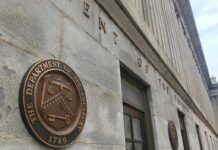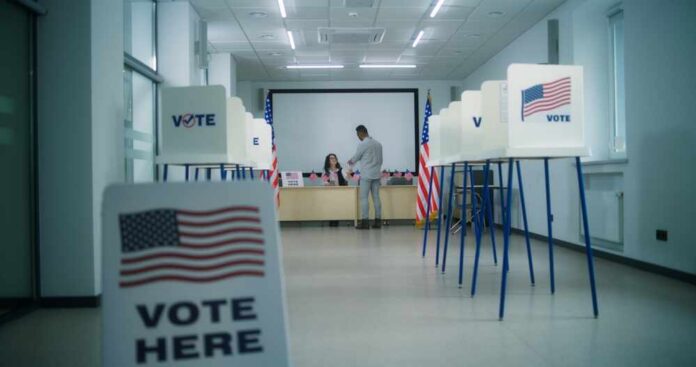
Washington is now telling states: change how you run elections or lose millions meant to keep your people safe.
Story Snapshot
- The Trump administration plans to tie vital homeland security grants to strict new state election rules.
- States that refuse these changes could lose about 20% of their Department of Homeland Security funding, worth millions.
- Critics say the plan misuses crisis and anti-terror money to strong-arm states and override their election authority.
- The fight taps into a growing belief on left and right that federal power is being abused by entrenched elites.
Trump’s DHS Money Leverage: What States Are Being Told To Do
CNN reporting says the Trump administration has drafted new rules for several homeland security grant programs that go far beyond past practice.[3] Under these rules, states must phase out certain electronic voting machines and switch to hand-marked paper ballots for in-person voting.[3] States would also have to run their entire voter rolls through the Systematic Alien Verification for Entitlements program, a Department of Homeland Security database that flags possible noncitizens on the rolls.[3] These steps are framed as “election integrity” measures.
Internal documents show the grants would now come with mandatory election audits and strict federal methods that states must follow.[3] States would need to use an approved government system to check the citizenship of every person working at polling places.[3] They also must submit a plan to fully phase out voting systems that do not use paper ballots voters can mark by hand.[3] These conditions reach deep into how counties choose voting equipment, staff poll workers, and monitor results.
How Much Money Is At Stake — And Why Both Sides Are Worried
The grants at issue fund core homeland security work, including disaster readiness and anti-terror programs, not just elections.[1] For years, these Department of Homeland Security grants have only required that a small slice, about three percent, be used for election security.[5] The new rules would instead threaten to cut 20% of a state’s grant if it refuses the election changes.[3] With more than a billion dollars in grants expected this year, that penalty could mean many millions lost in some states.[1]
For conservatives already angry about federal overspending and “deep state” control, tying security money to paper ballots and list checks may sound like a long-awaited win on voter fraud.[1] For liberals who fear voter suppression and unequal treatment of minority communities, the same rules look like Washington using cash to force states into stricter voting systems that will knock some people off the rolls.[2] Both camps, though, see another pattern they dislike: federal officials using money meant for safety as leverage to grab more power.
Does The President Have The Power To Do This?
A 2025 executive order, “Preserving and Protecting the Integrity of American Elections,” shows the White House legal theory behind this move.[4] That order tells the Election Assistance Commission to stop sending federal funds to states that do not follow certain federal election laws and to “condition any available funding” on compliance with uniform ballot standards and deadlines.[4] It cites specific sections of election law as authority, suggesting the administration claims it is simply enforcing existing statutes rather than writing new rules itself.
Legal experts and advocacy groups argue the president is crossing a clear line.[2] They point out that the United States Constitution’s Elections Clause gives states the main power to set the “times, places, and manner” of federal elections, with Congress — not the president — allowed to change those rules.[20] One detailed analysis says flatly that “the president does not have the power to unilaterally rewrite election laws” and cannot order agencies to withhold funds that Congress has already allocated to the states.[2] That view sees the grant threat as an attempt to do by money what the Constitution bars the president from doing by direct command.
Funding Conditions, Coercion, And The Deep State Fear
This fight fits a wider trend where Washington uses conditional grants to push states into federal policy lines. A legal brief on federal funding conditions explains that Congress can attach strings to money, but those strings must serve the general welfare, be clear, relate to the program, avoid violating the Constitution, and not be coercive.[15] When the threat becomes so large that states cannot realistically say “no,” the pressure can cross into unconstitutional coercion.[15] That test is at the heart of many modern battles over federal funds.
Trump told states to change their election rules or they will lose 30% of DHS funding
The funding for crisis mgmt, forest fires, health protocols etc. NOT about reforming ICE thuggery.
He wants to block non-GOP voters (dems & independents who despise him).
States must refuse! https://t.co/VEeVhF7GqA— Forgetmenotx0x0 (@forgetmenotx0x0) June 23, 2026
Recent years have seen courts push back when presidents, not Congress, add new conditions to grants after the fact. One review notes that several federal courts rejected earlier Trump-era attempts to withhold money from “sanctuary cities” because no law clearly gave the executive branch power to add immigration enforcement strings to those funds.[18] Another watchdog report says the administration has frozen or withheld billions, tying aid to broad, unrelated demands that match its political priorities.[16] For many Americans, left and right, this looks less like neutral governance and more like a permanent class of insiders weaponizing the federal purse.
What This Means For States, Voters, And Trust In Government
If these homeland security grant rules take effect, governors and legislatures will face a hard choice: accept deeper federal control over elections or risk losing vital security dollars. Some conservative states may welcome paper ballots and aggressive voter-roll sweeps but still balk at Washington dictating details of local election practice. Some liberal states may sue to block the rules, arguing the president is using crisis funding to bully them out of their constitutional role.[3]
For everyday voters, the stakes are double. On one side is worry about whether every legal vote is counted and only citizens vote. On the other is fear that “election integrity” will become a cover to strip some neighbors of the right to vote and to punish states that resist.[2] Underneath both worries sits a shared feeling: the federal government keeps playing power games with money that was supposed to protect communities, not control them. Whether courts, Congress, or the states step in will show if anyone in Washington is still willing to draw a firm line against that kind of leverage.
Sources:
[1] Web – States That Won’t Adopt Trump’s Sweeping Election Changes Risk Losing …
[2] Web – Trump admin plans to use DHS funds to force states election changes
[3] Web – The President’s March 2025 Executive Order on Elections
[4] Web – The Trump Administration Has No Legal Authority To Invoke …
[5] Web – Preserving and Protecting the Integrity of American Elections
[15] Web – Trump Rejects DHS Funding Deal, Ties Shutdown to Voter ID …
[16] Web – [PDF] Conditions on Federal Funding: Constitutional Considerations
[18] Web – [PDF] The Coercion Test and Conditional Federal Grants to the States
[20] Web – [PDF] Conditional Spending Doctrine and the Future of Federal …