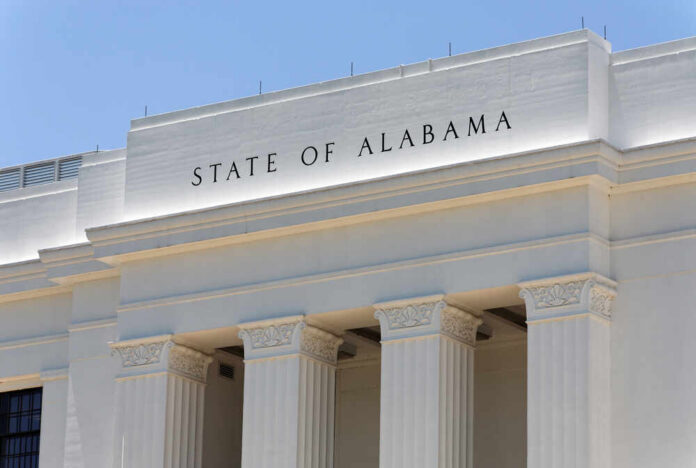
Alabama’s congressional map fight is back at the Supreme Court because judges and lawmakers are still battling over whether Black voters were deliberately pushed out of political power.
Quick Take
- Alabama faces a fresh Supreme Court fight over a congressional map that would leave the state with only one majority-Black district.[1]
- The Supreme Court has already told a lower court to reconsider the case in light of its Louisiana redistricting decision.[1]
- Justice Sonia Sotomayor said a lower court could still find intentional discrimination against Black voters under the Fourteenth Amendment.[1]
- The dispute sits at the center of a wider national clash over race, partisan advantage, and the shrinking reach of the Voting Rights Act.[1][2]
Why Alabama Is Back in Court
The latest ruling from the Supreme Court paused a lower-court order that had required Alabama to use a map with two largely Black congressional districts, at least for now.[1] The justices sent the case back for reconsideration after their separate Louisiana ruling weakened one of the legal grounds used against Alabama’s map.[1] That move could allow the state to use the Republican-drawn 2023 map that has only one district where Black residents make up a majority.[1]
That is why this fight matters beyond Alabama. If the state can proceed with the newer map, Republicans could gain another House seat in a year when control of a closely divided chamber is still politically valuable.[1] The AP reported that the map battle is not just about district lines; it is also about how much room remains for federal courts to enforce voting-rights protections when states say they are merely following race-neutral redistricting rules.[1][2]
The Legal Question Is Bigger Than One Map
The core issue is not whether Alabama must redraw districts forever, but whether the state’s plan intentionally discriminated against Black voters when lawmakers approved it.[1] Sotomayor’s dissent said the Louisiana ruling removed only one part of the case and that a lower court could still find a Fourteenth Amendment violation based on intent.[1] That leaves a live legal question about whether race was used to weaken Black voting power even after prior court intervention.[1]
Alabama’s broader redistricting history makes the dispute especially combustible. The state had already been told in the earlier Allen v. Milligan litigation that its map likely violated Section 2 of the Voting Rights Act because it diluted Black voting strength.[2] The current dispute follows that same pattern: civil-rights advocates say the new lines still undercut representation, while state officials insist they are entitled to redraw districts within the law.[1][2]
Why This Fight Resonates Nationally
The Alabama case now sits inside a national redistricting debate that cuts across party lines and distrust of government. Supporters of stronger voting-rights enforcement see these maps as proof that power can still be engineered through line drawing, while opponents argue that courts and advocates are overruling elected legislatures whenever the outcome looks politically unfavorable.[1][2] Either way, the public message is the same: a basic democratic process is once again being decided by judges instead of ordinary voters.[1]
Trump’s redistricting push suffers setbacks in Alabama and South Carolina – Reuters https://t.co/zxJKUOXl8e
— Alec Marken (@alecmarken) May 27, 2026
That perception matters because it feeds a broader sense that institutions are less interested in neutral rules than in preserving power. In this case, the argument is not abstract; it concerns who gets a real chance to elect a representative and whether long-standing protections for Black voters still have practical force.[1][2] The Supreme Court’s next steps will show whether Alabama’s map survives, but the deeper question is whether the country is still willing to treat fair representation as a binding constitutional promise.[1][2]
Sources:
[1] YouTube – Trump’s redistricting push suffers setbacks in Alabama, S. Carolina
[2] YouTube – Federal judges block Alabama’s congressional map …