Washington’s terror label on Brazil’s two biggest crime syndicates could supercharge cross-border crackdowns—or rupture a key partnership—while signaling how far federal power now stretches in the name of security.
Story Snapshot
- The administration moved to classify Brazil’s Primeiro Comando da Capital and Comando Vermelho as terrorist organizations, expanding a tool once reserved for ideologically driven groups [2].
- Supporters argue terror designations disrupt financing, travel, and support networks across borders, a core State Department rationale [6].
- Brazilian officials and U.S. critics warn the label may not meet terrorism thresholds and could strain bilateral cooperation [1].
- Banks, logistics firms, and remitters face legal exposure, raising costs that can ripple from São Paulo to South Florida [2][3].
What Changed: From Cartels To “Terrorists”
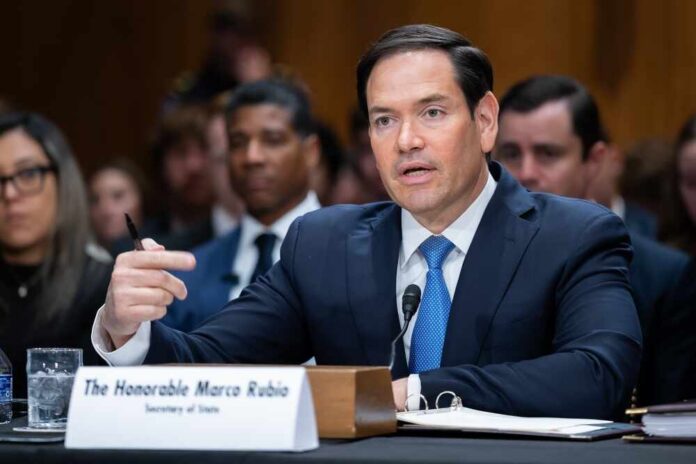
The administration and Senator Marco Rubio advanced a push to treat Brazil’s Primeiro Comando da Capital and Comando Vermelho as terrorist entities, folding organized-crime networks into a terrorism framework that triggers sanctions, immigration restrictions, and broad financial prohibitions [2][4]. Americas Quarterly reports the move follows a trend of applying terrorism labels to cartel and gang actors across the Americas, signaling a strategic shift in U.S. counternarcotics and anti-violence policy rather than a one-off action focused only on Brazil [2].
The State Department’s public guidance says terrorism designations aim to curtail support for terrorist activities by restricting access to the U.S. financial system and deterring material assistance, a logic the administration now applies to large, transnational crime groups operating supply chains, paramilitary enforcement, and corruption schemes [6]. Supporters contend these labels help pierce shell companies, cut off remittance pipelines, and empower joint investigations with foreign partners, especially where conventional indictments struggle to reach overseas facilitators [6].
Why Brazil Is Pushing Back
Brazilian officials cite their Anti-Terrorism Law, which defines terrorism as acts intended to provoke social or generalized terror, implying that narcotics trafficking and gang violence may not meet that standard without evidence of coercive political intent [1]. Reporting indicates Brasília has scrambled diplomatically to avoid a broad terrorism label for Primeiro Comando da Capital and Comando Vermelho, arguing that organized-crime enforcement risks being politicized and that bilateral cooperation could suffer if Washington imposes unilateral terror branding [1].
Americas Quarterly and the Americas Society/Council of the Americas describe significant collateral consequences if the U.S. proceeds, including heightened due-diligence burdens for banks, higher compliance costs for shipping and logistics firms, and a chilling effect on legitimate cross-border commerce where name-screening errors can freeze payments [2][3]. Those ripple effects, they note, would reach Brazilian exporters and U.S.-based counterparties alike, complicating lawful trade and remittances while authorities sort genuine facilitation from false positives [2][3].
Congressional Friction And The Evidence Question
House Democrats pressed the administration to show the factual basis for terrorism designations against Brazilian groups and warned against overuse of foreign terrorist organization tools, echoing long-running concerns that national-security authorities can be stretched beyond their original purpose. A press statement from Representative Jim McGovern criticized what he characterized as weaponization of the designation process, urging transparency about the criteria applied and the specific conduct that would meet terrorism standards rather than organized-crime benchmarks.
Thank you very much, Mr. Secretary. Strong action against PCC and Comando Vermelho shows a real commitment to security and the fight against narco-terrorism.
— Jayme Eduardo Leone (@JaymeL32078) May 29, 2026
Rubio and allies frame the action as overdue alignment of U.S. law with the reality of transnational syndicates that terrorize communities, corrupt institutions, and destabilize neighbors; critics counter that the statutory elements for terrorism remain distinct and must be proven case by case [2][6]. This clash reflects a broader power-versus-precision debate: whether maximum pressure enhances safety or whether imprecise labels erode due process, strain alliances, and expand executive tools without adequate guardrails [2][6].
What It Means For Americans Watching Costs And Crime
Financial restrictions could squeeze cartel logistics, potentially reducing drug flows that fuel violence and addiction in U.S. cities, a result many communities want. Yet wider screening and de-risking can raise costs for importers, small shippers, and immigrant families sending money home, feeding frustrations about a system that punishes the rule-followers while missing the well-connected [2][3][6]. If coordination with Brazil falters, joint cases may slow, undercutting outcomes both sides say they need to curb fentanyl precursors, arms trafficking, and money laundering [2][3].
What To Watch Next
Key indicators include whether the State Department publishes detailed findings tying Primeiro Comando da Capital and Comando Vermelho to terrorism elements; how Brazil calibrates cooperation or retaliation; and whether U.S. regulators issue narrow guidance that protects legitimate trade while targeting true facilitators [1][2][3][6]. If Congress demands oversight hearings, the evidence record may expand. If banks broadly de-risk, expect higher transaction costs to show up quickly in Brazilian trade corridors and U.S. remittance channels [2][3].
Sources:
[1] Web – Trump and Rubio Finally Go After Brazil’s Narco-Terrorists. House Dems …
[2] Web – Brazil Scrambles to Block U.S. Terror Label for Its Gangs
[3] Web – Brazil’s Gangs in Trump’s Crosshairs – Americas Quarterly
[4] Web – Brazil’s Gangs in Trump’s Crosshairs – AS/COA
[6] Web – Press Releases – Congressman Jim McGovern – House.gov