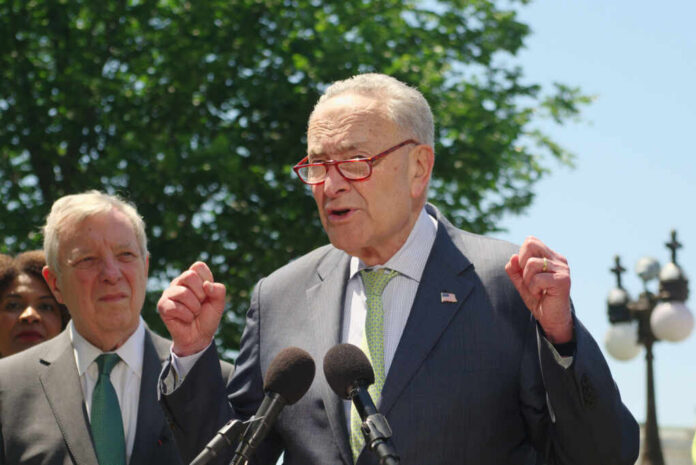
Progressive activists are trying to strong-arm Senate Democrats into a leadership purge—using President Trump as the excuse and Chuck Schumer as the scapegoat.
Quick Take
- Progressive groups and some House Democrats are intensifying calls to replace Senate Minority Leader Chuck Schumer after the 2025 shutdown funding fight.
- Multiple reports describe private frustration and “replacement” chatter, but no Senate Democrat has publicly mounted a direct challenge to Schumer.
- Names floated as alternatives include Sen. Chris Van Hollen, with other possibilities discussed amid Sen. Dick Durbin’s planned retirement at the end of 2026.
- The pressure campaign appears driven largely by outside organizations and House members, revealing a widening House–Senate divide inside the Democratic Party.
Progressives Escalate the Anti-Schumer Campaign After the Shutdown Deal
Progressive Democrats ramped up attacks on Schumer after a mid-November 2025 government shutdown ended with a stopgap funding bill that passed without major progressive demands, including certain Affordable Care Act protections. Reports describe this as a moment of “capitulation” that energized outside groups and some House members to demand new Senate leadership. Those calls became more organized and public in the days after the shutdown, targeting Schumer’s tactics and negotiating results.
House Democrats helped fuel the story. Rep. Ro Khanna publicly called for Schumer’s removal and argued that the party needs “dynamic” leaders, while other lawmakers and aligned groups amplified the message. The criticism is framed as an argument about strategy under Trump’s second term—whether Democrats should use sharper confrontation and procedural hardball. For conservatives watching from the outside, the key fact is simple: Democrats are fighting over how aggressively to obstruct.
“Quietly Replacing” vs. Reality: Little Evidence of an Active Senate Revolt
Headlines about Democrats “quietly replacing” Schumer run ahead of what’s actually visible inside the Senate caucus. Several accounts stress that frustration is real, but a clear ouster path is not. No sitting Senate Democrat has publicly declared a challenge for the minority leader post, and key senators have defended Schumer’s job performance or downplayed the idea that leadership should change midstream. That disconnect matters when assessing how serious the threat is.
Even sympathetic analyses of the anti-Schumer push concede the practical problems: the Senate is built on seniority, personal relationships, and internal ballots—not viral pressure campaigns. Some reports describe a procedural theory in which a single senator could force an internal vote via a “self-executing” motion, but there is no public evidence that a senator is prepared to trigger that process. As of early 2026, the public posture from Senate leadership remains continuity, not upheaval.
Who Replaces Schumer? The Succession Talk Is Real, but the Bench Is Complicated
One reason the campaign looks more like a pressure tactic than an imminent coup is that progressives have not united around a single successor. Reports have floated Sen. Chris Van Hollen as a potential alternative, and other names come up in broader discussions about who can lead messaging against Trump. At the same time, accounts note that some potential contenders are not actively seeking the job, and others carry political constraints of their own.
Behind the scenes, leadership jockeying is also shaped by timing. Sen. Dick Durbin’s expected retirement at the end of 2026 opens space in the Democratic hierarchy, encouraging senators to think about the next ladder rung. Analysts have suggested the more realistic inflection point may come after the 2026 midterms, when parties often reassess strategy and leadership. Until then, the most observable action is outside groups organizing primaries and media pressure, not senators filing challenges.
What Conservatives Should Take From the Democratic Infighting Under Trump
Conservatives don’t need to guess at motives to see the practical consequence: Democrats are split between institutional leadership and a progressive wing demanding more aggressive resistance to Trump’s agenda. That internal conflict can shape everything from shutdown tactics to nominations and investigations. For voters who spent the Biden years watching Washington normalize ideological “woke” enforcement and bureaucratic overreach, the irony is striking—progressives are now furious that their own leaders aren’t fighting hard enough.
The pressure is loud outside the Senate, but the Senate caucus itself has not shown an open rebellion. That means Republicans and the Trump White House should expect Democratic obstruction regardless of who holds the title, while recognizing that the opposition party is distracted by internal power struggles. The biggest near-term impact may be more progressive primary activity and more confrontational messaging, not an immediate leadership turnover.
Sources:
Furious progressives swarm Schumer’s job as Democratic leader
Get rid of Chuck Schumer!!! (And replace him with who???)
Ro Khanna calls for ‘dynamic’ leaders as progressives ramp up criticism of Schumer
To win, Democrats should chuck their leadership
One Weird Trick to Get Rid of Chuck Schumer