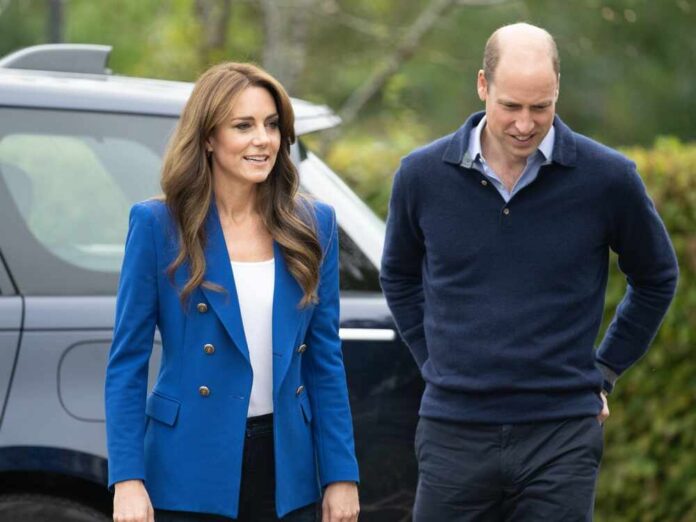
Prince William’s pointed admission that he wasn’t “in a calm state” put a human face on a royal scandal that now involves police, politics, and the Epstein cloud all over again.
Quick Take
- Prince William and Kate Middleton attended the 2026 EE BAFTA Film Awards on Feb. 22, their first joint appearance since Prince Andrew’s Feb. 19 arrest.
- UK authorities arrested Andrew on suspicion of misconduct in public office after newly released documents alleged he shared sensitive government information with Jeffrey Epstein.
- William’s remarks about needing a “calm state” to watch a film were widely interpreted as a rare glimpse of strain inside the family.
- King Charles publicly backed law enforcement, saying the law must take its course, as the monarchy tries to project stability amid renewed scrutiny.
BAFTAs Became a Crisis-Management Moment for the Future King
Prince William’s return to the spotlight came at the 2026 EE BAFTA Film Awards at London’s Royal Festival Hall on Feb. 22, a setting normally reserved for entertainment headlines, not legal scandal. William, who has served as BAFTA president since 2010, appeared alongside Kate Middleton and carried out ceremonial duties, including presenting a BAFTA fellowship to producer Donna Langley. The timing mattered: this was their first joint public appearance since Andrew’s arrest three days earlier.
William’s most replayed line was not a speech about cinema but a personal aside. While referencing the film Hamnet, he said he needed to be in a “calm state” to watch it—language some outlets framed as an implicit acknowledgment that he was not calm. That interpretation is plausible given the circumstances, but the available reporting does not show William explicitly linking his comment to Andrew’s case. The couple otherwise offered no direct press statements about the arrest.
What Andrew Was Arrested For—and Why Epstein Is Back in the Picture
UK authorities arrested Andrew Mountbatten-Windsor on Feb. 19—his 66th birthday—on suspicion of misconduct in public office. Reporting tied the arrest to newly released documents alleging Andrew sent sensitive government information to Jeffrey Epstein during Andrew’s earlier service as a UK trade envoy, a role he held from 2001 to 2007. As of Feb. 22 coverage, Andrew remained in custody after the arrest and no formal charges had been filed, underscoring how early the case still is.
The accusation also lands on top of a long-running reputational collapse that began years ago. Prince Andrew’s association with Epstein, including widely reported meetings after Epstein’s earlier conviction, fueled intense public backlash and eventually led to Andrew being stripped of royal duties in 2020. Andrew later settled a U.S. civil lawsuit in 2022 while denying wrongdoing. The 2026 arrest, however, centers on alleged abuse of public office tied to information-sharing, expanding the scandal beyond personal misconduct and into questions of government integrity.
King Charles Put the Monarchy on Record: “Law Must Take Its Course”
King Charles addressed the situation by expressing “deepest concern” and publicly backing the authorities, emphasizing that the law must take its course. That posture aims to draw a bright line between the institution and the individual—especially when the alleged misconduct involves public office. For a constitutional monarchy that survives on public trust, the risk is straightforward: any perception that elites operate under different rules corrodes legitimacy. Charles’s statement suggests the palace understands that this time, silence could look like protection.
Stability on the Red Carpet, Uncertainty Behind the Scenes
Publicly, William and Kate’s BAFTA appearance projected continuity: smiles, formal dress, and a focus on the event. Kate also commented on the emotional impact of Hamnet, saying it left her with “puffy eyes,” a reminder that the couple’s official role often requires warmth and normalcy even during turmoil. Yet the larger story is that the monarchy is again pulled into a scandal linked to Epstein, a name that reliably triggers public anger and skepticism about privilege.
The available reporting offers limited detail about investigative steps, potential charges, or timelines, so firm conclusions about legal outcomes are not yet possible. What is clear is that the palace is managing two tracks at once: cooperating with the principle that the justice system operates independently, while trying to keep the working royals focused on public duties. William’s “calm state” remark—whether intentional or not—shows how hard that balancing act can be when family crisis collides with public office.
In the short term, the monarchy’s credibility will hinge on transparency and restraint: no special pleading, no soft-pedaling, and no attempts to steer public perception with carefully staged appearances alone. In the long term, the case could further isolate Andrew permanently and intensify pressure for stricter oversight of roles like trade envoys and access to sensitive information. For everyday citizens who already distrust unaccountable power, the simplest demand is equal standards—especially when the alleged misconduct touches government itself.
Sources:
Prince William Reveals He Is Not “in a Calm State” While at the BAFTAs
Prince William and Kate make first joint appearance since Prince Andrew arrest
Prince William, Kate Middleton attend 2026 BAFTAs amid Prince Andrew arrest