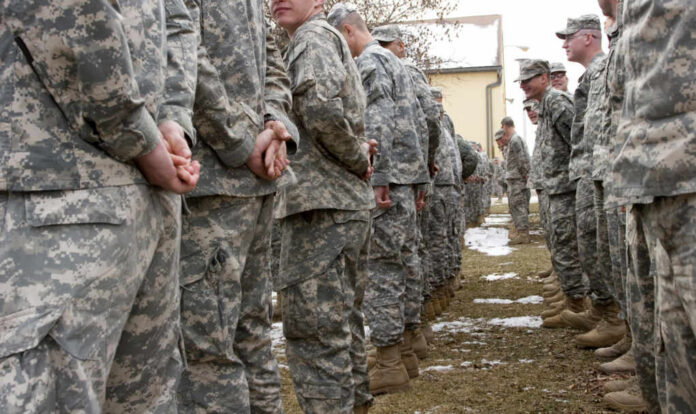
President Trump’s administration readies thousands of ground troops for potential Iran deployment, balancing decisive action against nuclear threats with public assurances of no boots on the ground.
Story Highlights
- Trump team evaluates sending thousands of US troops to secure Iran’s Kharg Island oil hub and uranium stockpiles amid escalating war.
- Joint US-Israel strikes ignited the 2026 Iran war on February 28; conflict now enters fourth week with no ground decision finalized.
- President publicly denies plans—”I’m not putting troops anywhere”—while officials confirm all options remain open.
- 22,200 Marines prepare to deploy from San Diego; Pentagon seeks $200 billion extra funding from Congress.
- Strategic ambiguity protects American forces, counters Iran’s missile threats, and upholds limited engagement principles.
Escalating Tensions Ignite 2026 Iran War
Joint US-Israel military strikes on February 28, 2026, launched the 2026 Iran war after months of buildup. The Trump administration cited Iran’s restarted nuclear program and missile advances as direct threats to American security. Late January saw the largest US Middle East military positioning since the 2003 Iraq invasion, deploying air, naval, and missile defense assets including preparations for USS George H. W. Bush. President Trump supported Iranian protesters on January 13 in Detroit, vowing punishment for regime killings, shifting to aggressive posture.
Strategic Deployment Options Under Review
Administration officials discuss deploying thousands of troops for targeted operations. Scenarios include securing oil tankers in the Strait of Hormuz, coastal positions along Iran, seizing Kharg Island—which handles 90% of Iran’s oil exports—and protecting uranium stockpiles. Experts label Kharg risky due to Iranian missiles and drones, uranium missions complex even for elite units. No final ground troop decision exists, but planning advances to weaken Iran’s navy, missiles, and nuclear ambitions. This aligns with the 2026 National Defense Strategy’s focus on presidential optionality and American dominance.
Trump’s Public Denials Amid Private Planning
On March 20, President Trump stated, “I’m not putting troops anywhere. If I were, I certainly wouldn’t tell you, but I’m not.” This follows Reuters reports of active discussions and his March 7 remark not ruling out troops for a “very good reason.” White House Press Secretary on March 10 confirmed no draft in current plans but options open. Such deliberate opacity frustrates endless wars, honors public skepticism of Middle East quagmires, and keeps adversaries guessing while prioritizing air and naval superiority.
Domestic and Global Stakes Mount
Public support for deeper involvement stays limited, echoing Trump’s past opposition to prolonged engagements. Pentagon requests $200 billion funding; 22,200 Marines from San Diego deploy soon. Congress holds purse strings for sustained action. Risks include oil shocks from Hormuz disruptions, Iranian retaliation, and regional chaos. Taxpayers face costs, military families uncertainty, yet neutralizing Iran’s nuclear threat safeguards Israel, Gulf allies, and global energy flows essential to American prosperity.
Here we go -“Boots on the ground” Trump admin. undertakes heavy preparations for potential use of ground troops – CBS News https://t.co/F9G5sA3WP8
— Sandy (@heretohearyou) March 20, 2026
Conservative Priorities in the Balance
America First demands prudent force, not open-ended commitments like past failures. Ground options target high-value assets to cripple Iran’s terror sponsorship without nation-building. Limited public backing and fiscal discipline constrain escalation, pressuring quick victories. Military planners provide scenarios; Trump decides, upholding constitutional war powers against globalist entanglements. Outcomes will test resolve to deter aggression while avoiding Biden-era weaknesses that emboldened foes.
Sources:
2026 National Defense Strategy
AFP Fact Check on Trump Statements