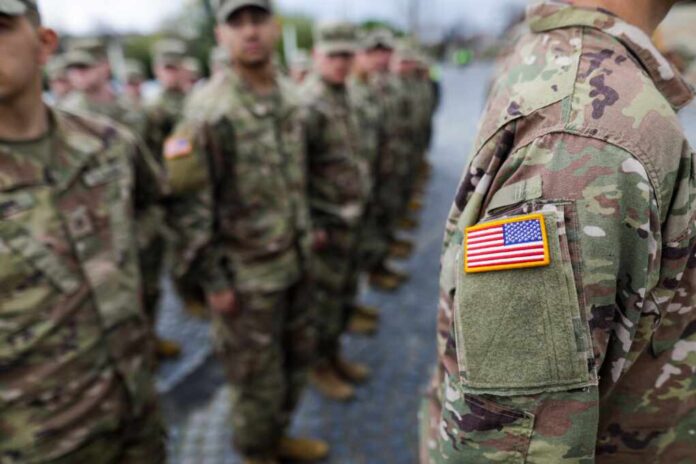
In late September 2025, President Trump directed the federalization of 200 members of the Oregon National Guard to protect federal personnel and property at the Lindquist Building, an ICE facility in Portland, Oregon. This action was taken at the request of the Department of Homeland Security, citing ongoing protests and the Oregon governor’s refusal to deploy state forces. The deployment has since faced legal challenges, initiating a constitutional debate regarding federal authority versus state sovereignty.
Story Highlights
- President Trump’s administration and the state of Oregon are engaged in a legal dispute over the deployment of National Guard troops to protect a Portland ICE facility.
- A federal district judge in Oregon initially blocked the deployment, but the Ninth Circuit
- Court of Appeals has temporarily allowed it to proceed.
- The case examines the boundaries of presidential power, state authority, and the judiciary’s role in national security situations.
The outcome could establish a precedent for future federal-state conflicts, particularly in urban areas experiencing civil unrest.
Federal Authority and State Response
President Trump invoked federal authority under 10 U.S.C. § 12406, a statute used in emergencies when state officials are deemed to have failed in upholding federal law. This move aimed to address what the administration described as sustained unrest targeting the federal facility. However, a federal district judge in Oregon issued a temporary restraining order (TRO) to block the deployment.
🚨Breaking: The 9th Circuit Court just ruled 2-1 in favor of the Trump admin, allowing deployment of Oregon National Guard to secure Portland's ICE facility amid violent protests. Overturns lower court block—cites Insurrection Act. Clashes ongoing with tear gas & riots. pic.twitter.com/Y2CUaj91Iq
— 𝐃𝐔𝐓𝐂𝐇 (@pr0ud_americans) October 20, 2025
Judicial Review and Constitutional Considerations
The Ninth Circuit Court of Appeals subsequently granted a stay, allowing the National Guard deployment to continue while legal proceedings are ongoing. This legal back-and-forth underscores the constitutional tension between executive authority and judicial review.
The case also brings to the forefront discussions surrounding the Insurrection Act and related statutes, which empower the President to federalize the Guard for purposes such as suppressing insurrection or enforcing federal law. Historically, such federalizations have been infrequent and contentious. Supporters of the deployment contend that the situation in Portland, marked by repeated incidents against federal officers and property, aligns with the intent of the law. Critics express concerns about the potential militarization of domestic law enforcement, while proponents argue that federal intervention is necessary when local authorities permit disorder.
Impact and Future Implications
The immediate consequence of the Ninth Circuit’s stay is the temporary deployment of Oregon National Guard members under federal command in Portland. This has heightened political tensions, with the Oregon governor reiterating opposition and President Trump defending the action as crucial for safeguarding federal interests. For the members of the Oregon National Guard, the situation is notable, as they are now operating under presidential rather than gubernatorial orders for this mission within their home state.
In the long term, the case could influence the distribution of power between federal and state governments, particularly in cities with differing approaches to federal policies, such as immigration enforcement. If the courts ultimately support the administration, it would reinforce the President’s authority to protect federal operations nationwide. Conversely, a ruling in favor of Oregon could empower state and local officials to impede federal law enforcement.
Beyond the legal and political aspects, the case has implications for Portland residents, local businesses, and the broader discourse on immigration and public safety. It also prompts questions about the appropriate role of military forces in domestic affairs.
Outlook
The legal proceedings are ongoing, and the Ninth Circuit’s stay is temporary. The fundamental constitutional questions remain unresolved, and the case may eventually reach the Supreme Court, where its implications for federalism, separation of powers, and public safety would be significant. The Trump administration’s actions have signaled a stance that the federal government will act to protect its personnel and property.
Watch the report: Judge again blocks deployment of National Guard troops to Oregon, this time from any state
Sources:
Live updates: National Guard deployment as anti-ICE protests flare from coast to coast | CNN
Federal judge once again weighing whether to allow National Guard in Portland – OPB
What Trump’s federal crackdown looks like in 5 US cities