
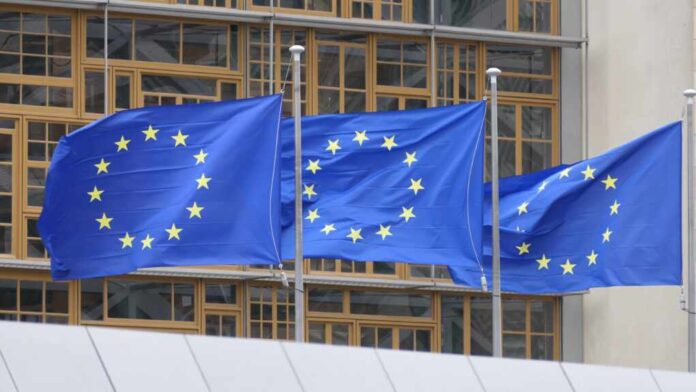
Brussels just pushed through a massive EU–South America trade pact that hands more leverage to global bureaucrats and green activists while sidelining the very farmers and workers who keep Western economies alive. Sealed after more than 25 years of negotiations, the EU-Mercosur deal slashes €4 billion in tariffs to create one of the world’s largest free-trade zones. However, it has ignited fierce protests from European farmers who warn they will be undercut by South American agribusiness with looser standards. Furthermore, the pact embeds expansive “sustainable development” provisions, making it a powerful example of how EU elites are using trade rules to enforce climate agendas and ideological priorities far beyond their borders, standing in stark contrast to the Trump administration’s America-First approach to trade.
Story Highlights
- EU and Mercosur sealed a trade and partnership deal after more than 25 years of negotiations, creating one of the largest free‑trade zones on earth.
- The agreement slashes about €4 billion in tariffs and removes roughly 90% of duties between the blocs, reshaping global supply chains.
- European farmers mounted fierce protests, warning they will be undercut by South American agribusiness operating under looser rules.
- Environmental and “sustainable development” provisions give Brussels new leverage over how South American nations manage land and resources.
EU–Mercosur Deal: A 25‑Year Push for Bigger, Deeper Global Integration
Negotiations between the European Union and South America’s Mercosur bloc began in 1999 and dragged on for more than a quarter‑century before officials finally announced a political agreement in December 2024. The pact links the EU with Argentina, Brazil, Paraguay, and Uruguay in a vast partnership that combines trade, political dialogue, and cooperation under one umbrella. In early 2026, EU governments gave political backing for formal signature, despite entrenched objections from some member states and farming communities.
The scope of the deal is enormous: once fully in force, it will eliminate roughly 90% of tariffs between the two regions and remove around €4 billion in duties on traded goods. Supporters in Brussels frame it as a way to secure access for European cars, machinery, chemicals, and services in a region of more than 700 million people. They also portray it as a strategic response to rising protectionism and the growing influence of China and the United States across Latin America.
🇪🇺 EU states gave a provisional go-ahead on Friday for the bloc to sign its largest ever free trade accord with South American group Mercosur, more than 25 years since talks began and after months of wrangling to secure enough backers. pic.twitter.com/iIduWGNtXJ
— FRANCE 24 English (@France24_en) January 9, 2026
Farmers’ Revolt: When Global Trade Meets Rural Reality
While Eurocrats celebrate, farmers across Europe have sounded the alarm about what this means on the ground. Agricultural producers already squeezed by energy prices, fertilizer costs, and layers of regulation now face intensified competition from giant South American operations. Those producers often work with lower labor costs and, in some cases, looser environmental and animal‑welfare standards. European farm unions warn that surging imports of beef, poultry, sugar, ethanol, and other products will undercut prices and hollow out rural livelihoods.
Fierce protests in Brussels and other capitals helped delay the deal’s signing in late 2025, when Italy briefly withheld support and demanded stronger safeguards and more generous budget support. EU leaders eventually promised earlier access to tens of billions in agricultural subsidies and cuts to import duties on fertilizers as a form of compensation. Those steps illustrate a familiar pattern conservatives recognize: technocrats push ambitious global schemes first, then offer taxpayer‑funded band‑aids to those hurt most by policies they never asked for.
Green Strings Attached: How Climate Agendas Shape Trade Rules
The agreement is also a powerful example of how environmental and climate agendas are now baked directly into trade architecture. Ratification stalled for years over concerns about Amazon deforestation and Brazil’s environmental record, leading the EU to demand tougher “sustainable development” and forest‑protection commitments. The final package includes a broad partnership framework where climate, labor, and environmental rules are treated as core conditions, not just side issues, giving Brussels leverage to pressure Mercosur governments on domestic policies.
For conservatives, that raises two red flags. First, it extends the reach of unelected regulators who can use trade rules to enforce ideological priorities far beyond their borders. Second, it risks weaponizing access to markets in ways that punish countries for pursuing their own development path or resource strategies. Instead of simple, mutually beneficial tariff cuts, the EU model increasingly links commerce to expansive social and environmental agendas that mirror the same top‑down, bureaucratic mindset Americans saw in global climate compacts.
Strategic Stakes: What This Means for the U.S. Under Trump’s America‑First Reset
The EU–Mercosur deal lands at a moment when President Trump is reshaping U.S. trade around national interest, secure supply chains, and fair, reciprocal treatment. Europe is moving in the opposite direction, doubling down on large, complex trade frameworks that embed climate and regulatory objectives alongside market access. For American producers, especially in agriculture and manufacturing, the agreement could stiffen competition in South America, where EU exporters will face far lower tariffs on cars, machinery, dairy, and wine than their U.S. counterparts.
The broader message for U.S. conservatives is clear: globalist institutions are not retreating just because American voters rejected their overreach at home. From Brussels to Brasília, elites are designing rules that shape how energy, land, food, and industry are managed for hundreds of millions of people. By contrast, Trump’s second‑term focus on bilateral leverage, border security, energy independence, and domestic industry stands as an alternative model—one that puts sovereignty, accountable decision‑making, and working families ahead of grand technocratic experiments.
Watch the report: EU advances Mercosur South America trade deal despite strife
Sources:
- The EU and Mercosur are creating one of the world’s largest free trade areas (Atlantic Council)
- EU reaches South America trade deal after 25 years of talks
- EU countries approve Mercosur trade deal after 25 years of talks