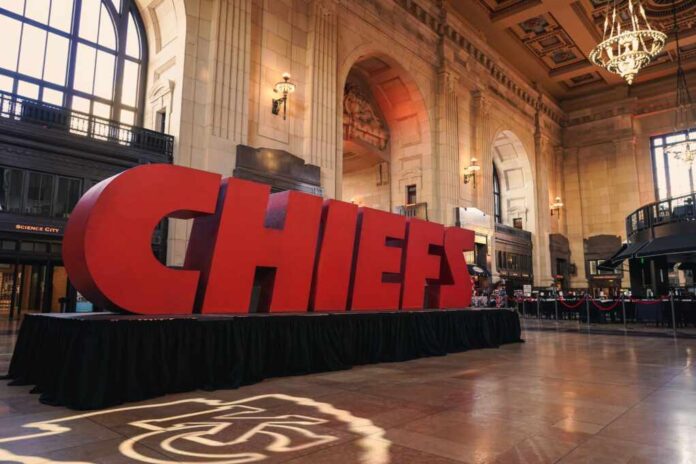
Kansas politicians are betting billions of taxpayer dollars on an NFL stadium deal that looks more like corporate welfare than real economic growth. The state has struck a deal with the Kansas City Chiefs for a $3 billion domed stadium and new headquarters built on substantial taxpayer-backed subsidies, primarily through the state’s controversial STAR bond program, which diverts future sales tax revenue. This move follows Missouri voters rejecting a long-term stadium sales tax and renews the long-running Kansas–Missouri “border war” for corporate assets, even as economists and auditors question whether such deals deliver meaningful net benefits to taxpayers.
Story Highlights
- Kansas struck a deal with the Kansas City Chiefs for a $3 billion domed stadium and new headquarters built on substantial taxpayer-backed subsidies.
- The state’s STAR bond program steers future sales tax revenue away from core services to underwrite the project’s financing.
- Economists and auditors have repeatedly questioned whether stadium subsidies and STAR bonds deliver meaningful net benefits to taxpayers.
- The Chiefs’ move follows Missouri voters rejecting a long-term stadium sales tax, signaling public fatigue with these deals.
Kansas Bets Big Tax Dollars to Land the Chiefs
On December 22, 2025, Democratic Governor Laura Kelly and the Kansas City Chiefs announced an agreement to shift the team’s stadium from Missouri to a new, enclosed $3 billion facility in Wyandotte County, paired with a headquarters and training complex in Olathe. The plan wraps both sites in mixed-use entertainment districts, from hotels and restaurants to offices and housing. Behind the glossy renderings sits a simple reality: the deal depends heavily on taxpayer-backed subsidies and state financing tools.
The core mechanism is Kansas’s STAR bond program, which allows governments to issue bonds repaid with future state and local sales tax collected inside designated districts. Instead of new revenue flowing to schools, roads, or broad tax relief, those dollars will be earmarked for paying off stadium-related debt. State officials are touting projections of more than twenty thousand construction jobs and billions in economic impact, but those numbers come from models that often assume optimistic visitor spending and growth that may never fully materialize.
#Chiefs are getting a staggering $1.8 billion in public money for their new $3 billion Kansas stadium to open in 2031. With a new training complex and development also to be built in Kansas, it’s a total of $4 billion in construction projects. https://t.co/HcXyDDzy2Q
— Daryl Ruiter (@RuiterWrongFAN) December 22, 2025
Border War Politics and Taxpayer Fatigue
This deal did not appear out of thin air. In April 2024, Jackson County, Missouri voters rejected a proposed forty-year extension of a three‑eighths‑cent sales tax that would have funded upgrades for the Chiefs and Royals at the aging Truman Sports Complex. That vote signaled deep frustration with pouring more public money into private sports facilities. Kansas seized the opening, having already moved to strengthen its incentive toolkit, explicitly positioning STAR bonds and related programs as weapons in a renewed Kansas–Missouri bidding war for high-profile assets like professional sports franchises.
The metro’s two states have a long history of luring employers and projects a few miles across the border with subsidies, often producing little net regional job creation. Corporate headquarters and offices have ping‑ponged back and forth while taxpayers on both sides absorbed the cost. Critics have described this as a zero‑sum game that shifts where commerce happens but does not fundamentally grow the pie. The Chiefs deal, by moving an existing regional team rather than attracting a new one, fits that pattern: entertainment and hospitality spending may simply migrate from Missouri to Kansas without generating equivalent statewide gains.
STAR Bonds: Powerful Tool or Risky Corporate Welfare?
STAR bonds were created in the 1990s and later expanded, marketed as a way to finance “destination” projects by capturing their future sales tax revenue. Kansas officials hold up developments like Village West and the Kansas Speedway in Wyandotte County as success stories, arguing those projects transformed vacant land into a major retail and entertainment hub. Yet other STAR bond ventures have stumbled badly, including a high‑profile water park that closed after safety failures and weak performance, leaving taxpayers questioning whether the promised benefits justify locking in long-term revenue diversions.
State legislative auditors have raised concerns that many STAR bond projects do not clearly demonstrate net new economic activity for Kansas. When future sales tax is pledged to pay bonds, the state loses flexibility to use that revenue for broader priorities like property tax relief, infrastructure, or public safety. For conservative taxpayers who prioritize limited government and fiscal restraint, that tradeoff matters. The Chiefs project magnifies the stakes: if sales and tourism forecasts fall short, Kansans will still live with the consequences of dedicating major revenue streams to a stadium that primarily enriches a wealthy NFL franchise and its development partners.
Winners, Losers, and the Question of Public Purpose
Chiefs ownership gains enormous leverage from this arrangement. A domed, mixed‑use complex allows for premium seating, year‑round events, and lucrative real estate opportunities, all supported by public financing tools they could not secure in Missouri after the failed tax vote. Kansas leaders get to brag about landing a marquee team and “beating” Missouri, even as they obligate future taxpayers to cover foregone revenue for decades. Construction firms, developers, and hospitality companies stand to profit from contracts and new venues, creating a strong lobbying bloc in favor of the deal.
Ordinary taxpayers face more uncertainty. Residents near the proposed sites could see new jobs and amenities, but they may also confront heavier traffic, higher land prices, and pressure on housing affordability. Missouri workers and small businesses that rely on game‑day crowds around the current stadium may lose vital income, even though the broader region keeps the same team. For conservatives who value market discipline, the central question is whether government should be in the business of picking winners and losers at this scale, especially when independent research on stadium subsidies consistently finds limited net benefit.
Watch the report: How Kansas’ gamble on Chiefs paid off
Sources:
- Gov. Kelly and Kansas City Chiefs announce agreement on plans for state-of-the-art domed stadium in Kansas
- ‘Some see the Chiefs’ planned move to Kansas as a win. Others are furious.’ – Lawrence Times / Kansas News Service
- Chiefs moving to Kansas with $3.3 billion plan for domed stadium, training facility • Missouri Independent