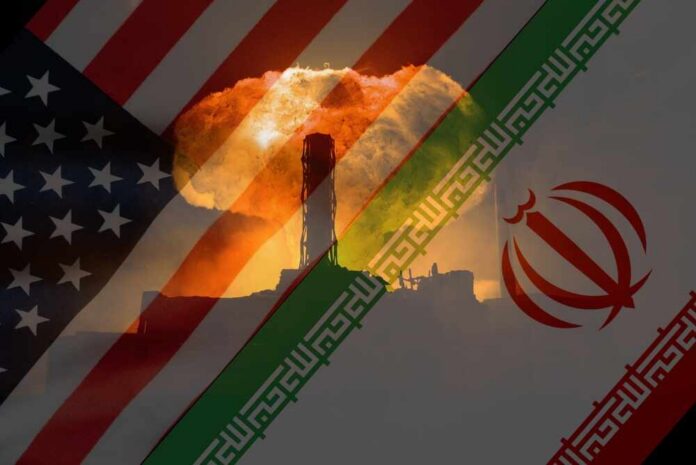
President Trump’s threat to destroy Iran’s bridges and power plants marks a dangerous escalation that breaks his core 2024 campaign promise to keep America out of endless wars, leaving his base questioning how we got dragged into yet another Middle East conflict.
Story Snapshot
- Trump threatens Iranian civilian infrastructure—bridges and power plants—demanding Tehran accept peace terms “FAST” or face total destruction
- U.S.-Israeli airstrikes destroyed Iran’s B1 Bridge near Tehran on April 3, killing 8 and wounding 95, escalating a war launched February 28, 2026
- Iran rejects surrender demands despite Trump’s “Stone Ages” bombing threats, raising concerns about prolonged conflict and regional war expansion
- MAGA base increasingly frustrated as second-term Trump administration deepens involvement in regime change operation contradicting his America First promises
Trump Escalates Threats Against Iranian Civilian Infrastructure
President Trump posted on Truth Social April 3, 2026, warning the U.S. military “hasn’t even started destroying what’s left in Iran,” explicitly naming bridges and electric power plants as next targets unless Iran’s leadership agrees to a peace deal immediately. The threat followed coordinated U.S.-Israeli strikes that obliterated the B1 Bridge in Karaj near Tehran, a 1-kilometer structure whose collapse killed 8 people and wounded 95 others. Trump shared video footage of the bridge destruction, declaring “Much more to follow!” while demanding Iran’s “new regime leadership” capitulate before American airpower leaves “nothing left.”
War Launched Despite Campaign Promises to Avoid Entanglements
The United States initiated military operations against Iran on February 28, 2026, targeting the nation’s military capabilities in partnership with Israel. Trump’s Wednesday primetime address on April 1 vowed to bomb Iran “back to the Stone Ages” over a 2-3 week period, a dramatic shift from his 2024 campaign rhetoric opposing new foreign wars. The escalation represents exactly the kind of regime change intervention Trump’s base rejected when supporting his candidacy, raising fundamental questions about America First principles versus neoconservative foreign policy objectives that dominated previous Republican administrations.
Iranian Defiance Signals Prolonged Conflict Ahead
Iranian Foreign Minister Abbas Araghchi rejected Trump’s ultimatum, stating that targeting civilian infrastructure will not force Tehran’s surrender. Iran’s IRGC vowed retaliation against U.S. and Israeli interests, with unverified Iranian claims of downing American F-35 fighters circulating alongside threats to disrupt the Strait of Hormuz energy corridor. U.S. officials reportedly outlined six demands including halting missile programs, ending proxy funding, and achieving zero uranium enrichment, conditions Iran dismisses as sovereignty violations. Despite denials from both sides, reports indicate ongoing back-channel negotiations that contradict the public escalation, suggesting a dangerous game of brinkmanship with American lives and treasure at stake.
The shift to explicitly threatening power plants raises serious concerns beyond military strategy. Council on Foreign Relations analysts warn such strikes constitute potential war crimes under international law, primarily harming civilian populations rather than military capabilities. Iranian civilians in Alborz province face the immediate consequences, with emergency responders deliberately targeted in a second strike on the B1 Bridge site. This tactic mirrors strategies from past Middle East interventions that generated humanitarian crises while failing to achieve stated political objectives, a pattern Trump voters believed his administration would break.
Constitutional and Strategic Concerns Mount for Conservative Base
Trump supporters who opposed globalist intervention policies now confront an uncomfortable reality: their president prosecuting a war launched without clear congressional authorization or transparent justification to the American people. The Constitution grants Congress alone the power to declare war, yet this conflict escalates daily through executive action reminiscent of previous administrations’ overreach. Beyond constitutional questions, the practical impacts hit home through inevitable oil market volatility affecting energy costs, exactly the pocketbook issue that drove voter frustration with Biden-era inflation. Threats to obliterate Iranian energy infrastructure guarantee retaliatory disruptions that will spike gas prices for working Americans already stretched thin.
The promised “deal FAST” appears increasingly unlikely as Iran demonstrates willingness to absorb punishment rather than accept terms Tehran views as unconditional surrender. Trump’s framing of Iran’s “potential to be a great country” rings hollow when paired with threats of civilizational destruction, a contradiction that undermines negotiation credibility. Two months into hostilities with no exit strategy visible, MAGA supporters face a troubling question: how does this differ from the perpetual wars in Iraq, Afghanistan, and Syria that squandered American blood and treasure while destabilizing entire regions? The answer matters for families questioning whether their sons and daughters will deploy to enforce another Mideast occupation.
Sources:
Trump threatens Iran’s bridges, power plants after B1 bridge strike – Turkiye Today
Trump Pauses Threat to Hit Energy Sites – Council on Foreign Relations