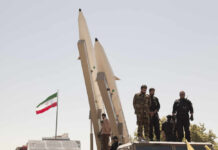
France is mobilizing a multinational naval coalition to forcibly reopen the Strait of Hormuz after US-Israeli strikes on Iran triggered a regional war that shut down 20% of global oil and gas flows, raising urgent questions about whether European military intervention will stabilize energy markets or drag the West deeper into Middle Eastern chaos.
Story Snapshot
- French President Macron announced a “purely defensive” mission to escort commercial ships through the closed Strait of Hormuz once the war’s hottest phase subsides
- US-Israeli strikes killed Iran’s Supreme Leader on February 28, 2026, sparking a regional conflict that halted maritime traffic through the critical waterway
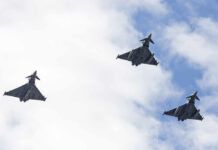
- France is deploying the Charles de Gaulle aircraft carrier, eight frigates, and two helicopter carriers to protect energy flows threatening global markets
- The closure disrupts approximately 20% of the world’s oil and liquefied natural gas shipments, spiking prices and trade costs worldwide
Macron’s Naval Mission Targets Critical Chokepoint
French President Emmanuel Macron announced on March 9, 2026, during a visit to Cyprus, that France and allied nations are preparing a naval mission to gradually reopen the Strait of Hormuz. Speaking aboard the Charles de Gaulle aircraft carrier, Macron emphasized the operation would be “purely defensive” and focused on escorting commercial vessels once the most intense fighting subsides. The mission directly responds to the strait’s effective closure following escalating warfare between Iran and US-Israeli forces. France is deploying substantial military assets including eight frigates, two helicopter carriers, and the Charles de Gaulle carrier itself across the Mediterranean, Red Sea, and potentially the Hormuz region.
US-Israeli Strikes Trigger Regional War and Energy Crisis
The current crisis began on February 28, 2026, when coordinated US-Israeli military strikes on Iran killed Supreme Leader Ali Khamenei, triggering broader regional warfare now in its second week. Iran quickly named Khamenei’s son Mojtaba as successor, but the leadership transition has done little to de-escalate hostilities. Iranian-made drones struck Cyprus in early March, prompting immediate French military deployments to the eastern Mediterranean. The conflict has effectively closed the Strait of Hormuz, through which approximately 20% of global oil and liquefied natural gas passes, creating unprecedented disruption to international energy markets and threatening economic stability worldwide.
Strategic Implications for Global Trade and Security
The Strait of Hormuz closure represents a direct assault on free commerce and Western economic interests, with Europe and Asia facing severe supply disruptions. Macron’s mission differs from the EU’s existing Operation Aspides, which has focused on countering Houthi attacks in the Red Sea since 2024. This new operation specifically targets Hormuz and involves significantly expanded French naval power. The mission aims to restore maritime traffic gradually, stabilizing oil and gas prices while deterring future Iranian threats to international waterways. However, the defensive posture raises concerns about mission creep and whether European forces will become entangled in prolonged Middle Eastern military operations initiated by aggressive US-Israeli strikes.
European Leadership Versus American Overreach
Macron’s initiative highlights growing tensions between European strategic autonomy and American military adventurism in the Middle East. During his Cyprus visit, Macron met with Cypriot President Nikos Christodoulides and Greek Prime Minister Kyriakos Mitsotakis, declaring that attacks on Cyprus constitute attacks on Europe itself. He also spoke with Israeli Prime Minister Benjamin Netanyahu about broader regional stability. France’s emphasis on a “strictly defensive” mission contrasts sharply with the offensive strikes that triggered the current war. Macron warned that bombing campaigns alone will not change Iran’s behavior, predicting the conflict could last several weeks. The situation underscores legitimate concerns about whether initial US-Israeli aggression created unnecessary risks to global energy security that now require costly European intervention to stabilize.
Aboard the French aircraft carrier Charles de Gaulle (AFP) – France and its allies are preparing a 'defensive' mission to reopen the strategically vital Strait of Hormuz, President Emmanuel Macron sai https://t.co/N8tZr7RE3G pic.twitter.com/KHvAAYevOp
— zeta panama (@zetacompa) March 9, 2026
The mission remains in preparatory phases, with exact coalition partners and operational timelines still unclear. France has committed to long-term contributions of two frigates to Operation Aspides while simultaneously organizing the Hormuz operation. Energy markets remain volatile as shipping firms reroute vessels and importers scramble for alternative supplies. The closure’s economic impact extends beyond fuel costs, threatening broader trade flows and demonstrating how regional conflicts can weaponize critical infrastructure against Western interests. Whether Macron’s naval coalition can restore stability without escalating hostilities remains an open question as the war enters its second week with no clear resolution in sight.
Sources:
France preparing ‘purely defensive’ mission with allies to reopen Strait of Hormuz, Macron says
France, allies preparing bid to ‘gradually’ reopen Strait of Hormuz
France plans defensive mission to reopen the Strait of Hormuz
Macron says France and allies preparing ‘defensive’ mission to reopen Strait of Hormuz
Macron says France, allies preparing ‘defensive’ mission to reopen Strait of Hormuz
Macron announces France and allies preparing joint mission to reopen Strait of Hormuz