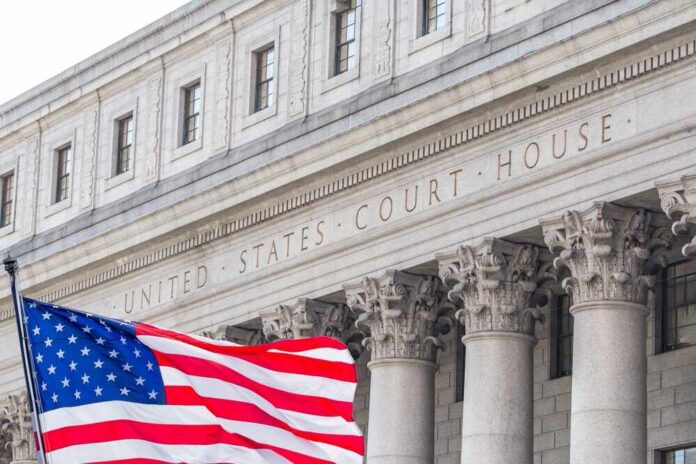
Supreme Court unanimously shields internet providers from music industry demands to police users’ online activity, blocking potential mass internet cutoffs over piracy accusations.
Story Snapshot
- U.S. Supreme Court rules 9-0 in Cox v. Sony that ISPs like Cox Communications bear no liability for subscribers’ music piracy without proven intent.
- Reverses potential $1.5 billion verdict against Cox, protecting neutral internet infrastructure from entertainment giants’ overreach.
- Even liberal justices Sotomayor and Jackson concur, emphasizing strict intent requirement under copyright law.
- Preserves open internet access for families and businesses amid rising energy costs and war uncertainties.
Supreme Court Delivers Unanimous Victory for Internet Freedom
On March 25, 2026, the U.S. Supreme Court issued a 9-0 ruling in Cox v. Sony, reversing a lower court decision that threatened Cox Communications with $1.5 billion in damages. Record labels Sony Music, Warner Music Group, and Universal Music Group sued Cox, claiming the ISP enabled subscriber piracy through peer-to-peer networks. Justice Clarence Thomas authored the majority opinion, stating Cox lacked intent to facilitate infringement by providing standard broadband service. This decision upholds precedents limiting secondary liability to intentional actors, rejecting broad policing mandates on ISPs.
Record Labels’ Aggressive Push for ISP Enforcement Fails
Sony and allies argued ISP liability would force account terminations for alleged pirates, citing nearly 19 billion pirated downloads in 2023 per MPAA data. Cox countered that such requirements risk disconnecting innocent users, including families relying on internet amid high energy costs from the Iran conflict. The Court agreed, finding no evidence Cox tailored services to infringement or derived direct financial benefit from it. This protects essential infrastructure, aligning with conservative principles of limited government overreach into private communications.
Lower courts had awarded damages, with the Fourth Circuit ordering a new trial potentially upholding $1.5 billion. The Supreme Court remanded the case but rejected liability without intent, shielding ISPs from bankruptcy-level penalties.
Stakeholders React to Intent-Focused Ruling
Justice Sonia Sotomayor, joined by Ketanji Brown Jackson, concurred in judgment but critiqued the majority’s broader reasoning on liability standards. Re:Create’s Brandon Butler hailed it as reaffirming liability only for intentional enablers, not neutral technologies. MPAA had pushed for expansive rules pre-ruling, but the unanimous core holding signals strong consensus. Cox, the third-largest U.S. broadband provider, avoids forced subscriber policing that could mirror overreaching surveillance agendas.
This outcome bolsters defenses for platforms amid tech-content wars, preserving access for households and universities strained by inflation and war-related disruptions.
Implications Shield Consumers from Overreach
Short-term, ISPs dodge massive payouts, while labels lose a key tool against unchecked piracy. Long-term, higher proof burdens may spur legislative pushes, but the ruling safeguards open internet against corporate demands for user monitoring. Consumers benefit by avoiding arbitrary cutoffs, especially critical now with families navigating economic pressures from fiscal mismanagement and global conflicts. It upholds individual liberty over industry pressure for government-like enforcement by private firms.
Sources:
Supreme Court deals blow to music industry fight against illegal downloads
U.S. Supreme Court Rules Internet Service Providers Not Liable for Music Piracy