President Trump escalated his Michigan push by labeling Democratic Senate nominee Abdul El-Sayed a “Muslim Brotherhood” member as the race tightens before November 3.
Story Highlights
- Trump publicly alleged El-Sayed is tied to the Muslim Brotherhood in multiple appearances.
- Republican allies echoed the charge as part of a coordinated message ahead of Election Day.
- El-Sayed denied the claim and said he disavows the Muslim Brotherhood.
- Some reports note no public evidence has been produced to prove formal membership.
Trump’s Charge Moves From Washington To Michigan Stump
On October 15, at a White House Rose Garden lunch, President Trump said Abdul El-Sayed was “a Muslim Brotherhood guy, 100%.” The line set the tone for a week of campaign messaging. Trump later recorded a video aimed at Michigan voters that repeated the allegation and urged scrutiny of El-Sayed’s past. The statement put religion at the center of a high-stakes Senate fight in a state both parties view as pivotal.
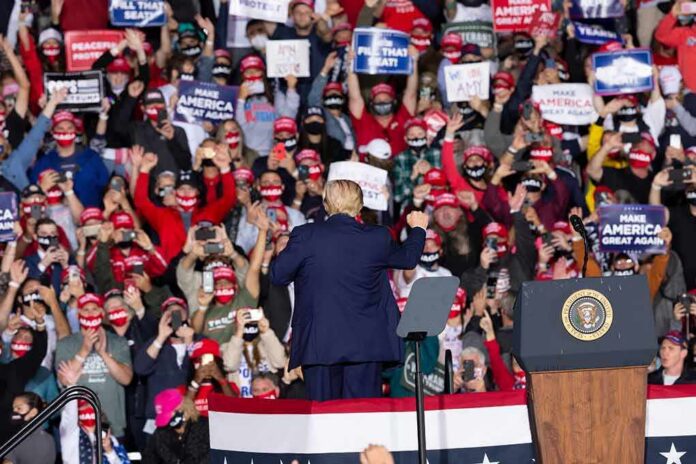
On October 25 in Port Huron, Trump told rally-goers he came to stop “a jihadist Muslim Brotherhood member” from winning a Senate seat. The message fit the campaign’s final stretch focus on national security and immigration themes. It also reflected Trump’s broader habit of framing opponents as threats, not just rivals. The line drew cheers from his base and immediate attention from national and local outlets covering Michigan politics.
GOP Echo Chamber Builds A Unified Attack Line
The allegation did not remain a one-off. On October 17, Republican Senate candidate Mike Rogers urged El-Sayed to disavow the Muslim Brotherhood at the Birch Run Speedway and Event Center. Trump amplified the theme in a same-day video, signaling a coordinated push. The back-to-back messages gave Republicans a shared script across rallies, interviews, and social media in the crucial final weeks.
Vice President JD Vance also sharpened the tone in separate comments reported that week, adding heat to the narrative as the contest narrowed. The repeated references raised the profile of the claim beyond a single rally moment. They also ensured that Michigan voters heard the charge in multiple venues, from live events to online clips and cable segments throughout the state’s media markets.
El-Sayed’s Denial And Disavowal Define The Counter
El-Sayed answered the allegation in clear terms. At an October 17 town hall, he said “sure, yeah, absolutely” when asked to disavow the Muslim Brotherhood. He also criticized suggestions that he had “dual loyalty,” stressing that such claims attack his identity rather than his record. The denial gave Democrats and allied groups a direct quote to use in rapid response and in press coverage that followed the rallies.
Coverage assessing the exchange reported that no public documentary proof of formal Brotherhood membership had been produced with the campaign rhetoric. Outlets highlighted Trump’s statements and El-Sayed’s denial side by side, but noted the missing records that would confirm actual membership. That detail matters because voters often weigh sharp claims differently when no primary documents are presented during the campaign sprint.
Why This Fight Resonates Beyond One Race
The clash taps a larger pattern in American elections. Research on Muslim American candidates from 2001 to 2026 documents common tactics, including linking candidates to “Sharia” or to extremist groups. These claims often spread fastest online through a few high-reach accounts and automated activity. Campaigns then meet voters already primed by social feeds, which can harden views before detailed evidence is discussed in traditional news formats.
At a Michigan rally backing Republican candidates, Trump accused Democratic Senate nominee Abdul El-Sayed of extremist ties and questioned whether he should serve in the Senate. El-Sayed has denied such allegations, and no evidence has been presented pic.twitter.com/SineTvXIIU
— MEAWW News (@meawwcom) October 26, 2026
The Michigan episode also reflects a broader voter frustration with politics that prizes scoring points over proving facts. Many Americans across left and right say leaders chase headlines instead of solutions on jobs, prices, borders, and safety. When identity becomes the main frame, policy debates on health care, energy, and spending fade. That shift can leave citizens feeling the system serves the powerful, not the public, and that real problems go unsolved while campaigns trade labels.
What To Watch Before Election Day
Watch whether Republicans release the “past correspondence” Trump referenced, or any records that would verify the membership claim. Look for how El-Sayed and Democrats keep answering the charge while pressing their policy contrasts. Track whether undecided voters hear more about identity or about costs, crime, and immigration. The final days will test whether repetition beats documentation, or whether voters demand proof when rhetoric gets this sharp.
Sources:
cbsnews.com, detroitnews.com, washingtonexaminer.com, edition.cnn.com, newsweek.com