
A North Carolina couple and their two dogs walked away after their small plane lost power at night and stopped in the trees instead of the ground.
Story Snapshot
- A husband, wife, and two dogs survived a forced landing after engine power dropped midflight.
- The Federal Aviation Administration said the aircraft had mechanical trouble before striking trees.
- The pilot reported pulling up at the last moment to soften impact as the trees slowed the plane.
- Investigators are still examining why the engine lost power; no cause is confirmed yet.
What Happened During The Night Flight
In eastern North Carolina, a Piper PA-32 carrying Dustin and Autumn Davis and their two dogs lost engine power during a nighttime flight, according to local reports. The couple said the engine stopped producing power at about 6,000 feet above the ground, and they began emergency checklists while talking with air traffic control. The plane descended toward dark tree lines and rural terrain. The Federal Aviation Administration said the aircraft had mechanical trouble before it hit trees.
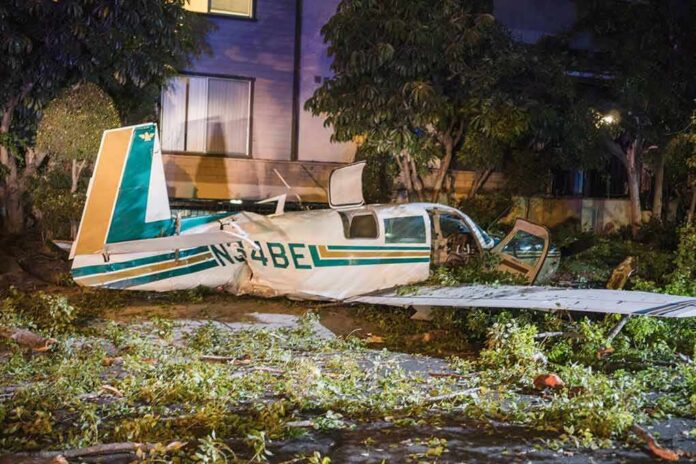
As the aircraft neared the trees, Davis said he pulled the nose up to reduce speed at the final moment, allowing the belly to take more of the force. A separate report described how a tree flexed and left the airplane resting several feet above the ground, which likely helped limit injuries. Photos from local outlets showed the nose near the ground with the fuselage supported by branches. The couple and their dogs climbed out and were treated for minor injuries.
Why The Outcome Was Survivable
Emergency training tells pilots to keep control, slow down, and use whatever terrain is available to absorb energy in a forced landing. Aviation safety guidance explains that many survivors do not avoid contact; they manage it to reduce the crash force on people inside. Trees can slow a small airplane in steps, which can help, though they still pose serious risks. The pilot’s reported pull-up likely lowered the vertical speed before contact, which can make injuries less severe.
General-aviation materials teach that power loss is not one simple cause but a group of problems, from fuel issues to broken parts. The Federal Aviation Administration’s risk guidance and training resources stress that loss of control kills most often, especially after a power problem at low altitude or at night. In this case, control appeared to be maintained through the descent and flare, which often makes the difference between life and death.
What We Know And What We Do Not
Local outlets identified the survivors as Dustin and Autumn Davis and reported minor injuries such as a black eye and soreness. Reporters said both dogs survived as well. The Federal Aviation Administration confirmed there was mechanical trouble before the plane struck trees. The couple said they worked through checklists and talked with controllers, which matches standard steps during an engine failure. These facts track with many forced landings in small aircraft where control is preserved until touchdown.
Investigators from the Federal Aviation Administration and the National Transportation Safety Board will examine the engine and airframe to find why power dropped. Reports so far do not identify a failed part, a fuel problem, or a maintenance error, and they do not list the aircraft registration or a case number. That is common in the first days after a crash. A preliminary report often comes later and may include basic facts about the flight, weather, and damage.
How This Fits A Wider Safety Pattern
Training from aviation groups explains that forced landings carry higher risk than precautionary landings, but survival chances rise when the pilot keeps flying the airplane to the end. Resources used by pilots highlight steps like picking a landing area early, setting best glide speed, and using flaps and pitch control to slow down before impact. Night flying makes it harder to judge height and pick a field, which is why extra control discipline matters even more.
Government safety material also warns that many deadly crashes begin with a power issue but end with a loss of control, such as a stall or a spin near the ground. This case shows the other path: controlled flight into rough terrain at the slowest safe speed. That is not luck alone; it fits long-standing guidance on how to survive when the engine quits. The pending investigation should explain the technical cause, but the survivable outcome already offers practical lessons for any pilot.
Sources:
nypost.com, wsoctv.com, wwaytv3.com, aopa.org