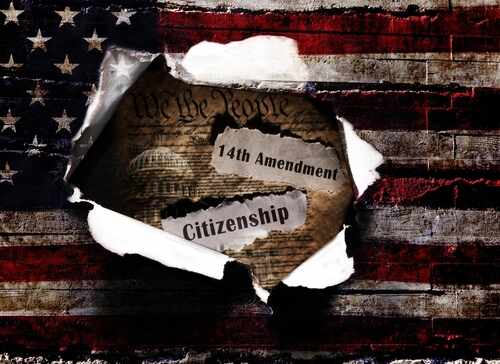
The Supreme Court rejected President Donald Trump’s effort to limit birthright citizenship by executive order, leaving the broader political debate over immigration and citizenship unresolved.
Story Snapshot
- The Supreme Court struck down Trump’s executive order and reaffirmed birthright citizenship for babies born on U.S. soil to noncitizen parents.
- The majority relied on longstanding constitutional precedent, including the 1898 decision in United States v. Wong Kim Ark, to reaffirm birthright citizenship.
- Trump called the decision “too bad for our country,” arguing it will fuel illegal immigration and urging Congress to change the law.
- Dissenting justices warned of national security risks and said the Court has “repurposed” the 14th Amendment beyond its original focus on freed slaves.
What the Supreme Court decided in Trump v. Barbara
On June 30, 2026, the Supreme Court ruled 6–3 in Trump v. Barbara that babies born in the United States are citizens at birth even when their parents are in the country illegally or only on short-term visas. The case tested Executive Order 14160, Trump’s 2025 order that tried to end automatic citizenship for children of parents who were neither citizens nor permanent residents. The Court struck the order down, saying these children are “subject to the jurisdiction” of the United States and covered by the 14th Amendment’s Citizenship Clause.
Chief Justice John Roberts wrote the majority opinion and tied the ruling back to long-standing precedent. He relied heavily on the 1898 case United States v. Wong Kim Ark, which held that a man born in San Francisco to Chinese parents was a citizen because he was born on U.S. soil, even though his parents were not eligible to naturalize at the time. Roberts called the birthright rule a “promise” kept to the Framers of the 14th Amendment, who wrote that all persons born in the United States and subject to its jurisdiction are citizens.
Why Trump’s order challenged birthright citizenship
Trump’s executive order tried to narrow who counts as a citizen at birth. It said a child born in the United States would not be a citizen if the mother was here illegally, or here legally but only for a short time on a visa, and the father was not a citizen or permanent resident. The Trump administration’s lawyer, D. John Sauer, told the Court that “subject to the jurisdiction” should mean full political allegiance, and that illegal immigrants and short-term visitors lack that kind of allegiance. Under the executive order, many children born in the United States to parents without qualifying immigration status would not have received automatic U.S. citizenship.
Lower federal courts had already signaled trouble for Trump’s plan. A federal court in New Hampshire blocked the order and certified a nationwide class to protect all babies born on U.S. soil, calling the order a “blatant violation” of the Constitution and a break with the 14th Amendment’s guarantee that everyone born in the United States is a citizen. Civil rights groups argued the order would let officials question people’s citizenship on sight and push many American-born kids into legal limbo, with no clear status or rights.
Inside the split: majority vs. dissent
The majority’s view matches how every branch of government has read the 14th Amendment for more than a century: if you are born here, you are a citizen, with only narrow exceptions like children of foreign diplomats. Legal scholars note that this broad rule was adopted after the Civil War to fix the status of freed slaves and avoid another Dred Scott-style denial of basic rights. Over time, the rule has also protected the children of many different immigrant groups, including those who lacked power or political voice.
The dissenting justices saw things very differently. Justice Clarence Thomas argued that the 14th Amendment was written mainly to secure rights for formerly enslaved people, not to grant citizenship to children of illegal immigrants or so-called “birth tourists.” The majority did not accept those arguments, concluding that existing constitutional precedent controlled the outcome. To them, the Court “repurposed” the amendment beyond its original scope and ignored modern threats.
Trump’s response and the push to involve Congress
After the decision, Trump said he would accept the Court’s authority but blasted the outcome as “too bad for our country” and a “major loss” for border security. He argued that automatic citizenship for children of illegal immigrants is expensive and unfair to taxpayers and legal immigrants who follow the rules. Trump urged Congress to “start today” on new laws to end birthright citizenship, framing the issue as policy disagreement rather than open defiance of the Court. His allies echoed that message, calling the current system full of loopholes that encourage people to come or stay illegally.
'Trump not going to give up easily' on bid to restrict birthright citizenship despite SCOTUS stop https://t.co/KRtaOwKYDD #News
— The Right News, Right Now. (@BradPorcellato) July 1, 2026
Legal experts across the spectrum say changing birthright citizenship by regular law or by executive order would clash with the 14th Amendment and deep Supreme Court precedent. Because the Court based its decision on the Constitution, most legal scholars say any lasting change to birthright citizenship would likely require a constitutional amendment rather than executive action alone. That keeps the issue alive politically, even as the legal question is settled for now. That is a very high bar in a country already divided and suspicious of both parties and the “deep state.” For now, the Court’s ruling keeps the birthright promise in place, even as anger over immigration, fairness, and elite power continues to grow on both the left and right.
Sources:
cbsnews.com, ogletree.com, americanimmigrationcouncil.org, brennancenter.org, courthousenews.com, supremecourt.gov, fam.state.gov, constitutioncenter.org, lettersandsciencemag.ucdavis.edu, aclu.org