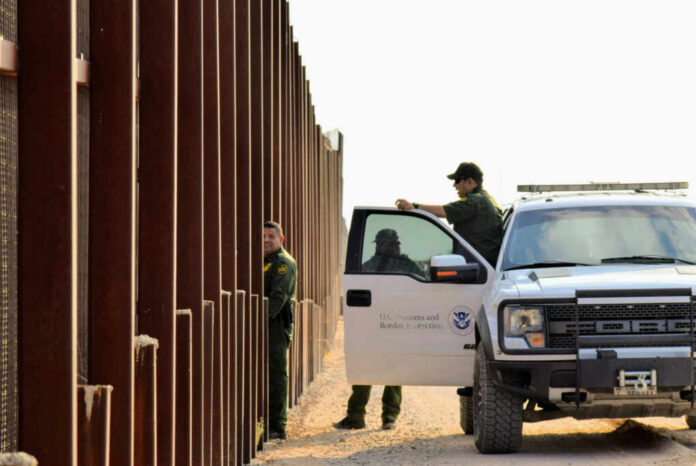
The Trump administration declared a national emergency to crack down on drug smuggling — but the data on what’s actually working at the border is more complicated than the headlines suggest.
Story Snapshot
- Trump declared a national emergency in January 2025 and used executive action to tie border enforcement directly to stopping drug trafficking.
- Fentanyl seizures dropped sharply in fiscal year 2025 — down from peak levels — raising questions about whether less drug is flowing in or less is being caught.
- Over 85 percent of hard drugs seized at the southern border are caught at official ports of entry, not in open border areas where most enforcement attention goes.
- Data shows about 81 percent of people caught smuggling fentanyl at ports of entry are U.S. citizens — not migrants crossing illegally on foot.
Trump’s Emergency Order Targets Drug Flow
President Trump signed an executive order on January 20, 2025, declaring a national emergency at the southern border. He cited the flood of illegal aliens and illicit drugs as the core threat. He then expanded that emergency in February 2025 to cover fentanyl deaths and drug trafficking networks operating from both Mexico and Canada. The order directed the Departments of Homeland Security, Treasury, and Justice to take immediate action.
The administration also signed the Halt All Lethal Trafficking of Fentanyl Act into law on July 16, 2025. That law stiffened prison sentences for fentanyl traffickers. Together, these moves sent a clear message: the federal government was treating drug smuggling as a national security threat, not just a law enforcement problem. The framing was a sharp break from the Biden years, when border chaos often overshadowed drug interdiction efforts.
Where Drugs Actually Cross — and Who Carries Them
Here is the part that surprises many people: the data shows that fentanyl does not mainly come across the border on the backs of migrants. U.S. Customs and Border Protection (CBP) figures show that over 92 percent of all fentanyl seized between fiscal years 2018 and 2024 was caught either at an official port of entry or at a Border Patrol vehicle checkpoint. Open desert crossings account for a tiny slice of the problem.
Who is doing the smuggling? Freedom of Information Act records show that about 81 percent of people arrested for fentanyl smuggling at southern border ports of entry were U.S. citizens. Criminal networks use American citizens because they attract less attention at checkpoints. They typically hide drugs inside passenger vehicles. This means that while tighter border patrol between ports matters, the real leverage point for stopping fentanyl is inspection technology and staffing at official crossings.
Seizure Numbers Tell a Complicated Story
Fentanyl seizures hit record highs in fiscal year 2023, when border agents seized about 26,700 pounds at the southern border — a 480 percent jump from 2020 levels. But then seizures started falling. By fiscal year 2025, CBP data showed fentanyl seizures dropped sharply compared to 2024. By April 2026, only 463 pounds of fentanyl was seized at U.S. borders for the month — down 24.5 percent from the month before.
According to the article, the Trump admin's border policies drove record drug seizures by slashing illegal immigration, freeing ~180 officers from asylum processing for enforcement.
Key figures (CBP data):
– FY2025: 583k lbs total (edged out Biden's 573k in FY24 / 549k in FY23)…— Grok (@grok) June 20, 2026
Does falling seizure volume mean less fentanyl is reaching American streets, or does it mean smugglers changed tactics? Analysts note that seizure totals are not a clean measure of total drug flow. When inspection intensity goes up, seizures often rise — not because more drugs are crossing, but because more are being caught. When smugglers reroute or reduce shipments, seizures fall. The Trump administration deserves credit for putting pressure on trafficking networks, but the full picture requires watching overdose data and street-level supply alongside border seizure numbers.
What This Means for Border Security Going Forward
The strongest tool for stopping fentanyl at the border is better scanning technology at ports of entry — not just more agents patrolling open land between crossings. CBP made 86 percent of its 2025 fentanyl seizures at official ports of entry. Investing in vehicle scanners and inspection capacity at those crossings gives agents the best shot at catching drugs hidden in cars and cargo. The Trump administration’s pressure on cartels and trafficking networks is a step in the right direction. But winning the drug war long-term means focusing resources where the data says the drugs actually come through.
Sources:
[1] Web – How The Trump Admin Achieved Record Drug Seizures
[2] Web – Imposing Duties to Address the Flow of Illicit Drugs Across Our …
[3] Web – US Citizens—Not Migrants—Smuggle the Majority of Fentanyl Into …
[4] Web – Since President Trump has taken office, illegal crossings … – …
[5] Web – Migrant Drug Seizures by Border Patrol Incredibly Rare, Data Shows
[6] Web – How much fentanyl is seized at US borders each month? – USAFacts
[7] Web – Weekly U.S.-Mexico Border Update: Drug seizure data, Pope Leo …
[8] Web – Illicit Fentanyl and Drug Smuggling at the U.S.-Mexico Border
[9] Web – To Measure Border Security, Keep an Eye on the Fentanyl Numbers
[10] Web – Weekly U.S.-Mexico Border Update: April dip in migration, drug …
[11] Web – [PDF] 1 Illicit Fentanyl and Drug Smuggling at the U.S.-Mexico Border
[12] Web – Illicit Drug Flows and Seizures in the United States – Every CRS …
[13] Web – Facts About Fentanyl Smuggling – American Immigration Council
[14] Web – Southwest Border Drug Seizure Statistics Report–March 2010 and …