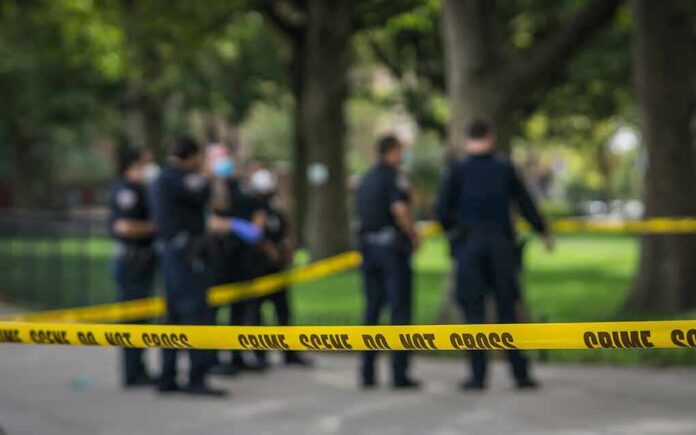
Nine people lay injured in Central Park while officials offer few answers about how a motorcycle got there in the first place.
Story Snapshot
- Police say a woman on a motorcycle hit nine pedestrians in Central Park.
- Officials have not stated whether the crash was intentional or accidental.
- Media language implies intent, but confirmed facts remain limited.
- Summer timing and urban crash trends match broader New York City patterns.
What Police Confirmed And What Remains Unknown
New York police confirmed that a woman riding a motorcycle struck nine pedestrians inside a New York City park on June 28, injuring all of them [2]. The report does not list a case number or any charges. Officials have not said whether the rider acted on purpose or lost control. No public evidence shows a police report, court filing, or sworn witness statement. The core facts are the location, the motorcycle, and nine injured people. Everything else is still open [2].
The early coverage used sharp words like “plows through” and “mowing down,” which suggest intent before investigators tell the public what they know [2]. That framing can shape opinion long before a court sees evidence. Many readers on the right and left already distrust official stories. Vague briefings and charged headlines only deepen that divide. Clear timelines, a case number, and a basic incident narrative would help the public sort fact from spin [2].
Why The Setting And Timing Matter For Risk
Summer months bring the highest share of motorcycle crashes in New York City. Data show about 40 percent of injury crashes happen in June through August, with most from midday into the night [11]. That is when parks and paths are busiest with families and tourists. Common crash factors include driver distraction and failure to yield. Together they cause about 38 percent of motorcycle crashes citywide, pointing more to mistakes than intent in most cases [11].
Urban areas also see most severe motorcycle harm nationwide. The National Safety Council reports most deadly motorcycle crashes happen on city roads, often in good weather and during the day [14]. Those base rates do not prove what happened in Central Park. They do show why crowded spaces and warm weather raise the odds of a bad outcome when control is lost. Investigators will look at speed, braking, line of travel, and any sudden obstacles to understand this case [14].
Evidence Gaps And The Questions They Raise
Investigators can answer key questions with basic steps. A police incident report with a case number would log time, place, and initial findings. Park camera footage could show the path and speed. Forensic work on the motorcycle could show whether brakes failed or the rider panicked. None of that is public yet. Without it, the strongest known facts are the injuries, the location, and that a woman was riding the motorcycle when it hit people [2].
When officials withhold even simple details, trust erodes. People across the spectrum see a pattern: big claims, thin evidence, and slow answers. That worry is not partisan. It is about accountability. If this was reckless riding, charges should say so. If it was a loss of control, the record should show that. Either way, sunlight helps victims, the rider, and the city. Premature blame helps no one and can taint any jury pool [2].
Public Safety, Enforcement, And Design Tradeoffs
New York City has reported a drop in traffic deaths in recent years under its Vision Zero safety push, including a sharp decline among motorcycle users in 2025 [16]. The city credits street redesigns, more pedestrian space, and targeted enforcement. Yet one crash in a dense park can injure many people at once. That risk pushes a basic tradeoff: open public space invites crowds, and even one motorized intruder can turn a path into a danger zone [16].
Policy makers can focus on clear measures that respect civil liberties. Better physical barriers at park entries can block motorcycles without hindering walkers or wheelchairs. Clearer signs and visible patrols can deter riders from entering. If data show certain hours or entrances are weak points, the city can fix them first. That approach avoids culture-war fights and goes right at the shared goal: safe public spaces where families do not fear a speeding machine.
Sources:
[2] Web – Teenager dies after Central Park carriage horse breaks free
[11] Web – UPDATE: Teenager Arrested; NYPD Officer Struck, Injured While …
[14] Web – 18-Year-Old Dies in Fall From Horse Carriage in Central Park
[16] Web – Man arrested in hit-and-run of NYPD officer in Central Park – abc7NY