The United States is racing to plant a permanent flag on the Moon by the early 2030s — and the urgency goes well beyond science.
Story Highlights
- NASA’s March 2026 national space policy commits to returning astronauts to the Moon and building a permanent lunar base, framing it as essential to American leadership in space.
- The lunar south pole, described by NASA as “strategically and scientifically valuable,” is the target site — largely because of water-ice deposits that could fuel long-duration missions and eventual Mars travel.
- SpaceX’s Starship is set to begin cargo flights to the lunar surface no earlier than 2028 at roughly $100 million per mission, with Blue Origin’s lander also selected for uncrewed cargo runs.
- While NASA publicly emphasizes exploration, science, and Mars preparation, analysts and outside observers increasingly read the program as a strategic hedge against China’s own advancing lunar ambitions.
NASA’s Three-Phase Blueprint for a Permanent Lunar Outpost
NASA’s March 2026 policy release formally commits the agency to a phased approach to building a Moon base, structured around three stages: “Build, Test, Learn,” followed by “Establish Early Infrastructure,” and finally “Enable Long-Duration Human Presence.” [3] The plan targets the lunar south pole, a region NASA describes as both strategically and scientifically valuable due to its near-constant sunlight on crater rims and confirmed water-ice deposits in permanently shadowed craters below. [9] A permanent base in that location would give the United States a foothold on the most resource-rich real estate on the Moon.
NASA’s May 26, 2026 press conference laid out an iterative operational approach, using commercial landers, rovers, and technology demonstration payloads to make surface access what agency officials called “a high reliability endeavor” before committing crews to long-duration stays. [1] The agency confirmed contributions from the European Space Agency and the Korean Space Agency, framing the program as an international effort built on commercial partnerships. [1] That collaborative structure reflects how NASA has consistently presented the program publicly — as a cooperative exploration initiative rather than a unilateral strategic maneuver.
SpaceX, Blue Origin, and the Commercial Engine Behind the Mission
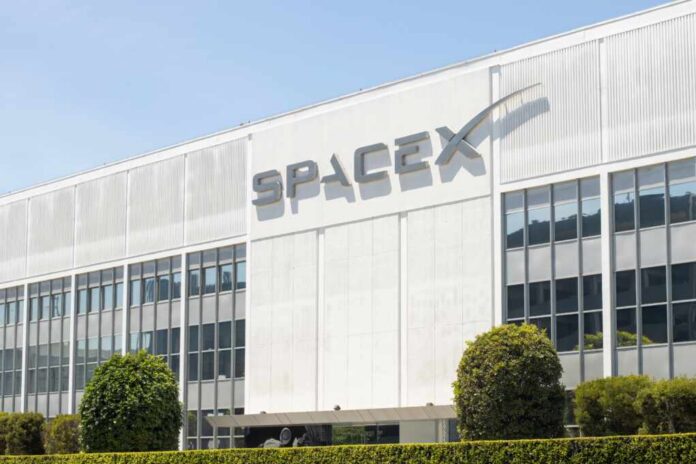
SpaceX’s role in the Moon base effort centers on its Starship vehicle, which the company describes as uniquely capable of delivering astronauts, supplies, equipment, and science payloads needed for sustained lunar operations. [6] Starship cargo flights to the lunar surface are scheduled to begin no earlier than 2028, priced at approximately $100 million per mission. [6] A lunar base equipped with fission power and the ability to extract propellant from water ice would fundamentally transform Starship’s utility — potentially making it a self-sustaining logistics platform for both the Moon and eventual Mars missions. [7]
Blue Origin’s Blue Moon lander was selected by NASA for specific uncrewed Moon base cargo missions, meaning the agency is distributing critical delivery responsibilities across more than one commercial provider. Multiple companies including Astrobotic, Firefly, Astrolab, and Lunar Outpost are also involved in surface hardware development. [3] The breadth of commercial involvement reflects NASA’s strategy of building a robust, redundant supply chain — but it also means billions in federal contracts are flowing to private aerospace firms with direct financial stakes in the program’s continuation and expansion.
Strategic Competition or Peaceful Exploration — or Both?
The public narrative from NASA consistently emphasizes exploration, Mars preparation, and the “science of survival” — mastering power generation, water extraction, habitation systems, and in-situ resource utilization as prerequisites for deep-space travel. [1] [2] What the agency’s official documents do not include is a formal threat assessment naming China as the driver of schedule acceleration, or any declassified war-planning document concluding that lunar conflict in the 2030s is likely. The absence of such documents limits public ability to evaluate whether the conflict framing circulating in media coverage reflects genuine intelligence or is largely speculative.
What is clear from primary sources is that NASA’s own language describes the lunar south pole as “strategically” valuable — not just scientifically — and that national space policy explicitly prioritizes establishing an enduring American presence there before any rival power can. [9] Whether that constitutes a race, a hedge, or simply prudent long-range planning depends heavily on what classified assessments say about China’s lunar timeline and intentions. What both conservatives frustrated by years of U.S. strategic drift and liberals concerned about militarizing space can agree on is this: decisions of this magnitude — costing tens of billions of dollars and potentially reshaping geopolitics beyond Earth — deserve far more transparent public debate than a series of press conferences and polished mission graphics can provide.
Sources:
[1] Web – Threat Of 2030s Lunar War Has NASA, Elon Musk Racing To Build Major …
[2] YouTube – Watch live as NASA provides an update on its moon base plans
[3] YouTube – How NASA Will Build The Artemis Moon Base
[6] Web – [PDF] building the moon base | nasa
[7] Web – Mission: Moon – SpaceX
[9] YouTube – SpaceX’s Genius Solution to Build First Moon Base Shocked NASA …