Congressional leaders canceled a high-stakes vote on limiting presidential war powers against Iran, reviving fears that procedure—not principle—now decides when Americans are dragged toward war.
Story Snapshot
- Representative Gregory Meeks said the House “had the votes” to pass an Iran War Powers resolution before Republicans pulled the vote [4].
- House Republican leaders cited member absences and timing as reasons for delaying the floor action, asserting control over the schedule [1].
- The fight reflects a long pattern: leaders use procedure to block or delay constraints on presidential war powers [3].
- The dispute underscores shared public frustration that Washington’s process shields power while sidelining accountability.
What Happened And Why It Matters
Representative Gregory Meeks, the top Democrat on the House Foreign Affairs Committee, said after the canceled vote that “we had the votes to pass it today,” arguing House Republicans pulled the Iran War Powers resolution despite sufficient support [4]. Meeks had pressed for a vote to reassert congressional authority over decisions that risk open-ended conflict with Iran, contending that his caucus stood unified and that a cross-party coalition was ready to act [2]. The cancellation froze momentum and kept the president’s latitude intact—for now.
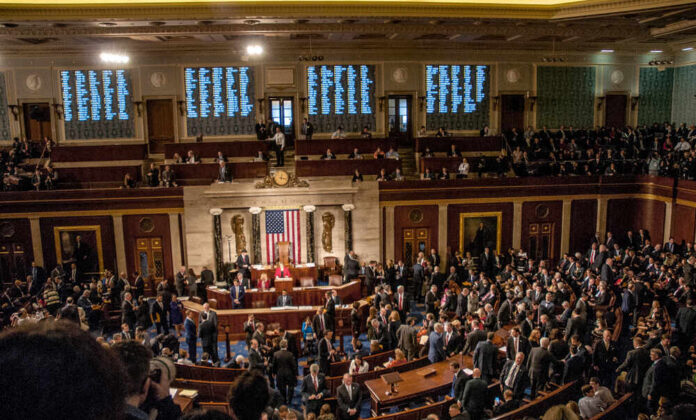
House Republican leaders control the floor schedule and opted to postpone, pointing to absent members and vote-count uncertainty as reasons to delay rather than risk defeat [1]. That choice reflects a procedural reality in a chamber the party currently runs: leadership’s gatekeeping can be dispositive. By denying a roll call, leaders prevented members from taking recorded positions on a binding constraint, preserving negotiating leverage with the White House and avoiding an intra-party split on foreign policy direction.
The Core Dispute Over War Powers
Meeks and supporters framed the resolution as a constitutional checkpoint, insisting Congress—not the executive branch—must decide whether to authorize sustained military action against Iran [2]. They argue that when leaders cancel votes that likely would pass, the effect is to mute the very check the Constitution assigns to the legislative branch. Their claim is specific and testable: they say a bipartisan majority existed and was prepared to back a statutory limit, but never received the chance to vote [4].
Republican leaders and allies counter that proceeding without the full conference present invites avoidable mistakes, and that complex national security measures deserve participation from all stakeholders [1]. They maintain the delay was tactical, not an admission of defeat, and suggest that counting fluid support under absentee conditions is unreliable. That stance emphasizes process integrity but leaves open whether leadership will schedule a vote that carries genuine risk of constraining the president’s options during a volatile standoff.
Why Procedure So Often Beats Substance
Scholars and practitioners have long observed that fights over the War Powers Resolution frequently turn on procedure—agenda control, timing, and floor access—rather than substantive votes on the merits [3]. When leaders can stall, reschedule, or bury measures, the executive branch often retains operational freedom while Congress debates rules. The recurring pattern is familiar: claim the votes exist; cancel the vote; argue about readiness and absences; then move on as events abroad outrun deliberation at home. That cycle erodes public trust across ideological lines.
HOUSE GOP PULLS IRAN WAR POWERS VOTE THAT MAY HAVE BEEN PASSED
GOP leaders scrapped the vote rather than risk losing, as a prior tie vote last week showed waning support. Democratic Rep. Gregory Meeks said "we had the votes without question." The Senate earlier voted to advance…
— STOCK DUTY (@stock_duty) May 22, 2026
Americans who worry about endless wars see a system that shields decision-makers from recorded accountability. Conservatives who distrust “forever conflicts” and liberals who favor tighter constraints both watch leaders use procedural tools to avoid tough votes. In this case, Meeks publicly pressed for immediate action and a recorded tally [2][4], while House leaders exercised their authority to delay [1]. Until leadership permits an up-or-down vote, claims about the whip count remain assertions—and presidential war powers remain effectively unconstrained.
Sources:
[1] Web – Meeks Issues Statement on Republicans Again Voting Against Iran …
[2] YouTube – Gregory Meeks Demands Passage Of Iran War Powers Resolution
[3] Web – Meeks Delivers Remarks During Floor Debate on Iran War Powers …
[4] YouTube – ‘We had the votes,’ Rep. Meeks says after House GOP calls off Iran …