

A sitting Democrat claimed the Trump administration would rather see Black Americans “pick cotton” than pick their leaders — an incendiary charge delivered without documentary proof.
Story Snapshot
- Rep. Ayanna Pressley used a racially charged line to accuse Trump’s team of anti-Black intent [1].
- Her remarks were tied to disputes over voting rights and “racial gerrymandering” [1].
- Pressley has repeated themes of a “hostile” and “racist” government across her platforms [3][6].
- No primary-source records in the provided material substantiate discriminatory intent by the administration [1].
What Pressley Said And The Context She Claimed
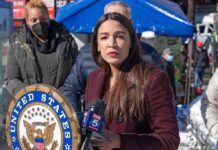
Mediaite reported that Representative Ayanna Pressley asserted, “There are people in this hostile anti-Black administration that would rather Black Americans pick cotton than pick the president, than pick their congressperson, than pick a senator.” She framed her remarks around voting rights, describing “racial gerrymandering” and a “great injustice,” while casting the dispute as a defense of democracy. The quotation appears on record in that report, establishing that she made the allegation publicly and explicitly in that setting [1].
Mediaite’s account links her comments to a court ruling and reaction that she argued affected representation and Black political power. That framing fits her broader messaging that political fights over district lines and ballot access determine whose voices matter. However, the supplied research does not include the underlying judicial opinion, filings, or civil-rights findings needed to verify the discriminatory intent that her rhetoric clearly implies. The claim’s sharpest edge rests on her words, not on a disclosed record [1].
Pattern Of Accusations From Pressley’s Public Platforms
Pressley’s official pages and campaign materials show a repeated portrayal of Trump-era governance as hostile to Black Americans. Her releases and speeches describe “racist, rogue, and lawless acts,” call the government “hostile,” and connect policy debates to suppression of Black leadership and progress. This consistency demonstrates a sustained narrative rather than a one-off quip. Still, repetition does not convert rhetoric into proof regarding specific decision-making intent inside the administration [3].
Her campaign site further emphasizes themes of combating racism, authoritarianism, and attacks on marginalized communities, reinforcing how she frames policy conflicts through a racial-justice lens. These materials underscore her position’s durability across venues — official statements, speeches, and campaign messaging — but they do not surface emails, memos, or sworn testimony demonstrating that named officials sought to render Black Americans politically subordinate as alleged in her “pick cotton” line [6].
What The Evidence Shows — And What It Does Not
The available record confirms Pressley made the charge and tied it to voting rights, but it does not include primary-source documents proving discriminatory intent. No internal administration directives, deposition excerpts, or inspector-general findings appear in the provided material to corroborate the motive she asserts. Absent those records, the allegation remains a powerful metaphor rather than an evidentiary showing that a particular policy was adopted because of race rather than for a facially neutral reason [1].
For conservative readers, the gap matters. Claims this explosive can inflame division, especially when broadcast without documentation. If there were proof, it would likely appear as court-tested findings, agency memoranda, or sworn testimony. Without those, the debate defaults to political framing: supporters cite lived experience and systemic outcomes, while critics see defamatory hyperbole that smears opponents and distracts from core issues like border security, economic sanity, and constitutional limits on government power [1][3].
How To Keep The Debate Grounded In Facts
Serious scrutiny requires records. Pulling full court files on the referenced voting-rights dispute would clarify what judges actually decided about intent versus impact. Freedom of Information Act requests to the Department of Justice Civil Rights Division and relevant agencies could reveal internal communications on districting, turnout, and voting access. Interviews or depositions of decision-makers could establish whether race-based exclusion was discussed — or if policy goals were election integrity and statutory compliance instead [1][3].
Until documentation surfaces, common-sense guardrails apply. Voters should distinguish between severe moral accusations and substantiated facts, insist on evidence before condemning political opponents as racists, and push back on rhetoric that reduces complex constitutional fights to historical slurs. That approach protects civic trust, preserves space for real debate on election law, and resists attempts to intimidate conservatives who advocate for secure elections, accountable government, and equal protection under the law [1][3][6].
Sources:
[1] Web – Ayanna Pressley: Trump Prefers Black Voters ‘Pick Cotton’ – Mediaite
[3] Web – Media – Ayanna Pressley
[6] Web – Ayanna Pressley for Congress – Official Campaign Website of …