

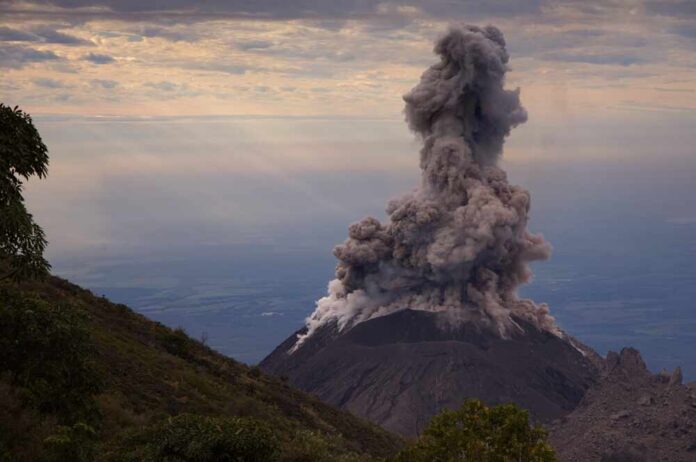
Hikers sprinted for their lives down Guatemala’s explosive Santiaguito Volcano, dodging hurled rocks and choking ash clouds in a heart-stopping reminder that nature defies human overconfidence and government warnings.
Story Snapshot
- Hikers at the summit fled as Santiaguito erupted, spewing ash and debris in a sudden blast.
- The volcano, one of the world’s most active, has a history of deadly events, including thousands killed in past disasters.
- Despite INSIVUMEH alerts, adventure seekers ignored risks, highlighting failures in enforcement and personal responsibility.
- Viral footage underscores perils of volcano tourism, pressuring authorities for stricter controls amid ongoing activity.
Santiaguito’s Deadly Eruption Unfolds
A group of hikers reached the summit of Guatemala’s Santiaguito Volcano when it erupted without warning. Ash plumes shot kilometers high as rocks and debris rained down the slopes. The hikers raced downward, capturing raw video of their narrow escape. This event at the Santiaguito complex in Quetzaltenango Department exposed the raw peril of approaching active craters. Nature’s unpredictability overwhelmed prepared adventurers, echoing broader frustrations with ignored dangers in pursuit of thrills. Government monitoring failed to prevent access, leaving lives hanging by seconds.
Historical Context of Persistent Volcanic Fury
Santiaguito formed in 1922 after Santa María Volcano’s massive collapse, marking one of the 20th century’s largest eruptions. Since then, it has shown near-constant activity with lava flows, pyroclastic surges, and explosions driven by unstable lava domes. Past incidents include 1989 lahars that killed 3,500 people and 2010 flows claiming three lives. These precedents underscore repeated warnings against summit hikes. Yet hikers persist, drawn by accessibility near populated areas. This pattern reveals a disconnect between official alerts and human initiative, much like elite oversight failing everyday Americans.
Stakeholders and Enforcement Challenges
Unnamed hikers sought adventure tourism thrills, disregarding risks from ballistic projectiles that travel hundreds of meters. Guatemala’s INSIVUMEH, the National Institute of Seismology, Vulcanology, Meteorology, and Hydrology, monitors the site and issues evacuation orders. Local tour guides and tourism operators enable access despite advisories, prioritizing economic gains from volcano visits. Power dynamics favor revenue over safety, as communities rely on this industry. INSIVUMEH volcanologists influence alert levels, but weak enforcement mirrors deep state inefficiencies where bureaucracy trumps protecting citizens.
Impacts and Calls for Accountability
Hikers escaped unharmed, but nearby Quetzaltenango residents faced ashfall risks and potential flight disruptions. The tourism sector gained viral publicity from shared videos, yet scrutiny mounts for better safety education. Politically, the event pressures INSIVUMEH amid Guatemala’s disaster-prone landscape. Long-term, it reinforces needs for global guidelines on active volcano hikes. This incident highlights shared populist concerns: governments and elites often prioritize self-interest over safeguarding lives, eroding trust in institutions founded on protecting individual liberty and common sense.
Ongoing Risks in a Highly Active Zone
Santiaguito remains among the world’s most active volcanoes, with persistent explosivity typical of lava-dome systems. No post-April 20 updates detail escalated activity, but media focused on the escape footage’s authenticity. Expert consensus frames the hikers’ luck against nature’s fury, implying criticism of their judgment. Uniform reports across outlets confirm the event without contradictions, though hiker outcomes stay unspecified. This serves as a stark lesson in self-reliance over depending on distant authorities.
Sources:
Straits Times video on Santiaguito eruption