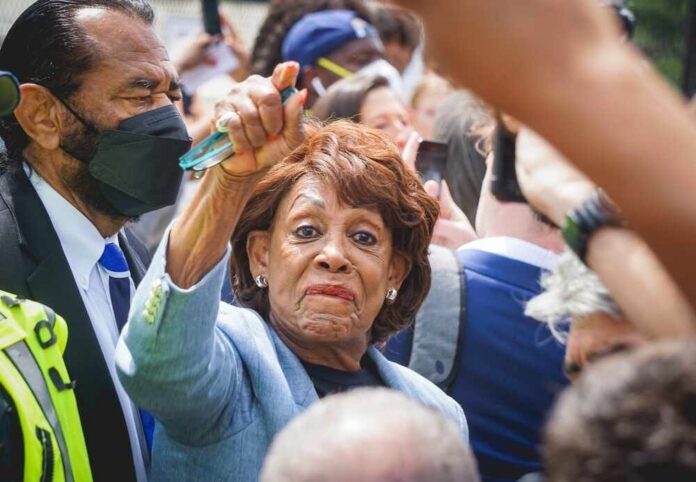
An 87-year-old lawmaker is openly positioning herself to retake the gavel over America’s banking and housing system—raising fresh questions about competence, accountability, and whether Congress has any real off-ramp from permanent “career politician” rule.
Story Snapshot
- Rep. Maxine Waters, 87, says she will seek to become chair of the House Financial Services Committee if Democrats win the House in November 2026.
- Waters previously chaired the committee from 2019 to 2023 and has served as the top Democrat on the panel since Republicans took the House in 2023.
- The committee’s jurisdiction reaches deep into daily life, including banking regulation, mortgage and housing policy, insurance, securities markets, and crypto oversight.
- Internal Democratic concerns about Waters’ fundraising and support for colleagues, even as some members praise her ability to whip votes on select issues.
Waters’ chair bid puts a powerful committee back in play
Rep. Maxine Waters told reporters she intends to pursue the chairmanship of the House Financial Services Committee if Democrats retake the House in the 2026 midterms. Waters is 87 now and would be 88 by the November election season. She previously led the committee during the last Democratic House majority and now serves as the panel’s ranking member under Republican control. The timing makes her vow a direct bet on a 2026 flip.
The chair’s authority matters because the committee oversees core financial plumbing—bank supervision, housing finance, insurance, securities markets, and emerging policy fights like cryptocurrency rules. That jurisdiction means the next chair can shape how aggressively Washington leans on lenders, how it approaches fraud enforcement, and how it responds to market turmoil. For voters already frustrated by inflation and elite mismanagement, leadership stability and competence on financial policy remains a kitchen-table issue.
Seniority culture collides with age, succession, and performance concerns
Waters has served in Congress since 1991 and represents a Los Angeles-area district. Under Democratic seniority norms, long tenure can translate into leadership opportunities when a party takes power, and Waters already has the résumé: she chaired Financial Services from 2019 through 2023. That reality is exactly what fuels the generational tension around her announcement—because it suggests institutional momentum, not merit-based competition, can decide who runs oversight of the U.S. financial system.
NOTUS reported that some Democrats, speaking anonymously, have raised concerns about Waters’ fundraising and how much she contributes to other members’ political efforts—an important factor in modern caucus politics. The same reporting also described colleagues crediting her with effectiveness on certain policy areas, including housing and insurance work, and with the ability to help move members into position on legislation. The available sourcing does not resolve the dispute; it documents it.
Her recent record shows active oversight—especially on SEC and crypto
Public committee materials show Waters has remained active as ranking member. In late 2025, she urged scrutiny around the Securities and Exchange Commission, including concerns about politicization and the handling of crypto-related issues. Committee Democrats also highlighted several bipartisan bills advancing out of the panel during that period. In early 2026, Waters continued participating in hearings, underscoring that she is not signaling retirement or a reduced schedule.
For conservatives, the policy takeaway is less about one personality and more about what a chairmanship empowers. Financial Services can drive rules that affect credit access, small-business financing, retirement investments, and the cost of buying a home. Aggressive regulatory swings can also expand federal leverage over private markets—raising perennial concerns about government overreach, backdoor activism through rulemaking, and regulatory favoritism toward connected institutions that can afford compliance armies.
What changes if Democrats win the House—and how quickly it could happen
If Democrats win House control in November 2026, committee chairs would be determined for the next Congress beginning in January 2027. Waters’ public vow signals she plans to be in that conversation immediately. Official House and committee information already lists her as the ranking member, and recent Democratic committee communications affirm she remains a central figure in the caucus’ oversight messaging.
That sets up a clear decision point for Democratic leadership: lean into seniority and familiarity, or respond to internal warnings about fundraising and the optics of an 88-year-old chairing a high-stakes committee. For voters, the practical question is accountability. In a moment when many Americans say they feel trapped by institutions that never correct course—on spending, inflation, and elite impunity—Congressional leadership choices become a measure of whether either party is serious about renewal.
Not Only Is Radical, Senile Maxine Waters Refusing to Retire at 87, She Could Chair Powerful Committee Come Next January
READ: https://t.co/XAeQulyfkj pic.twitter.com/oGCYLMjLOB
— The Gateway Pundit (@gatewaypundit) March 28, 2026
Her explicit intent to seek the gavel, her established seniority and prior chair tenure, and ongoing public activity as ranking member. With the midterms ahead, the question is no longer whether Waters wants power—it’s whether Democrats, and ultimately voters, will reward that model.
Sources:
https://financialservices.house.gov/about/members.htm
https://democrats-financialservices.house.gov/news/documentsingle.aspx?DocumentID=414080
https://democrats-financialservices.house.gov/news/documentsingle.aspx?DocumentID=413988
https://en.wikipedia.org/wiki/Maxine_Waters
https://democrats-financialservices.house.gov/news/documentsingle.aspx?DocumentID=412783