Germany just escalated the political pressure on Washington by calling the US-Israeli war on Iran illegal—while Americans at home are asking why a second Trump term is drifting into another open-ended Middle East fight.
Quick Take
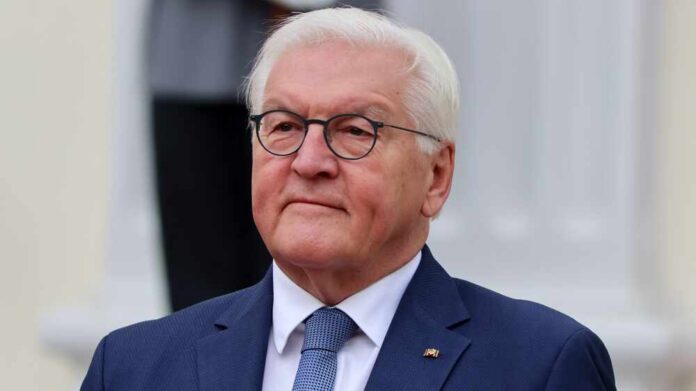
- German President Frank-Walter Steinmeier labeled the US-Israeli campaign against Iran a “disastrous mistake” and a breach of international law, an unusually blunt rebuke of the Trump administration.
- German Chancellor Friedrich Merz struck a more mixed tone: condemning Iran’s terror networks and nuclear ambitions while urging diplomacy and warning about regional escalation.
- President Trump announced a five-day pause on planned strikes against Iranian power plants to create space for direct contacts, but Iran’s foreign ministry disputed that productive talks are happening.
- Merz said “numerous” top Iranian regime figures were killed and included the religious leader Ali Khamenei in that description—an extraordinary claim with major implications.
Germany’s Rare Public Break With Trump’s War Strategy
President Steinmeier’s criticism matters less as battlefield leverage than as a political signal that a key Western ally is distancing itself from how this war is being justified and conducted. In Europe, “international law” language is often a shorthand for legitimacy, coalition cohesion, and constraints on military escalation. For American conservatives already skeptical of “forever wars,” that dispute feeds a bigger question: if allies won’t defend the rationale, will Americans be asked to pay more—financially and militarily—anyway?
Chancellor Merz offered a parallel message that complicates the headline narrative. He described Iran as a terror regime, tied it to decades of oppression, and pointed to Tehran’s backing of Hamas and Hezbollah and destabilizing regional attacks. Merz also said previous European sanctions and legal condemnations had little effect, implying diplomacy without leverage failed. At the same time, he emphasized Germany cannot achieve its goals through military force alone and pushed for a ceasefire track.
What We Know About the Strikes—and What We Don’t
Merz said US and Israeli forces carried out massive strikes inside Iran and that prominent regime representatives were killed, naming the religious leader Ali Khamenei among them. That is a historically significant claim, because it would reshape Iranian succession and the risk calculus for retaliation.
Israel’s stated approach has been to keep pressure on Iran’s missile and nuclear programs while also striking Hezbollah and even targeting nuclear scientists. The Trump administration’s public objective is narrower on paper than past “nation-building” missions: no nuclear weapon for Iran, removal of enriched uranium, and an agreement preventing nuclear arms. That goal may sound clean, but the path to enforce it—air campaigns, infrastructure targeting, and retaliation cycles—can easily expand the mission.
Trump’s Five-Day Pause: A Diplomatic Off-Ramp or a Tactical Reset?
President Trump announced a five-day postponement of planned attacks on Iranian power plants to allow immediate and direct contacts with Iranian leadership. Merz said he conveyed concerns about hitting power plants and offered Germany’s regional contacts to help push toward a ceasefire. Iran’s foreign ministry, however, said the US is not telling the truth about “productive conversations.” With only these statements available, the safest conclusion is that backchanneling may be happening, but both sides are messaging for leverage.
For a conservative audience watching costs stack up at home, the pause raises a practical issue: what is the measurable end-state, and who is accountable if it drifts? Trump’s “no more wars” rhetoric collides with a reality where limited objectives often morph under pressure—especially if Iran answers with harsh counterstrikes, as Merz warned. Congress, not foreign capitals, is supposed to be central to authorizing sustained war, funding it, and defining limits; that constitutional tension becomes sharper the longer fighting continues.
Why the “International Law” Fight Lands Differently With MAGA Voters
Steinmeier’s “breach of international law” framing will resonate strongly in European media, but many MAGA voters view international institutions as selective, politicized, and hostile to US sovereignty. At the same time, the underlying issue—whether this conflict stays limited or becomes regime-change by inertia—hits home for conservatives burned by Iraq-era intelligence failures and postwar chaos. German leadership itself is split: Steinmeier condemns the war as unnecessary, while Merz emphasizes Iran’s terror record and seeks a post-conflict “day after” agenda.
NEW: #US-Israeli war on #Iran is ‘breach of international law,' German president says
— Gautam Agarwal 🇮🇳 (@gauagg) March 24, 2026
The most important open question is whether the administration can secure verifiable limits on Iran’s nuclear and missile programs without sliding into an occupation mindset or a blank-check security commitment. Americans should demand defined objectives, transparent metrics, and constitutional accountability—because wars sold as “necessary” have a way of becoming permanent.
Sources:
Chancellor statement on the situation in the Near East (Bundesregierung.de)
German president calls Iran war a “disastrous mistake,” in rare rebuke of Trump (Times of Israel)