A fight over whether students can legally defend themselves on campus is exposing a deeper split inside the GOP—between expanding Second Amendment access and rolling it back after headline-grabbing shootings.
Story Snapshot
- Utah Republicans advanced a bill that shifted from clarifying campus carry rules to banning open carry on college campuses after a high-profile 2025 shooting.
- Florida gun-rights activists and student Republicans are again pressing lawmakers to legalize firearms on campuses, arguing “gun-free zones” invite danger.
- The debate is increasingly about visible open carry versus concealed carry rules, campus administration concerns, and how police respond during emergencies.
Utah’s Post-Shooting Pivot: From “Clarity” to an Open-Carry Ban
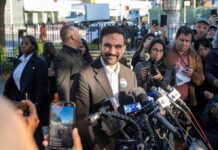
Utah’s latest campus-gun flashpoint runs through HB84, introduced by Rep. Walt Brooks, a Republican who previously sponsored Utah’s 2021 “constitutional carry” law. After a 2025 shooting at Utah Valley University that killed conservative commentator Charlie Kirk, Brooks advanced legislation that ultimately shifted direction. HB84 moved from clarifying whether open or concealed carry is permitted on campuses to prohibiting open carry, following input from higher-education officials.
Supporters of the Utah change argue that visible firearms can alarm students and staff and complicate judgment calls in tense situations. Brooks is quoted acknowledging that open carry raises concerns “especially on campuses,” and the bill’s evolution highlights how quickly policy can change when lawmakers face pressure from administrators and the public after tragedy. The underlying question remains unresolved for many voters: whether reducing lawful carry options makes campuses safer, or simply disarms the compliant.
Florida Activists and Student Republicans Renew the Campus Carry Push
Florida’s campus-carry debate resurfaced publicly after a January 2026 event hosted by the University of Florida College Republicans, where gun-rights advocates urged lawmakers to legalize firearms on college campuses. The discussion tied campus carry to broader priorities, including proposals touching “red-flag” laws and firearm purchasing rules. Speakers framed the issue as basic self-defense, while critics emphasized prevention strategies and warned that more guns could create confusion during an active threat.
Reporting from the event shows the political tension is not merely partisan. Some pro-gun speakers criticized Republican officials as unreliable on gun rights, suggesting intra-party frustration when campaign rhetoric does not translate into legislation. Opponents, including UF College Democrats, argued that introducing more firearms into campus life risks misidentification in emergencies and shifts attention away from mental-health interventions. Florida’s recent history—statewide memories of mass shootings—still shapes how quickly lawmakers move.
What the “Nearly a Dozen States” Claim Gets Right—and What’s Unproven Here
The broader narrative circulating online suggests Republicans are pushing campus carry in “nearly a dozen states,”. The strongest sourced developments in the materials focus on two places moving in opposite directions: Florida advocates pushing expansion and Utah lawmakers contemplating a restriction on open carry. With limited citations, readers should treat sweeping national counts cautiously until independently confirmed by a comprehensive legislative tally.
That said, the underlying policy conflict is clearly national in scope: gun laws vary widely across states, and campus carry remains one of the most contested arenas. Prior analyses indicate many states already allow some form of campus carry, while other states maintain gun-free campus policies. The near-term reality for families is that rules can change quickly, and they can differ not only by state but also by the type of campus and how statutes are interpreted after recodifications.
The Real Policy Fault Line: Open Carry Visibility, Emergency Response, and Civil Liberties
Much of the current dispute is less about firearms in principle and more about how they are carried and how authorities respond under pressure. Utah’s debate shows the distinction: open carry can be legal yet politically explosive, while concealed carry often draws different standards, permits, and enforcement practices. Florida’s advocates emphasize that “gun-free zones” primarily restrain law-abiding citizens, while critics focus on the practical difficulty of sorting “good guy” from “bad guy” in a chaotic scene.
Republicans push campus carry laws in nearly a dozen states as college shootings reignite debate https://t.co/csrhOEEmOU
— Fox News (@FoxNews) March 18, 2026
For conservative voters, the constitutional stakes come down to whether lawmakers treat self-defense as a fundamental right that travels with citizens—especially adults on public campuses—or as a privilege that can be narrowed whenever institutions claim discomfort. This here confirms a live split among Republicans: one faction pressing to expand carry options and another willing to restrict them after a major incident. What is not established in the provided sources is a coordinated wave across “nearly a dozen states.”
Sources:
Republican lawmaker moves to ban open carry on Utah college campuses
Gun rights advocates push to legalize firearms on college campuses