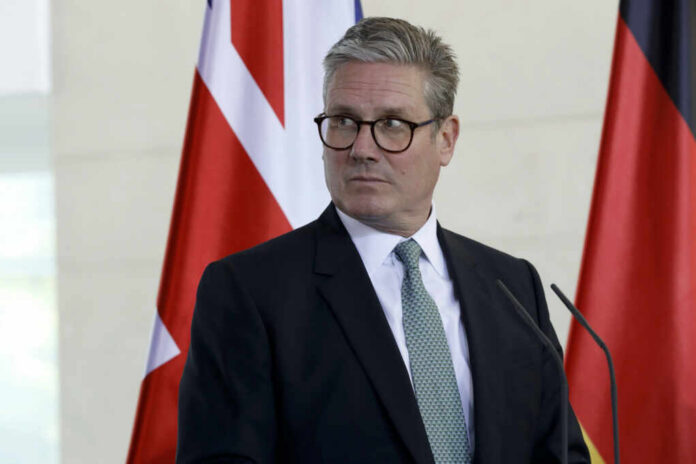
UK Prime Minister Keir Starmer defied President Trump’s public rebuke over Britain’s refusal to join initial US-Israeli strikes on Iran, exposing deep fissures in the transatlantic alliance as conservatives demand accountability for a leader prioritizing legal caution over American support in combating state-sponsored terrorism.
Story Snapshot
- Starmer defended his March 2026 decision not to join US-Israel offensive strikes on Iran, despite Trump’s unprecedented public criticism calling UK delay “very disappointing”
- UK eventually permitted defensive US base use after initial refusal, drawing fire from Conservative leader Kemi Badenoch who accused Starmer of “dithering” on supporting allies against Iranian aggression
- Iran’s regime has backed over 20 potentially lethal attacks on UK soil in the past year while threatening dissidents and British Jewish communities
- Starmer cited Iraq War lessons as justification for demanding lawful basis and viable plans before military involvement, straining the historically strong US-UK special relationship
Trump Publicly Rebukes UK Leader Over Alliance Hesitation
President Trump expressed sharp disappointment with Prime Minister Starmer in a Telegraph interview on March 2, 2026, criticizing the UK’s failure to support initial weekend strikes against Iranian targets. Trump stated the British delay in allowing US use of military bases “took far too long” and called the hesitation unprecedented. The public rebuke marks an extraordinary moment in US-UK relations, with an American president openly challenging a British prime minister’s loyalty during active Middle East operations. Starmer addressed Parliament the same day, firmly declaring “I stand by it” regarding his decision to keep Britain out of offensive operations.
Conservative Opposition Demands Clear Support for US Action
Conservative Party leader Kemi Badenoch accused Starmer of dangerous indecision during the parliamentary exchange, demanding he unequivocally back American strikes against what she termed “state-sponsored terror.” Badenoch framed the US-Israel operation as necessary action against Iranian aggression, criticizing Starmer’s ambiguous position as weakening alliance credibility. Her remarks reflect broader conservative frustration with Starmer’s cautious approach when decisive action against a regime threatening British citizens appears warranted. The domestic political pressure underscores concerns that Britain’s global standing suffers when leaders prioritize legal technicalities over supporting key allies confronting shared threats.
Iran’s Record of UK Attacks Justifies Allied Response
Starmer acknowledged Iran’s destabilizing role in his February 28 statement, noting the regime has backed over 20 potentially lethal attacks on British soil within the past year alone. Iranian threats extend to UK dissidents and Jewish communities, with British security forces implementing enhanced protective measures following the weekend strikes. Iran’s retaliation included indiscriminate regional attacks against non-conflict parties, closing airspace across the Gulf and endangering British nationals requiring shelter-in-place advisories. The regime’s history of crushing domestic dissent and murdering citizens demonstrates the threat level, yet Starmer’s government opted for diplomatic outreach to European allies rather than military solidarity with America and Israel responding to Iranian provocations.
Starmer’s Iraq War Defense Raises Questions on Preparedness
Starmer defended his approach by invoking lessons from the Iraq War, insisting Britain requires a lawful basis and viable plan before joining military operations. His emphasis on legal standards appeared to critique American planning, suggesting Trump’s administration lacked sufficient preparation for the Iran strikes. While prudence matters, conservatives question whether Starmer’s framework enables adversaries like Iran to exploit Western hesitation. The UK ultimately permitted defensive US strikes from British bases on Sunday night, March 1, against Iranian missile sites, but the initial refusal damaged alliance cohesion during critical hours when unified action carries maximum deterrent effect against terrorism-sponsoring regimes.
BREAKING – UK Prime Minister Keir Starmer defended Monday his decision to keep Britain out of the US and Israel's initial strikes against Iran following criticism from President Donald Trump. https://t.co/Kfk9Rv8LYi pic.twitter.com/0uACjjPDwC
— Insider Paper (@TheInsiderPaper) March 2, 2026
Starmer’s decision prioritizes diplomatic negotiation and national interest calculations over immediate military alignment, a posture raising concerns among Americans who expect Britain to stand shoulder-to-shoulder against shared enemies. British planes participated in coordinated defensive operations, and UK forces maintain strengthened Middle East capabilities, yet the delayed commitment signals reluctance that emboldens adversaries. Trump’s frustration reflects a growing American impatience with European allies demanding security guarantees while declining to share risks when confronting rogue states threatening Western interests and citizens directly.
Sources:
Keir Starmer Says UK Not Joining US And Israel “Offensive Strikes” On Iran – PoliticsHome
Starmer ‘stands by’ decision not to get involved in initial Iran strikes – ITV News
Iran UK war Cyprus Starmer latest updates – The Independent
Starmer too scared to back Trump in Iran, says Badenoch – The Telegraph